

10 Transformative Ingredients for Your Compost Bin in 2025
Ever looked at a banana peel and seen not just waste, but potential? You're not just holding kitchen scraps; you're holding the key to creating 'black gold'—a nutrient-rich superfood for your garden. Composting is one of the single most powerful actions you can take to slash landfill waste, combat climate change, and cultivate a garden that bursts with life, all from your own home. But to unlock this potential, you must first understand what your compost pile truly craves to succeed.
This guide is your definitive answer to the question, what can you put in compost bin? We are moving beyond the obvious "greens" and "browns" to give you a comprehensive, categorized list of the best materials. More importantly, we'll reveal the specific 'why' behind each one, detailing its unique role in creating a balanced, fast-working, and vibrant compost pile. Understanding this synergy is the difference between a heap of garbage and a treasure trove of life-giving fertilizer.
Get ready to transform your perception of waste. We will cover everything from common fruit and vegetable scraps to surprising additions like hair clippings and cardboard. By the end of this list, you will have the confidence and conviction to turn your kitchen and yard waste into a powerful, soil-enriching resource that will make your plants thrive. Let's start building extraordinary soil, one scrap at a time.
1. Fruit and Vegetable Scraps
If you want to witness the magic of composting begin, look no further than your kitchen cutting board. Fruit and vegetable scraps are the quintessential composting ingredients. As "green" materials, they are bursting with nitrogen, the essential fuel for the microorganisms that drive the entire decomposition process. These scraps break down with astonishing speed, kick-starting your compost pile and infusing your future soil with a powerful dose of nutrients.
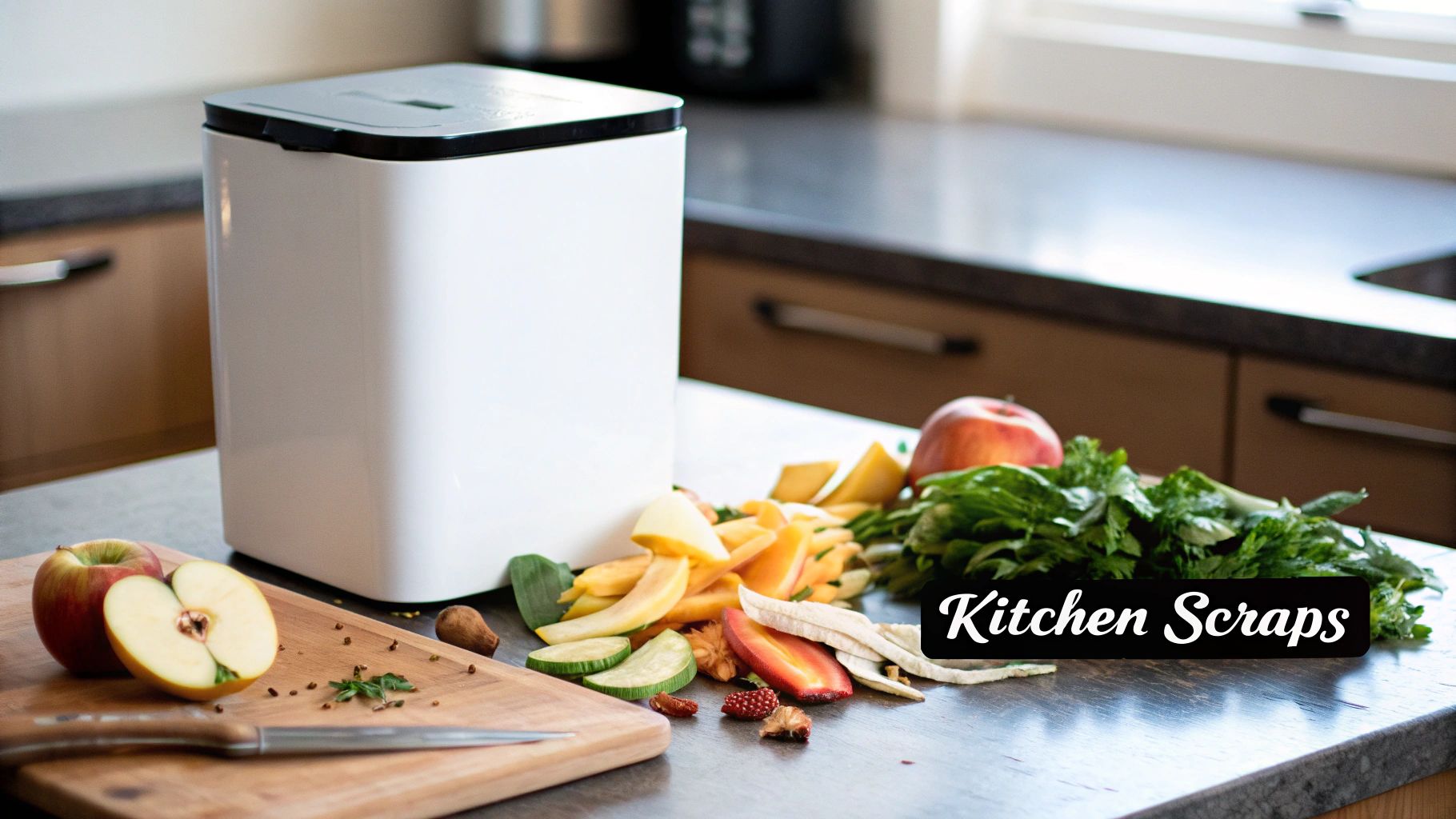
Think of all the vibrant bits and pieces you normally throw away during meal prep. These are compost gold. By diverting this food waste from landfills, you are personally preventing harmful methane gas emissions and, in return, creating a priceless, nutrient-dense amendment for your garden. This is a simple, daily act that transforms kitchen "waste" into a life-giving resource.
What to Include
Virtually any raw fruit or vegetable byproduct is a perfect candidate for your compost pile.
- Fruit Waste: Apple cores, banana peels, citrus rinds, strawberry tops, and melon rinds.
- Vegetable Trimmings: Carrot tops and peels, potato peels, onion skins, corn cobs, and bell pepper stems.
- Spoiled Produce: Wilted lettuce, bruised apples, or any produce that has gone past its prime.
Actionable Tips for Success
To unlock the full potential of your kitchen scraps, embrace these simple habits:
- Chop It Up: Smaller pieces break down exponentially faster. Before tossing in a large watermelon rind or a whole corn cob, take a moment to chop it into smaller, 2-3 inch pieces. This creates a feast for microbes, inviting them to work their magic.
- Bury Your Greens: To deter pests and eliminate odors, always tuck fresh fruit and vegetable scraps under a protective layer of "brown" materials like dried leaves or shredded paper.
- Maintain the Balance: Kitchen scraps are a potent nitrogen source. To create a healthy, fast-working compost pile, you must balance them with carbon-rich brown materials. A good rule of thumb is to add roughly three parts browns for every one part greens.
- Avoid Diseased Plants: If you're clearing out garden plants that show signs of disease or pest infestation, it's best to keep them out of the compost bin. A home compost pile may not get hot enough to kill the pathogens, which could then spread back into your garden later.
2. Dry Leaves and Yard Waste
If fruit and vegetable scraps are the engine of your compost pile, then dry leaves and yard waste are the body and the fuel. Fallen leaves, grass clippings, twigs, and other plant debris are essential "brown" materials. They are packed with carbon, which provides the critical energy source for decomposing microorganisms and creates the very structure and aeration needed for a healthy, odor-free bin.
Imagine your compost as a layered cake. The "green" kitchen scraps provide moisture and nitrogen, but without the bulky, airy structure of "browns," the pile would collapse into a dense, slimy, and smelly mess. By incorporating yard waste, you master the chemistry, prevent compaction, and ensure a steady flow of oxygen, which is vital for the aerobic bacteria that do the heavy lifting. This is how you transform yard "chores" into a vital resource for creating rich, loamy compost.
What to Include
Most organic materials from your yard are excellent additions to your compost bin.
- Dry Leaves: Fallen leaves from deciduous trees are one of the best and most abundant sources of carbon.
- Grass Clippings: Can be added in thin layers; heavy clumps can mat down and block air.
- Small Twigs and Branches: Woody materials add incredible structure but break down slowly.
- Garden Trimmings: Spent flowers, pruned plant debris, and old potting soil.
Actionable Tips for Success
To master the use of yard waste in your compost, follow these key practices:
- Shred and Chop: Smaller pieces decompose dramatically faster. Run over dry leaves with a lawnmower or use a chipper for small branches to increase the surface area and accelerate the process.
- Layer Like a Pro: When you add a layer of nitrogen-rich "greens" like kitchen scraps, always cover it with a thicker layer of "browns" like shredded leaves. This is the secret to a balanced, odor-free pile.
- Maintain the Golden Ratio: The ideal compost pile has a carbon-to-nitrogen (C:N) ratio of about 30:1. A simple way to achieve this is by adding roughly three parts brown materials for every one part green material by volume.
- Stockpile Your Browns: Autumn provides a massive bounty of leaves. Don't let it go to waste. Rake them up and store them in bags or a separate pile near your compost bin. This gives you a ready supply of carbon to balance out kitchen scraps throughout the winter and spring.
3. Coffee Grounds and Tea Bags
Your daily caffeine ritual can do more than just awaken your mind; it can bring your compost pile to vibrant life. Spent coffee grounds and used tea leaves are powerhouse additions to any compost bin. Despite their dark, earthy appearance, they are considered a "green" material, providing a significant boost of nitrogen that fuels the decomposition process and enriches your final compost with invaluable nutrients.

Many large coffee chains, like Starbucks, even offer their used grounds to gardeners for free, a testament to their recognized value. By adding these materials, you are not just diverting waste, you are actively improving the structure and water retention of your future soil. Earthworms are also particularly drawn to coffee grounds, making them a perfect addition if you're interested in the fascinating world of vermicomposting. Learn more about the benefits of using worms in composting.
What to Include
Most residues from your morning brew are perfect for the pile, but a few details are important.
- Used Coffee Grounds: Any grounds from drip machines, French presses, or espresso makers.
- Paper Coffee Filters: Unbleached paper filters can be tossed in right along with the grounds.
- Tea Leaves: Loose-leaf tea or the contents of tea bags.
Actionable Tips for Success
To make the most of your coffee and tea waste, adopt these best practices:
- Check Your Tea Bags: While coffee grounds are a compost bin staple, when it comes to tea, it's essential to understand the nuances of composting tea bags. Many contain plastic, so make it a habit to tear them open, empty the precious leaves into the compost, and discard the bag and staple.
- Spread Them Out: Coffee grounds can become dense and compacted if added in one large clump. Sprinkle them in thin layers or mix them with brown materials like dried leaves to ensure proper aeration and integration.
- Watch the Ratios: Because they are a nitrogen-rich green material, balance coffee grounds with plenty of carbon-rich browns. Aim for a mix that is about 5-10% coffee grounds to prevent the pile from becoming too acidic or dense.
- Connect with Cafes: Don't just rely on your own supply. Many local coffee shops are thrilled to give away their used grounds. This is a brilliant way to acquire a large volume of high-quality green material for your compost.
4. Cardboard and Paper Products
Before you haul that pile of delivery boxes and old newspapers to the curb, recognize their true value to your garden. Untreated cardboard and paper are fantastic "brown" materials for your compost bin. They are rich in carbon, the perfect counterpart to the nitrogen from your kitchen scraps. These materials also provide crucial structure, creating a network of air pockets that aerate the pile and prevent it from becoming a dense, soggy mess.
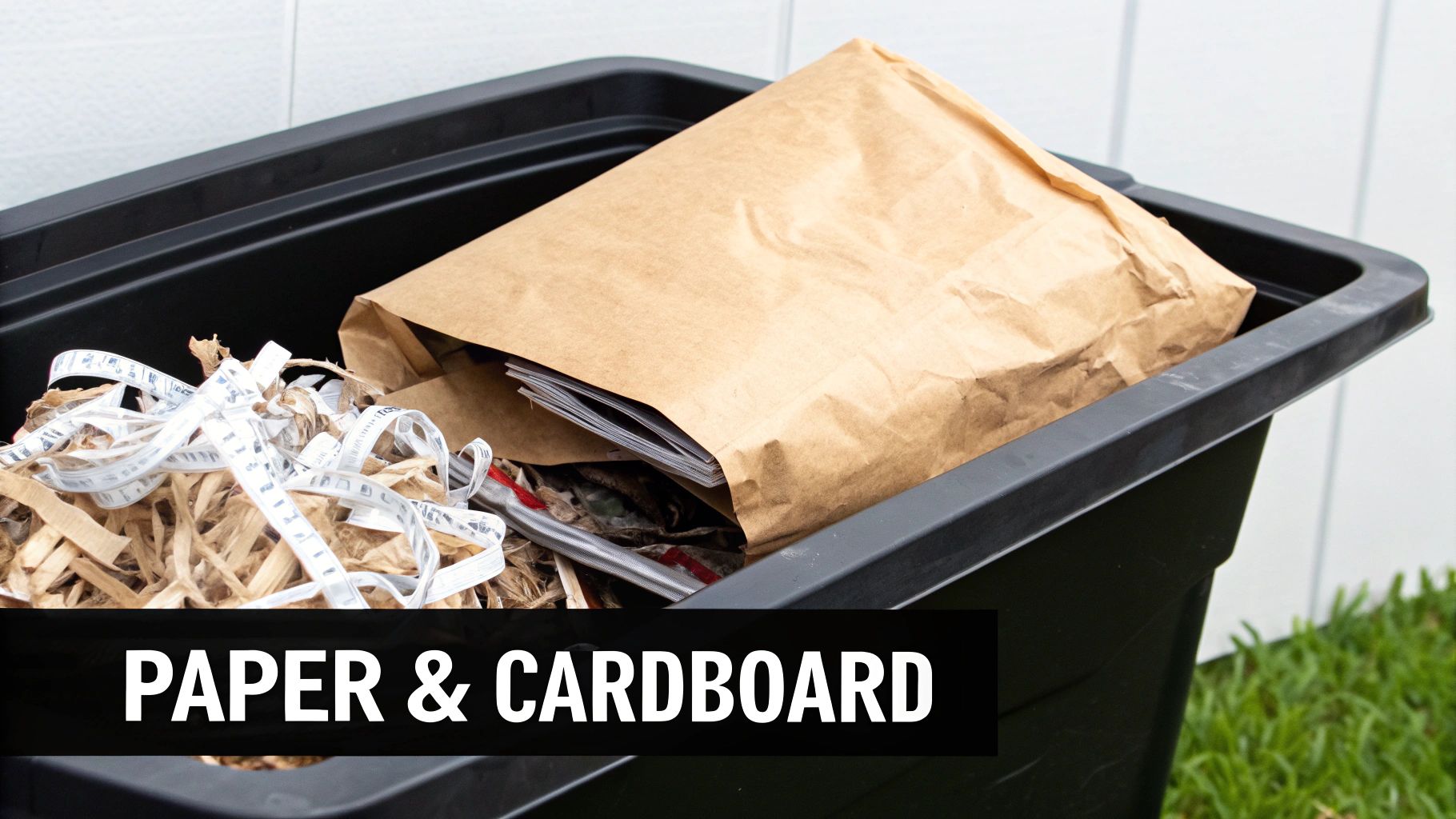
By composting paper products, you're not just recycling; you're upcycling. You are transforming a common household waste item into a cornerstone ingredient for building healthy, carbon-rich soil. This process helps retain moisture in your compost, absorb excess odors, and feed the beneficial microorganisms that are essential for decomposition. It's a simple, powerful way to boost your compost's quality while drastically reducing your household's waste footprint.
What to Include
Most non-glossy, uncoated paper and cardboard items are safe and beneficial to add to your compost.
- Cardboard: Corrugated boxes (with tape removed), paper egg cartons, toilet paper rolls, and cereal boxes (remove the plastic liner).
- Paper: Black-and-white newspaper, shredded office paper, paper bags, and junk mail (avoid glossy flyers and plastic windows).
- Other Paper Goods: Paper towels and napkins are also excellent additions. For more detailed guidance, learn about composting paper towels on myterravera.com.
Actionable Tips for Success
To effectively incorporate paper products into your compost, commit to these key practices:
- Shred and Tear: Whole sheets of paper or large pieces of cardboard can mat together, creating an impenetrable barrier to air and water. Always shred or tear them into smaller, 2-4 inch pieces to ensure they mix in well and break down efficiently.
- Avoid Glossy and Coated Materials: Shiny, glossy magazines, photo paper, and wax-coated cardboard must be avoided. These materials often contain plastics and chemicals that will not break down and can contaminate your compost.
- Soak for a Head Start: Dry cardboard can take a while to absorb moisture. To supercharge the process, briefly soak torn-up cardboard in a bucket of water before adding it to your pile. This helps it break down much faster.
- Create a Base Layer: A layer of bulky, shredded cardboard at the bottom of your bin is an excellent way to guarantee superior drainage and aeration right from the start.
5. Wood Chips and Sawdust
For composters who aspire to build a robust, long-lasting soil structure, wood chips and sawdust are powerhouse ingredients. Sourced from tree trimming, woodworking, or lumber mills, these materials are classified as "browns" for their incredibly high carbon content. While they take longer to decompose than softer materials like leaves, they provide an outstanding slow-release source of carbon that fuels microbial life for an extended period.
Incorporating wood-based materials adds incredible bulk and aeration to your compost pile, preventing compaction and ensuring excellent airflow. This creates the perfect, oxygen-rich environment for beneficial organisms to thrive. Their slow decomposition means they continue to feed the soil food web long after other materials have broken down, making them a cornerstone of many permaculture and regenerative gardening systems.
What to Include
It is imperative that you only use natural, untreated wood to avoid introducing harmful chemicals into your compost.
- Arborist Wood Chips: Chips from tree trimming services are ideal, as they often contain a perfect mix of wood, bark, and green leaves.
- Sawdust: Fine sawdust from untreated lumber is a great addition, but should be used in moderation to avoid clumping.
- Small Twigs and Bark: Broken-up twigs and pieces of bark from your yard are also excellent carbon sources.
Actionable Tips for Success
To successfully use wood chips and sawdust, keep these key points in mind:
- Only Use Untreated Wood: This is the most crucial rule. Never add wood from pressure-treated, stained, painted, or engineered products like MDF or particleboard. These contain toxic chemicals that will harm soil life and contaminate your garden.
- Source Wisely: When getting chips from an arborist, ask if they sprayed herbicides on the trees they removed. Many municipal yard waste programs also offer clean wood chips for residents.
- Balance with Nitrogen: Because wood is so high in carbon, it can temporarily "rob" nitrogen from the pile as it decomposes. To counteract this, always mix it with high-nitrogen "greens" like grass clippings, food scraps, or a nitrogen-rich amendment like manure.
- Be Patient: Wood breaks down slowly. If you need finished compost quickly, use wood chips sparingly. For a long-term, fungus-rich compost that will build incredible soil structure, they are the perfect choice. Consider a separate, slow-composting pile just for woody materials.
6. Grass Clippings
If you have a lawn, you have a steady supply of one of the most powerful "green" materials for your compost bin. Fresh grass clippings are incredibly rich in nitrogen, a key element that ignites the microorganisms responsible for breaking down organic matter. Adding them to your pile accelerates the decomposition process, quickly heating it up and providing a potent nutrient boost that enriches your finished compost.
Composting grass clippings is a brilliant way to practice "grasscycling," a sustainable approach to lawn care. Instead of bagging and sending this valuable resource to a landfill where it would produce methane, you can harness its power to create a natural, homemade fertilizer. This closes the loop in your garden's ecosystem, returning nutrients from your lawn directly back to the soil where they belong.
What to Include
Fresh, green grass clippings are the primary target here, but the source and condition are critical.
- Fresh Clippings: Clippings from your most recent lawn mowing session.
- Dried Clippings: Grass that has been left to dry for a day or two becomes more of a "brown" material, which is also useful.
- Untreated Lawn Waste: Only use clippings from lawns that have not been recently treated with chemical pesticides, herbicides, or fertilizers.
Actionable Tips for Success
Grass clippings are potent, and a little care is needed to use them effectively and avoid common pitfalls like slimy, smelly compost.
- Dry Them Out (Optional): To prevent grass from clumping into a dense, wet mat that blocks airflow, you can spread the clippings out in the sun for a day before adding them to the bin. This reduces the moisture content and makes them far easier to mix.
- Layer Thinly: Never dump a thick, heavy layer of fresh grass into your compost. Always add it in thin layers (no more than 2-3 inches deep) and alternate with "brown" materials like dried leaves or shredded cardboard.
- Prioritize the Ratio: Grass clippings are a powerful "green." To maintain a healthy compost pile, you must strictly follow the balance of one part green (grass) to about three parts brown materials. This is crucial for preventing foul odors and ensuring proper aeration.
- Avoid Treated Grass: If your lawn has been treated with herbicides (especially "weed and feed" products), do not compost the clippings for at least a few mowings. These chemicals can persist through the composting process and may harm or even kill your garden plants when you use the finished compost.
7. Plant-Based Food Waste (excluding oils and dairy)
Beyond raw fruit and vegetable scraps, your compost bin is ready to handle a wide variety of cooked and processed plant-based foods. Leftover grains, pasta, bread, and prepared vegetable dishes are excellent nitrogen-rich "green" materials. They add substantial nutritional value and bulk to your finished compost, helping to create a richer, more diverse soil amendment that your garden will love.
Including these items dramatically expands what you can put in a compost bin, significantly reducing the amount of food sent to landfills. While raw scraps are the classic ingredient, cooked plant-based foods represent a huge portion of household food waste. Composting them is a practical and impactful step toward a more sustainable kitchen and a more productive garden.
What to Include
Most cooked or processed plant-based foods are great for composting, as long as they aren't swimming in oil or dairy.
- Grains & Legumes: Leftover rice, oatmeal, cooked beans, and quinoa.
- Bread & Pasta: Stale bread crusts, leftover noodles, and old crackers.
- Prepared Vegetables: Steamed or roasted vegetables (without excess oil or cheese).
- Commercial Scale: Large-scale operations, like San Francisco's commercial food scrap collection program, successfully compost tons of this material daily. For commercial settings, understanding effective strategies for reducing food waste can often complement composting initiatives by managing organic refuse more efficiently.
Actionable Tips for Success
To avoid attracting pests and odors when composting cooked foods, follow these best practices:
- Bury It Deep: Always bury cooked food waste in the center of your compost pile, covering it with a generous layer of brown materials like leaves or cardboard. This strategy contains odors and makes it far less accessible to pests.
- Chop It Up: Just like with raw scraps, smaller pieces decompose faster. Break up stale bread or chop up leftover pasta to accelerate the process.
- Avoid Oily & Salty Foods: Excessive oils can create anaerobic (oxygen-free) conditions that stall decomposition and produce foul odors. High salt content can also harm the beneficial microorganisms working in your pile.
- Monitor Moisture: Cooked foods often contain more water than raw scraps. Be mindful of this and add extra dry, brown materials if your pile seems too wet or soggy. For a more detailed breakdown, you can learn more about what can and cannot be composted.
8. Manure from Herbivorous Animals
For those looking to truly supercharge their compost pile, manure from herbivorous animals is a game-changer. Often called a "compost activator," this material is exceptionally rich in nitrogen and is teeming with beneficial microorganisms. These microbes are the engines of decomposition, and adding manure introduces a thriving population that significantly accelerates the process and generates the heat needed for a healthy, fast-working pile.
Adding manure from plant-eaters is one of the single most effective ways to create high-quality, nutrient-dense compost. It transforms a slow, passive pile into an active, hot composting system. This is a powerful amendment that not only speeds everything up but also enriches the final product with a fantastic blend of nutrients perfect for demanding garden beds and vegetable patches.
What to Include
Only use manure from animals that eat a plant-based diet. Manure from carnivores or omnivores (like dogs, cats, and humans) can contain harmful pathogens and must never be used in a home compost bin.
- Horse Manure: Often mixed with straw or sawdust bedding, which adds valuable carbon.
- Chicken Manure: Extremely high in nitrogen; a little goes a very long way.
- Cow or Goat Manure: A well-balanced option that's a great all-around activator.
- Rabbit Manure: Considered "cool" manure, it can sometimes be added directly to gardens, but it also works wonders in a compost pile.
Actionable Tips for Success
Handling manure correctly is paramount for creating safe and effective compost.
- Age Fresh Manure: Fresh manure is very "hot" (high in nitrogen) and can burn plants. It's essential to let it age for at least 3-6 months in the compost pile before applying the finished compost to edible gardens. This aging process allows pathogens to die off and the nitrogen to stabilize.
- Layer It Properly: Manure is a potent "green" material. To avoid an odorous, slimy pile, mix it thoroughly with "brown" materials like dried leaves, straw, or shredded cardboard. Adhere to the one part green (manure) to three parts brown rule.
- Monitor Your Pile's Temperature: A hot compost pile (130-160°F or 55-70°C) is the gold standard for killing weed seeds and pathogens. Using manure makes it much easier to achieve these temperatures. Use a compost thermometer to check the core of your pile.
- Source Wisely: If possible, get manure from animals that have not been treated with persistent herbicides or antibiotics, as these can sometimes pass through and affect your compost and garden. Ask the farmer or stable owner about their practices.
9. Hair and Natural Fiber Clippings
While it might seem unconventional, one of the most surprising and beneficial items you can put in a compost bin is hair and natural fiber clippings. Human hair, pet fur, and scraps from natural fabrics like cotton and wool are excellent "green" materials. They are packed with nitrogen, a critical element that fuels the microorganisms responsible for decomposition, and they also introduce unique proteins that create a richer, more complex final compost.
This practice gives a valuable second life to materials that would otherwise be swept into the trash. From the contents of your hairbrush to the fluff from your pet's grooming session, these organic fibers break down slowly, releasing their nutrients over time and improving the structure of your finished compost. It’s an innovative and resourceful way to reduce waste while adding a valuable, slow-release nitrogen source to your garden's future soil.
What to Include
Look for pure, natural fibers that are free from synthetic materials and harsh chemical treatments.
- Human Hair: Clippings from haircuts or the contents of your hairbrush.
- Pet Fur: Fur from brushing dogs, cats, rabbits, and other household pets.
- Natural Fibers: Small scraps of 100% cotton, wool, linen, or silk. Dryer lint can also be used if your laundry consists solely of these natural fibers.
Actionable Tips for Success
To effectively compost hair and natural fibers, follow these key recommendations:
- Disperse and Mix Well: Hair and fur tend to clump together, which can slow decomposition and create anaerobic pockets. To prevent this, separate the strands and mix them thoroughly with "brown" materials like leaves or sawdust before adding them to the pile.
- Chop Up Fabrics: Just like with large food scraps, cutting up textile scraps into smaller pieces significantly increases the surface area, helping them break down more quickly and integrate into the compost.
- Go Chemical-Free: Avoid composting hair that has been recently treated with harsh chemicals like bleach or hair dye. Similarly, only add fabrics that are undyed or colored with natural dyes, and ensure they are not blended with synthetic fibers like polyester or nylon, which will not decompose.
- Bury It Deep: Place hair and fiber clippings in the center of your compost pile. This placement helps contain potential odors as they break down and ensures they are in the hottest part of the pile, which accelerates the process.
10. Eggshells and Plant-Based Food Processing Waste
Beyond typical kitchen scraps, your compost bin can handle more robust organic materials like eggshells and various byproducts from food processing. These items are fantastic for adding structure and slow-release minerals, particularly calcium, which is crucial for building strong cell walls in plants and preventing issues like blossom-end rot. They act as a valuable "grit" in the compost, improving its texture and aeration.
Incorporating these materials diverts a significant stream of waste from commercial sources like restaurants, breweries, and food processing plants. This practice not only enriches your home compost but also supports a more circular economy, turning industrial byproducts into a nutrient-dense resource for your garden.
What to Include
These unique additions bring a diverse range of nutrients and textures to your pile.
- Eggshells: A fantastic source of calcium carbonate. Collect them from your kitchen or even from local bakeries and restaurants.
- Nut Shells: Hard shells from peanuts, pistachios, and walnuts (avoid black walnut shells as they contain juglone, which is toxic to many plants).
- Food Processing Byproducts: This includes items like apple pomace from cider mills, spent grains from breweries, and vegetable pulp from juicing facilities.
Actionable Tips for Success
To effectively compost these tougher materials, follow these key steps:
- Crush Everything: The most important step for shells is to crush them as finely as possible. Whole or large pieces of eggshell can take years to break down. A fine powder or small fragments will release calcium much more readily, making it available to your plants.
- Rinse and Dry: Briefly rinse eggshells to remove any liquid egg residue, which can attract pests. For an extra precaution, you can bake them for a few minutes to sterilize them completely before crushing.
- Mix Thoroughly: When adding bulky materials like spent grains or apple pomace, which can be very dense and wet, be sure to mix them well with plenty of "brown" materials. This prevents them from compacting and creating anaerobic, smelly spots.
- Bury Deep: Always bury these items in the center of your hot compost pile. This helps deter any curious critters and ensures they are exposed to the highest temperatures for the quickest decomposition.
Top 10 Compostable Materials Comparison
| Item | 🔄 Complexity | ⚡ Resource Needs | ⭐ Expected Outcomes | 📊 Ideal Use Cases | 💡 Key Advantages |
|---|---|---|---|---|---|
| Fruit and Vegetable Scraps | Low — simple collection; manage pests/odors | Minimal — kitchen bin, chopping, balance with browns | Fast decomposition; high nitrogen; nutrient-rich compost | Home kitchens, community programs, frequent composters | Readily available and free; tip: chop and bury under browns |
| Dry Leaves and Yard Waste | Low–Medium — collection and occasional shredding | Moderate — storage space; shredder speeds process | High carbon; improves structure; slow breakdown | Seasonal leaf collection, large garden piles, municipal programs | Abundant and aerating; tip: shred and use 3:1 brown:green |
| Coffee Grounds and Tea Bags | Low — easy to collect; check tea bag materials | Minimal — jar/bin; cafes supply bulk material | Moderate–high N; improves soil structure; fairly fast | Cafés, community gardens, home composters | Widely available; tip: mix with browns and remove staples |
| Cardboard and Paper Products | Low–Medium — avoid coated/glossy items; shred | Low — shredding and occasional soaking | High carbon; moisture control; good aeration | Urban composting, base layers, damp piles | Repurposes paper waste; tip: shred and avoid inks/coatings |
| Wood Chips and Sawdust | Medium–High — slow decomp; may tie up nitrogen | High — large volumes, storage, pre-composting advised | Long-term structure; very slow decomposition; fungal benefits | Large-scale piles, permaculture, mulching applications | Often free from arborists; tip: mix with high-N materials or pre-compost |
| Grass Clippings | Low — easy but risk of matting/odors | Minimal — abundant during mowing; may need drying | Fast N release; generates heat; can compact if bulked | Lawn recycling, hot composting, seasonal inputs | Fast-decomposing N source; tip: dry and layer with browns |
| Plant-Based Food Waste (no oils/dairy) | Medium — cooked foods need burial/enclosed bins | Moderate — enclosed bins, frequent turning, moisture control | Good nutrient return; moderate–fast decomposition | Restaurants, commercial collection, enclosed home systems | Reduces food waste; tip: bury cooked foods and avoid oily/salty items |
| Manure from Herbivorous Animals | Medium — sourcing and curing; monitor temps | Moderate–High — storage, aging space, temperature monitoring | Very high nutrient boost; hot composting; weed-seed kill when hot | Farms, community gardens, hot-compost systems | Accelerates composting dramatically; tip: age 3–6 months and monitor temperatures |
| Hair and Natural Fiber Clippings | Medium — slow decomp; needs mixing/shredding | Low–Moderate — collection (salons), shredding improves rate | Adds keratin/proteins; slow–moderate breakdown; diverse microbes | Salon collection programs, supplement to backyard piles | Repurposes grooming/textile waste; tip: chop/shred and mix well with browns |
| Eggshells & Plant-Based Processing Waste | Low–Medium — crushing/possible sterilization | Low–Moderate — crushing tools; processor byproduct collection | Mineral-rich (calcium); slow-release nutrients; adds texture | Bakeries, cider/nut processors, home cooks seeking minerals | Supplies calcium and trace minerals; tip: crush shells and bury (or bake to sterilize) |
From Bin to Bounty: Mastering Your Compost Mix
You’ve made it to the end, and now you’re equipped with more than just a list. You have a powerful blueprint for transforming your everyday waste into the "black gold" that will make your garden flourish. The journey from a novice composter to a seasoned pro isn't about memorizing rules. It's about understanding the fundamental principles that bring this incredible transformation to life.
The core lesson is balance. Composting is a dynamic process, a living ecosystem you cultivate right in your backyard. The true secret lies in mastering the simple, yet crucial, relationship between nitrogen-rich 'greens' and carbon-rich 'browns'. Think of it less as a rigid recipe and more like conducting a symphony between two essential partners.
Recapping Your Composting Blueprint
Let's distill the most critical takeaways from our deep dive into what you can put in your compost bin:
- The Green and Brown Ratio is King: This is the non-negotiable foundation of good compost. For every measure of 'greens' like fruit scraps, coffee grounds, or fresh grass clippings, you must add two to three times that amount of 'browns' like dry leaves, shredded cardboard, or wood chips. This ratio fuels the microorganisms, prevents foul odors, and ensures a timely breakdown.
- Variety Creates Vitality: A compost pile fed only on coffee grounds and cardboard will work, but it won't be as nutrient-rich as one that includes a diverse diet. By adding a wide array of materials like crushed eggshells (for calcium), hair clippings (for slow-release nitrogen), and various yard trimmings, you create a final product teeming with a broad spectrum of micronutrients that plants crave.
- Size Matters: The speed of decomposition is directly linked to the surface area of the materials. A whole apple will take months to break down, while the same apple, chopped into small pieces, will disappear into the pile in a fraction of the time. Always aim to chop, shred, or tear larger items before adding them.
From Knowledge to Action: Your Next Steps
You now possess the knowledge to divert a significant portion of your household waste from landfills, but knowledge is only powerful when it's put into action. The real transformation begins when you lift the lid of your bin for the first time.
Start today. Don't wait for the "perfect" mix of materials. Begin with what you have. That banana peel from your breakfast? The junk mail on your counter? The leaves piling up by your fence? They all have a new, higher purpose now.
Key Insight: Your compost bin isn't a garbage can; it's a creation station. Every layer you add is an investment in the future health of your soil, your plants, and the planet. You are actively participating in a natural cycle of decay and rebirth.
As you build your pile, pay attention. Is it too wet and smelly? Add more browns. Is it too dry and inactive? Add some greens and a splash of water. This hands-on experience is your greatest teacher. You'll quickly develop an intuitive sense of what your compost needs, turning the science into a simple, rewarding routine.
By mastering what you can put in your compost bin, you're doing so much more than making fertilizer. You are taking a tangible, meaningful step toward a more sustainable lifestyle. You are closing a loop, turning what was once considered "trash" into a powerful resource that nourishes the earth and, in turn, can nourish you. Your efforts create a ripple effect, reducing methane emissions from landfills and building healthier, more resilient soil that can better retain water and support abundant life. Your humble bin is a small but mighty tool for positive change.
Ready to make your composting journey even cleaner and more convenient? Using certified compostable bags from terravera allows you to collect kitchen scraps without the mess and toss the whole bag directly into your bin. They are designed to break down right alongside your food waste, ensuring a hassle-free process from start to finish. Explore the options at terravera and simplify your composting routine today.