

Can I Compost Paper Towels? Absolutely—Here's Your Guide
Yes, you can and you absolutely should compost paper towels. This simple act is one of the easiest ways to reduce your household waste and create nutrient-rich soil for your garden. But there's one critical rule: it all depends on what you used them for.
Paper towels used for a simple water spill or wiping up crumbs? They are a perfect addition to your compost pile. But if they're soaked in grease, harsh chemical cleaners, or bodily fluids, they must go in the trash. It’s that simple.
The Definitive Answer to Composting Paper Towels
Starting a compost pile is empowering, and the core concept is straightforward. Think of your compost as a living ecosystem—you just need to feed it the right ingredients.
Plain, uncontaminated paper towels are a fantastic source of carbon, what composters call "browns." They are an essential ingredient for any healthy, balanced pile.
These brown materials are the workhorses of your compost, soaking up excess moisture from your "greens" (like fruit peels, veggie scraps, and coffee grounds). They also create vital air pockets for the microbes doing all the heavy lifting. Without enough browns, your compost will inevitably turn into a slimy, smelly mess.
Why Composting Paper Products Is a Game-Changer
It might seem like a small action, but composting your paper towels creates a massive positive impact. The resources required to manufacture them are staggering: it takes 17 trees and 20,000 gallons of water just to produce one ton of paper towels.
With an estimated 51,000 trees cut down every single day for North America's paper towel habit, composting the ones you can is a powerful statement. You're not just reducing waste; you're honoring the resources that went into making them.
Before we dive deeper, it’s worth remembering why this matters so much. Beyond just diverting waste from landfills, there are countless the many benefits of compost for your garden and the planet.
You are literally turning trash into black gold. By composting, you create a nutrient-packed soil conditioner that makes your garden thrive. It’s a beautiful, closed-loop system: kitchen scraps become food for the soil, which in turn grows more food for your kitchen.
This guide will show you exactly which paper towels are compost-friendly and which ones you must avoid. For a more complete list of what can go in your bin, our guide on what can I compost at home has you covered.
Paper Towel Composting Cheat Sheet
Here's a quick cheat sheet to empower you to decide on the spot whether that used paper towel belongs in the compost or the trash.
| Paper Towel Condition | Can It Be Composted? | Key Reason Why |
|---|---|---|
| Clean, unused, or used with just water | Yes | Perfect "brown" material; adds essential carbon to your pile. |
| Soiled with food scraps (veggies, fruit, coffee) | Yes | Food is a "green" material; this is a perfect compost combo. |
| Soaked in grease, oil, or butter | No | Oils attract pests and create foul odors. Non-negotiable. |
| Used with harsh chemical cleaners | No | Chemicals will kill the beneficial microbes in your compost. |
| Used to clean up bodily fluids (pet or human) | No | Poses a risk of introducing harmful pathogens to your compost. |
| Made from recycled paper, unbleached | Yes, ideal | Breaks down easily and has fewer processing chemicals. |
This table makes it easy to make the right choice every time, helping you build a healthier, more effective compost pile.
Why Your Compost Pile Needs Paper Towels
Think of your compost pile as a bustling city of microorganisms, and you're the city planner. For this microscopic workforce to transform your kitchen scraps into rich soil, it demands a balanced diet.
In the world of composting, that diet is simple: "greens" and "browns." Greens are items like fruit peels and coffee grounds. They're rich in nitrogen, the protein that helps microbes multiply. Browns, on the other hand, are things like dry leaves and, you guessed it, paper towels. They are packed with carbon—the pure energy that fuels all their hard work.
The Power of Carbon in Your Compost
A plain paper towel is almost pure carbon, which makes it an absolute hero for your compost bin. It is a top-tier "brown" material. Without enough carbon, a compost pile will fail, quickly turning into a dense, wet, and smelly mess as the nitrogen-heavy "greens" take over. This creates an anaerobic (oxygen-free) environment that suffocates the good microbes and invites the stinky ones to move in.
When you add a paper towel, you are accomplishing several critical tasks:
- Fueling the System: You're giving your microbial crew the essential energy they need to break down everything else.
- Creating Air Pockets: The fibrous texture of paper creates thousands of tiny air pockets. This aeration is crucial for the survival of beneficial aerobic bacteria—the ones that work efficiently and without raising a stink.
- Managing Moisture: Paper towels are, by design, sponges. They are fantastic at absorbing excess moisture from soggy food scraps, preventing the pile from becoming a compacted, swampy mess.
It's just like building a campfire. You can't just throw a giant, wet log on and expect it to ignite. You need smaller, drier materials like kindling and paper to get things roaring. Paper towels are the kindling for your compost pile, ensuring everything "burns" (or decomposes) perfectly.
Choosing the Right Paper Towels for the Job
Not all paper towels are created equal in the eyes of a microbe. The best ones are those closest to their natural, woody state. Unbleached, minimally processed paper towels are the gold standard because they break down quickly without adding unnecessary chemicals to your future soil.
Always remember, the goal here is to feed your soil, not pollute it. Every clean paper towel you add to the compost is a direct investment in the health of your future garden, turning a disposable product into a nutrient-rich resource.
Recycled paper towels are another fantastic choice. Their fibers have already been broken down once, meaning they're shorter and tend to decompose even faster. When you compost a paper towel, you are closing the loop on its lifecycle, returning it to the earth where it will support new life. It’s a simple act that transforms everyday waste into a valuable asset for a healthier planet and a thriving garden.
Paper Towels You Must Never Compost
While most paper towels are a welcome addition, some are compost-killers. Tossing in the wrong kind will introduce harmful chemicals, attract unwanted pests, or create a stinky, slimy disaster. To keep your compost healthy and create that beautiful, rich soil for your garden, you must learn to identify the offenders.
Think of your compost bin as a living, breathing ecosystem. You wouldn't pour bleach into a fish tank, and for the same reason, you must not add things that will kill off the hardworking bacteria and fungi in your pile.
The Grease and Oil Problem
One of the biggest culprits is a paper towel soaked in grease, fat, or oil. A tiny smear from wiping up olive oil is forgivable, but that paper towel you used to blot bacon grease or mop up a greasy spill? That’s a hard no.
Grease and oil are incredibly slow to break down. They coat everything, forming a waterproof layer that chokes off oxygen. When your compost can't breathe, it turns into a foul-smelling, anaerobic mess. Even worse, the smell of fats is a powerful invitation for pests like raccoons and rodents to invade your pile.
This mental checklist will make it easy to decide if a paper towel is compost-bound or headed straight for the trash.
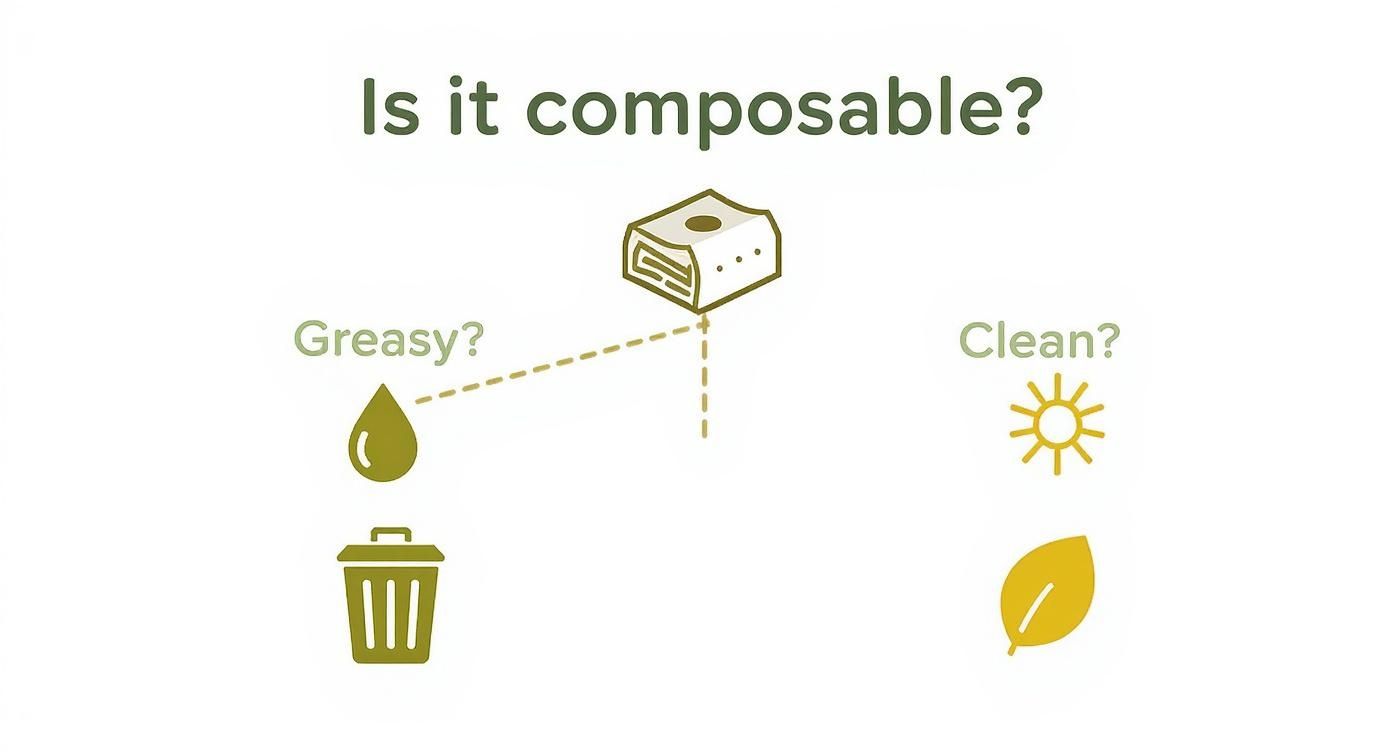
This visual is your constant reminder of the golden rule: clean and food-scrap-soiled paper towels are compost gold, but anything with grease or harsh chemicals belongs in the garbage.
Chemical Contamination and Other Red Flags
Another major no-go is anything with chemical residue. If you used a paper towel with a cleaning spray, disinfectant, or any other household chemical, it absolutely must not go into your compost bin.
For instance, paper towels used for cleaning floors with strong chemicals like ammonia carry residues that are toxic to the beneficial microbes your compost relies on. Killing off these microorganisms grinds the entire decomposition process to a halt.
To help you remember what to avoid, here’s a quick guide on what to toss in the trash bin instead of your compost.
Compost vs. Trash Decision Guide for Used Paper Towels
This table breaks down common contaminants and helps you quickly decide where that used paper towel belongs. It's an essential reference for keeping your compost pile healthy and productive.
| Contaminant | Compost Pile (Safe) | Trash Bin (Unsafe) | Potential Problem in Compost |
|---|---|---|---|
| Water & Food Scraps | ✅ Used to wipe up water, coffee spills, or fruit/vegetable juice. | None. These are ideal additions. | |
| Grease, Fat, or Oil | ✅ Soaked in bacon grease, butter, or cooking oil. | Attracts pests, creates foul odors, and slows decomposition by cutting off oxygen. | |
| Chemical Cleaners | ✅ Used with bleach, glass cleaner, disinfectants, or harsh soaps. | Kills the beneficial microorganisms essential for breaking down organic matter. | |
| Human Bodily Fluids | ✅ Used on blood, saliva, or other fluids. | Poses a health risk by potentially introducing harmful pathogens into your finished compost. | |
| Pet Waste | ✅ Used to clean up dog, cat, or other pet feces/urine. | Contains dangerous parasites and pathogens that can survive the composting process. | |
| Dairy & Meat Juices | ⚠️ Use with caution. A tiny bit is okay, but large amounts are not. | ✅ If heavily soaked. | Can attract pests and create strong, unpleasant odors similar to grease. |
| Waxy or Plastic Coating | ✅ Some "heavy-duty" or coated paper towels. | These materials will not break down and will contaminate your final compost. |
By sorting your paper towels correctly, you're not just making compost; you are cultivating a healthy environment for future growth.
Here’s a simple list of paper towels that should always go in the trash:
- Soaked in Grease or Oil: As we've covered, this is a top offender for causing odors and attracting pests.
- Used with Chemical Cleaners: Wipes from cleaning sprays, bleach, or disinfectants will poison your pile's microbial life.
- Waxy or Coated Paper Towels: Some brands have a waxy coating for extra strength; it prevents them from breaking down.
- Used for Pet Waste: Pet waste is a serious health hazard. It can contain harmful pathogens you don't want anywhere near your garden.
- Used for Human Bodily Fluids: For basic sanitation and to avoid spreading pathogens, these must always be trashed.
Keeping these contaminated items out is the key to protecting the long-term health of your compost. Your goal is to create a nutrient-rich amendment for your garden, not a toxic sludge that could harm your plants or your family. When in doubt, throw it out.
How to Prepare Paper Towels for Your Compost Bin
You've mastered which paper towels are safe for the compost. That’s the first step. But just like you wouldn't throw a whole pumpkin into a soup pot, you can't just toss a whole paper towel into your compost bin and expect magic.
How you add them to the pile is just as important as what you’re adding. A little prep work makes a huge difference, ensuring they break down quickly and actively help your compost instead of hindering it.
Tear Them into Smaller Pieces
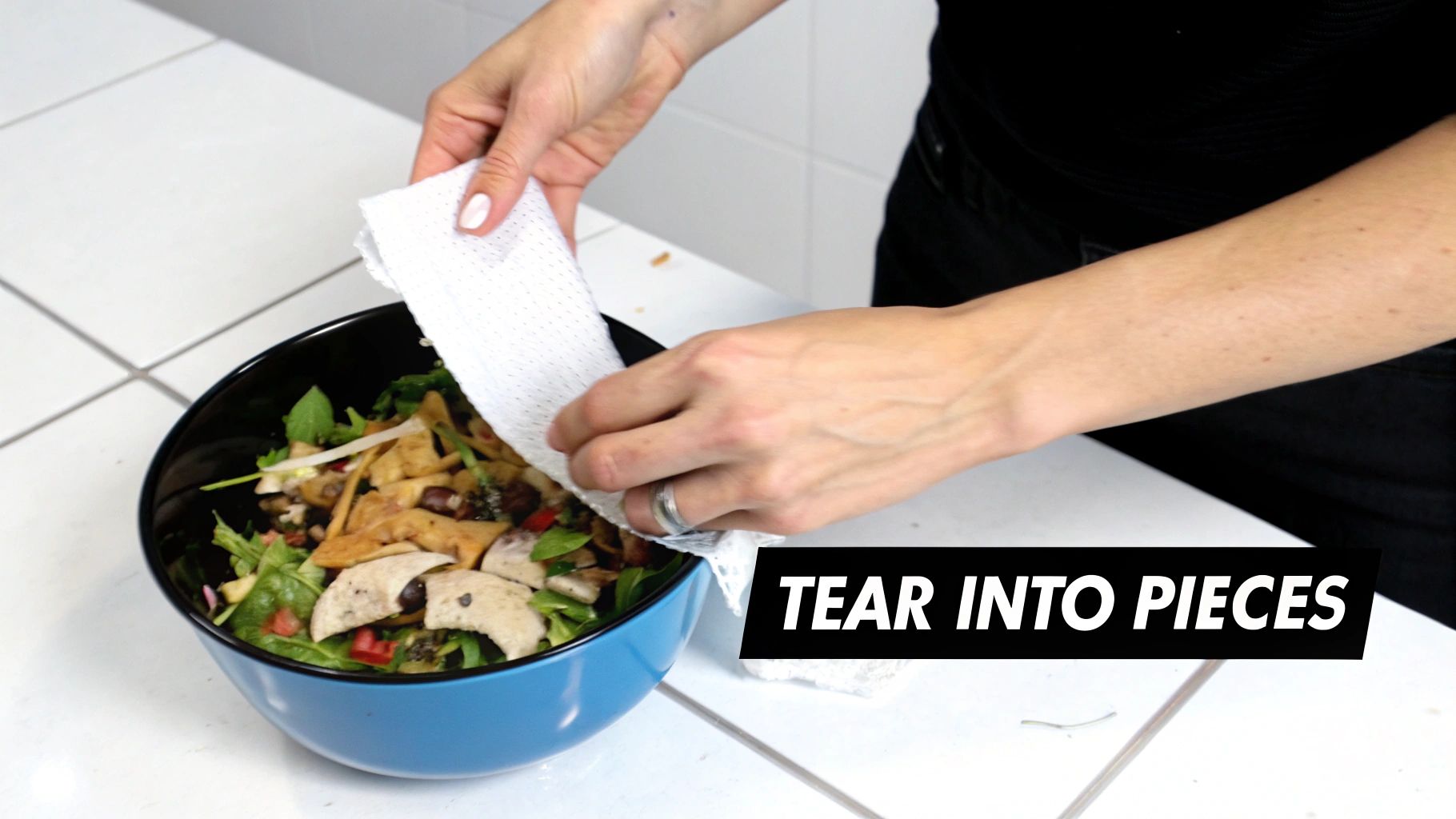
This is the single most important thing you can do. Always tear your paper towels into small strips or pieces before they go into the bin. A whole, flat paper towel will get waterlogged and mat down, forming a dense, impenetrable layer. This layer blocks airflow and moisture, bringing the decomposition process to a screeching halt.
Think of it like lighting a fire. You don’t start with a giant log; you use small bits of kindling. By tearing up the paper towels, you create exponentially more surface area for all those hungry microbes to get to work.
This simple step dramatically speeds things up. More surface area means more real estate for bacteria and fungi to feast on, turning that paper waste into rich, dark compost much faster.
Balance with Green Materials
Paper towels are a fantastic source of carbon, or "browns," but they need nitrogen-rich "greens" to create a balanced diet for your microorganisms. Simply throwing a clump of dry paper towels on top won't work. You need to mix them in.
Make it a habit to add them at the same time you add your kitchen scraps.
- Soak Up Moisture: Got some juicy watermelon rinds or wet coffee grounds? Toss in torn paper towels to absorb that excess liquid. This is your secret weapon against a slimy, smelly pile.
- Layer Like a Lasagna: Mix your torn paper towels in with grass clippings, vegetable peels, and other green materials. A good ratio to aim for is about two to three parts brown material for every one part green.
- Bury Your Scraps: Use a handful of shredded paper towels to cover up any food waste you add. This simple trick keeps pests like fruit flies away and locks odors in.
Ensure Proper Moisture Levels
A healthy compost pile should feel like a wrung-out sponge—moist, but not dripping wet. Piling in a bunch of dry paper towels can throw this delicate moisture balance off.
If you find yourself adding a lot of dry paper towels at once, give them a quick spritz with a spray bottle. You can also mix them in with something damp, like fresh grass clippings or leftover tea leaves. This moisture helps them integrate into the pile and start decomposing immediately, instead of just sitting on top like a dry, useless thatch.
Why Your City's Green Bin Program Says No
So, you've mastered composting paper towels at home, carefully separating the clean from the contaminated. Then you check your city's green bin guidelines and see "NO PAPER TOWELS" in bold letters. Why the contradiction?
It’s a common confusion, but the answer is simple: scale. The difference between your backyard compost and a massive municipal facility is like the difference between your kitchen and an industrial food processing plant.
The Challenge of Scale and Contamination
In your home compost, you are the quality control manager. You know exactly what goes in. A city's composting facility, however, deals with materials from thousands of different households.
They have no way of knowing if your paper towels wiped up a water spill or if your neighbor's were used to clean up bleach, pesticides, or engine oil. Just one bad batch of paper towels can contaminate tons of finished compost, making it useless—or even toxic—for local farms and gardens.
The risk is simply too high. It's impossible for workers to inspect every single paper towel. To protect the quality of the final product, it’s much safer and more efficient for them to issue a blanket ban.
This is a perfect example of the difference between something being technically compostable and something being accepted in a municipal program. You can learn more about these distinctions in our guide to compostable vs biodegradable bags.
Industrial Processing Demands Purity
This contamination risk is the main reason why the practical recovery rate for paper towels is so low. Despite being made from trees, the real-world challenges of composting them at scale are immense. The risk is so high that less than 1% of paper towels are ever recovered or recycled globally. You can discover more insights about paper towel waste on ecodisciple.com.
A municipal facility operates on speed and consistency. They demand clean, predictable inputs to create a safe, marketable product. Paper towels introduce too many variables and potential hazards that can disrupt their entire operation.
Ultimately, your city's rules aren't a criticism of your composting skills. They're a practical safeguard for a system that has to process waste from an entire community. This highlights one of the biggest benefits of home composting: you are in control. You get to ensure your finished compost is pure, safe, and perfect for your garden.
Solving Common Composting Problems
Every composter hits a snag now and then, but don’t let that discourage you. The solutions are almost always simple, and those paper towels you're composting are often the key to fixing problems, not causing them.
Let's walk through the most common composting hurdles and get your pile back to peak performance.
Is Your Compost Pile Smelly?
A smelly compost bin is the most frequent complaint from new composters, and it's an easy fix. That foul odor is your pile screaming that its diet is out of whack, usually the balance between your "greens" and "browns."
If you get a whiff of ammonia or something sour, it’s a clear sign you have too many nitrogen-heavy "greens" (like kitchen scraps) and not enough air. The pile has gone anaerobic, and the good microbes are suffocating.
The Fix: The pile needs more carbon-rich "browns," and it needs them now. This is where paper towels are your best friend. Tear them into smaller pieces and mix them right into the pile. They will immediately soak up excess moisture and create air pockets, kickstarting the right kind of decomposition and eliminating the smell.
Are Pests Visiting Your Bin?
Finding flies, mice, or other critters in your compost is startling, but it's entirely preventable. Pests aren't interested in the compost itself—they’re looking for an easy meal from your exposed food scraps.
- The Problem: Fresh food waste is left sitting on the surface, sending out a dinner invitation to every pest in the neighborhood.
- The Solution: Make it a rule to always bury your food scraps. Just dig a small hole in the center of your pile, drop in the kitchen waste, and then cover it with a thick layer of brown materials. Shredded paper towels, torn-up cardboard, and fall leaves work perfectly.
A properly managed compost pile should be completely uninteresting to pests. By keeping food scraps tucked away, you lock in the smells that attract them. For more great advice on keeping your pile aerated and healthy, learning how to turn a compost pile will give you excellent techniques. A well-turned pile breaks down faster and prevents problems before they start.
Answering Your Top Paper Towel Composting Questions
Even after you get the hang of it, you'll have those moments—standing over the bin, used paper towel in hand, second-guessing yourself. Let's clear up those common questions so you can compost with total confidence.
What About Paper Towels From Public Restrooms?
The answer is simple: never compost them. While the paper towel itself might be fine, you have no idea what it's been used for. Think harsh chemical cleaners, soaps, or other unsanitary messes you absolutely do not want mixing into your beautiful, rich compost.
When it comes to your compost pile's health, it’s always better to be safe than sorry. Stick to composting paper towels from your own home, where you have complete control over what they’ve touched. The contamination risk from public towels is not worth it.
Are "Compostable" Labeled Paper Towels a Good Choice?
Yes, for the most part, paper towels marketed as "compostable" are a great choice. This label usually means they're unbleached and free of the synthetic dyes, fragrances, or chemicals that many conventional brands contain.
But always remember the golden rule of composting: what's on the paper towel is what truly matters. Even a certified compostable towel must go in the trash if you used it to mop up cooking oil, grease, or a chemical spill. The main benefit of these products is knowing the paper itself is clean and won't add any unwanted extras to your pile.
Think of it this way: The paper towel is just one ingredient. The final decision always comes down to what you added to that ingredient.
Do Paper Towels Attract Pests to the Compost Bin?
No, not on their own. Pests like rodents or flies are not drawn to paper; they are drawn to the smell of food scraps. The paper towel is merely an innocent bystander.
So, can you compost paper towels with food on them without inviting every critter in the neighborhood? Absolutely. The trick is simple: always bury food-soiled paper towels deep in the center of your compost pile. Once you toss them in, cover them with a thick layer of "browns" like dried leaves, wood chips, or ripped-up cardboard. This locks away the smells.
A properly managed pile will not have pest problems. Taking that extra second to bury your scraps transforms your pile into a decomposition powerhouse, not a critter buffet.