

How to Turn a Compost Pile for Faster, Richer Results: The Definitive Guide
If you want to transform your compost from a slow, neglected heap into a powerhouse of rich, dark humus, turning it is the single most important action you can take. This isn't just a garden chore; it's the secret to unlocking the full potential of your organic waste, creating nutrient-dense garden gold in a fraction of the time. By simply mixing and aerating the pile, you empower the microbial workforce that breaks down your kitchen scraps and yard trimmings with staggering efficiency.
Why Turning Your Compost Is a Game Changer
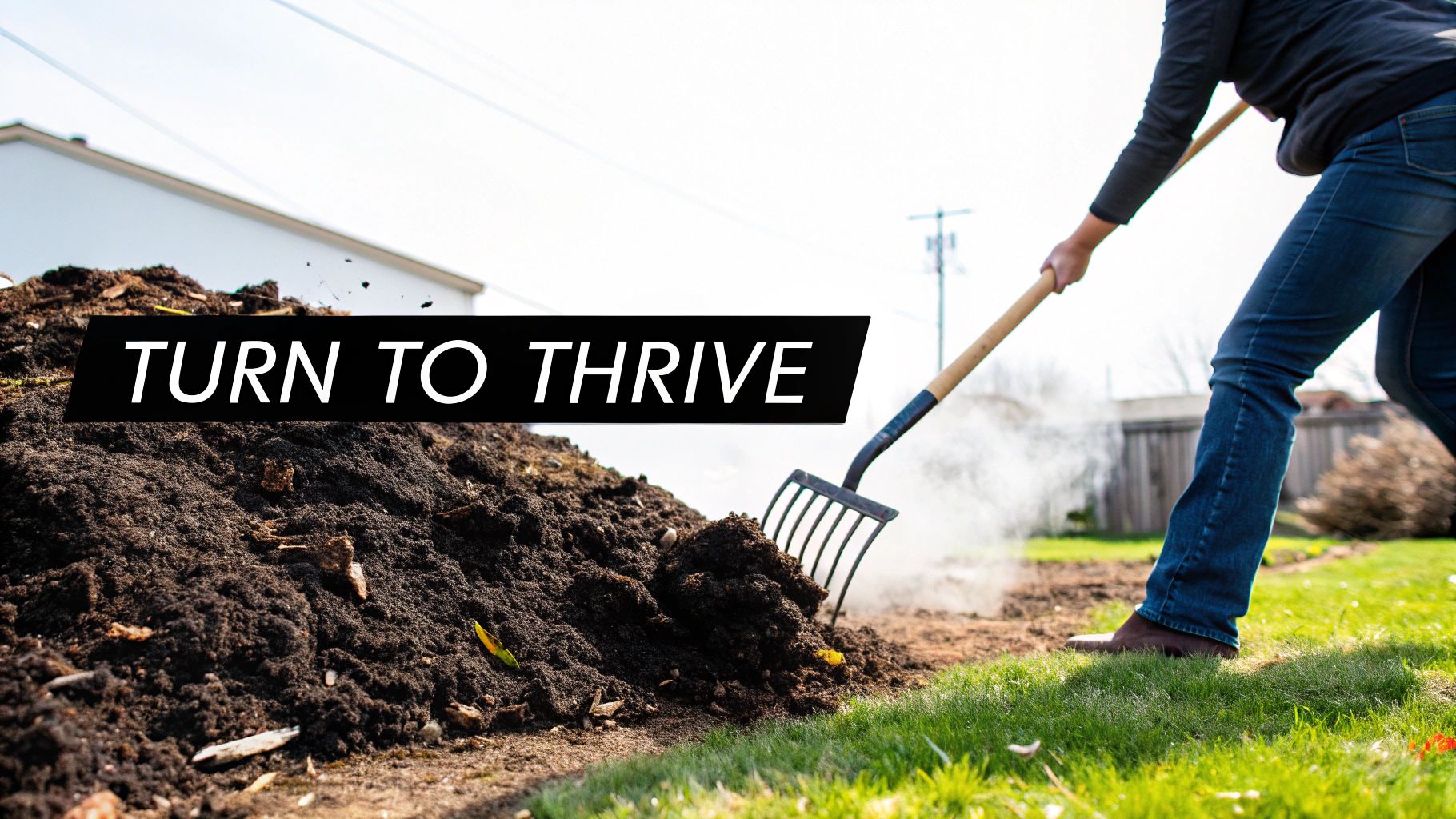
Before you even touch a pitchfork, it's crucial to understand what you're really doing. Composting isn't passive rotting; it's active ecosystem management. The primary reason you must turn your compost pile is to infuse it with life-giving oxygen.
Imagine this: the real workers in your pile are aerobic bacteria, a microscopic army that needs oxygen to breathe, thrive, and decompose organic matter at an incredible rate. When you provide them with abundant air, they work ferociously, generating the intense heat that powers the entire process. Without turning, the pile compacts, suffocates, and becomes anaerobic (oxygen-starved). This is the fast track to a slow, slimy, and foul-smelling failure.
The Science of a Thriving Pile
A properly turned compost pile is a living, breathing engine of transformation. Here’s what you are actually accomplishing with every turn:
- You Command the Temperature: An active pile generates impressive heat, with its core reaching 130–160°F—the perfect temperature to obliterate weed seeds and harmful pathogens. Turning moves the cooler outer material into this fiery center, ensuring every single particle is sanitized and processed evenly.
- You Master the Moisture: Inconsistent moisture—dry pockets and soggy clumps—will sabotage your efforts. By mixing the pile, you create a uniformly damp environment, like a perfectly wrung-out sponge. This is the ideal hydration level for your microbial allies to flourish.
- You Annihilate Odors: A whiff of ammonia or rotten eggs is a cry for help; your pile is suffocating. Turning is the immediate antidote, flooding the system with fresh air and instantly halting the anaerobic processes that cause foul smells.
When you internalize these principles, turning the pile ceases to be a chore. It becomes a strategic act of cultivation. You aren't just flipping waste; you are fueling the very organisms that create black gold for your garden.
It’s powerful to realize how these small-scale efforts contribute to a larger movement. The global market for compost and topsoil is projected to hit USD 5,645.8 million in 2025, driven by a collective desire for sustainable soil enrichment.
While we focus on backyard composting, these principles scale massively. Commercial operations use advanced forestry mulching techniques to manage huge volumes of green waste. If you're ready to master this process at home, our complete guide on https://myterravera.com/blogs/news/how-to-compost-at-home is your perfect starting point.
Forget the calendar. The true secret to knowing when to turn your compost isn’t about marking a date; it’s about learning to read the pile’s signals. Turn it too often, and you'll bleed heat and stall progress. Wait too long, and you'll starve the very microorganisms you're trying to cultivate.
The key is paying attention to temperature, moisture, and scent. Mastering these cues transforms composting from a passive activity into a responsive, powerful, and far more effective practice.
Use Temperature as Your Infallible Guide
If you invest in one tool for your composting, make it a long-stemmed compost thermometer. It is the only way to truly know what's happening in the heart of your pile. A healthy, active pile gets incredibly hot as legions of microorganisms break down organic matter. That heat isn't just a byproduct; it's the engine of transformation.
Your target is the "sweet spot" between 130°F and 160°F. In this range, beneficial bacteria are at peak performance, and the heat is intense enough to destroy weed seeds and pathogens.
When you see the core temperature reach this peak and then begin to fall over several days, that is your undeniable signal to act. The cooling trend means the microbes in the center have exhausted their oxygen supply. Turning the pile is like hitting a reset button—it fluffs everything up, injects fresh air, and moves new material into the hot center to reignite the process.
The Squeeze Test: Your Hands-On Moisture Meter
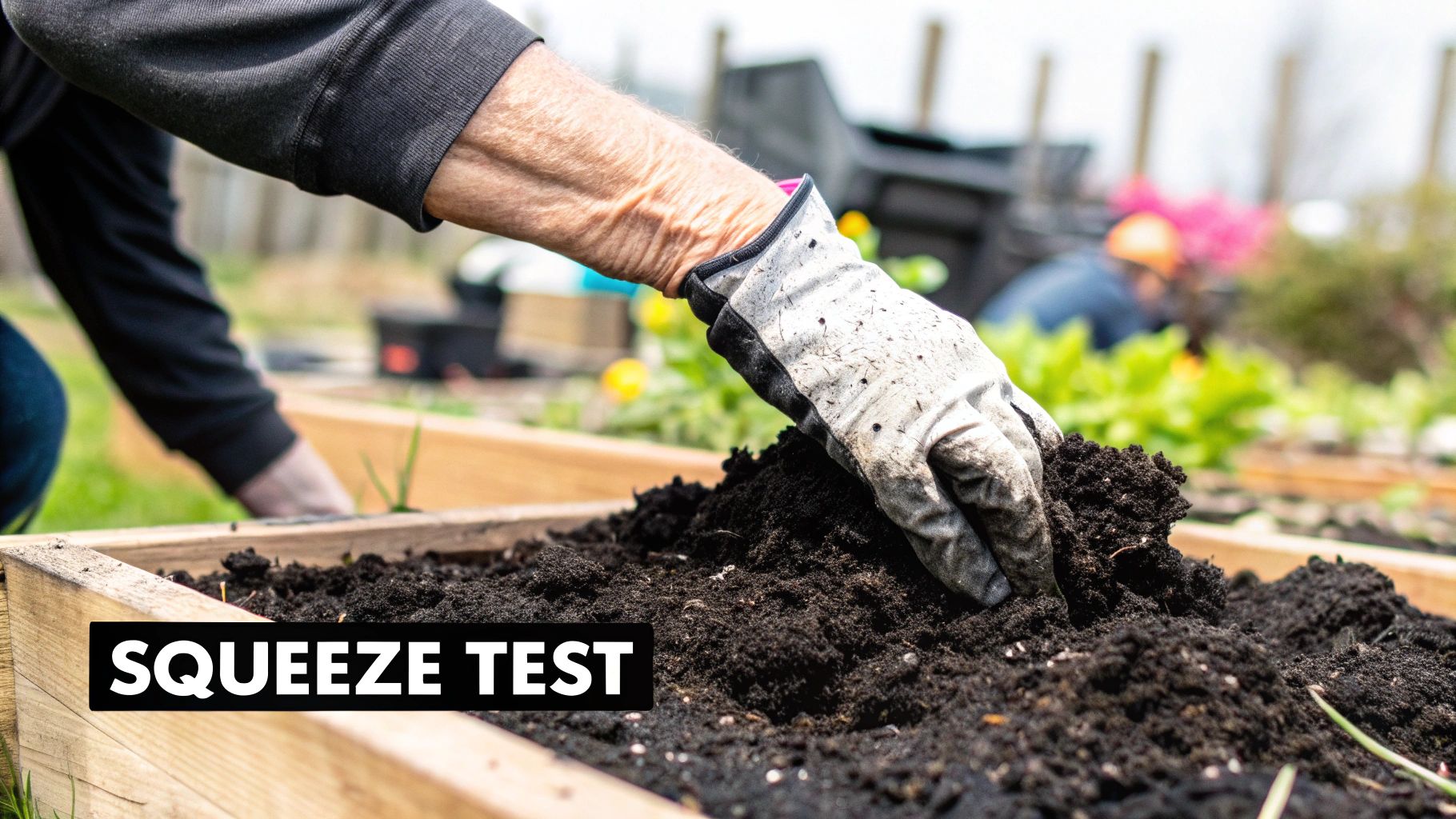
It's time to get your hands dirty. Moisture is just as critical as heat, and the most reliable way to check it is the classic "squeeze test." It's foolproof. Reach a few inches into the pile, grab a handful of material, and give it a firm squeeze.
You are aiming for the perfect dampness of a wrung-out sponge.
- Too Dry: If it's crumbly and falls apart with no moisture, your pile is parched. Decomposition grinds to a halt without adequate water.
- Too Wet: If water gushes out, it’s waterlogged. This is a critical failure, as it drowns the essential aerobic bacteria, leading to a slimy, anaerobic mess.
- Just Right: If only a few drops of water bead up between your knuckles, you've achieved perfection. The moisture level is ideal.
If the pile is too dry, simply spray it with a hose as you turn it. If it's too wet, the solution is just as straightforward: mix in more "browns"—dry leaves, shredded newspaper, or cardboard—as you turn. They will absorb the excess moisture instantly.
Checking moisture this way means you are no longer guessing; you are actively engineering the perfect environment for decomposition. This simple, hands-on step will dramatically accelerate your results.
Trust Your Senses: Look and Smell for Clues
Finally, use your most primal tools: your eyes and nose. A thriving compost pile should have a pleasant, earthy aroma, reminiscent of a forest floor after it rains.
If you smell ammonia, it's a clear signal that you have too much nitrogen-rich "green" material and not enough air. Turning the pile is the immediate remedy, allowing it to breathe and restoring the crucial carbon-nitrogen balance.
Visually, look for compaction. If the pile appears dense and matted, or if it has stopped shrinking, you can be certain the core has become an airless dead zone. This is another unmistakable sign that it's time to grab your pitchfork. Once you master these cues, knowing when to turn becomes second nature.
Here’s a powerful reference table to guide your decisions.
When to Turn Your Compost Pile
Use this guide as a checklist for your compost's health. It tells you exactly when your intervention is needed.
| Indicator | What to Look For | Action to Take |
|---|---|---|
| Temperature | The core temperature drops below 130°F after reaching its peak. | Turn the pile to mix outer layers into the center and re-introduce oxygen. |
| Moisture | The material feels dry and crumbly or is soggy and waterlogged. | If dry, add water while turning. If wet, add "browns" like leaves or cardboard. |
| Smell | You notice a strong ammonia or sour, rotten-egg smell. | Turn immediately to aerate the pile. Consider adding more carbon-rich "browns". |
| Appearance | The pile looks dense, matted, and compacted. | Turn to fluff up the material, break up clumps, and improve airflow. |
By responding to these signs, you work with your compost pile's natural cycle, guaranteeing a faster, more successful outcome every single time.
A Practical Guide to Turning Your Compost Pile
You now understand the why and when. It's time for the how—the physical act of transforming your pile. This is where you directly intervene to accelerate nature's process. The objective is simple: thoroughly mix everything to redistribute air, heat, and moisture. It’s a rewarding workout, and the results are well worth the effort.
Don't just flip material haphazardly. The most effective technique is to systematically move the cooler, drier outer layers into the hot, active center. Simultaneously, you'll bring the fully cooked core material to the outside. This ensures every last scrap of organic matter gets its turn in the decomposition hot seat.
Choosing the Right Tools for the Job
You don't need an arsenal of expensive equipment, but the right tool will make this job immensely easier and more effective. Your choice depends on your pile's size and your physical comfort.
- Pitchfork or Garden Fork: This is the undisputed champion of compost turning. Its long tines are perfectly designed to penetrate a dense pile, lifting and fluffing the material to create vital air channels. A sturdy fork is the single best investment you can make.
- Compost Aerator: These tools resemble a giant corkscrew. You plunge them into the pile to create air passages without a full turn. While they don't mix as thoroughly as a fork, they are excellent for a quick aeration boost, especially for those with back issues.
- Shovel or Spade: A shovel is useful for scooping the finished compost from the bottom but is inferior for breaking up compacted layers. It's best used in conjunction with a fork.
It's inspiring to see how many people are embracing this practice. The global market for household composters was valued at USD 483.5 million in 2024 and is projected to soar to USD 881.4 million by 2034. That represents a massive movement of people turning waste into wealth. You can learn more about the rise of household composters and join the revolution.
This infographic serves as your visual checklist for what to assess before you turn.
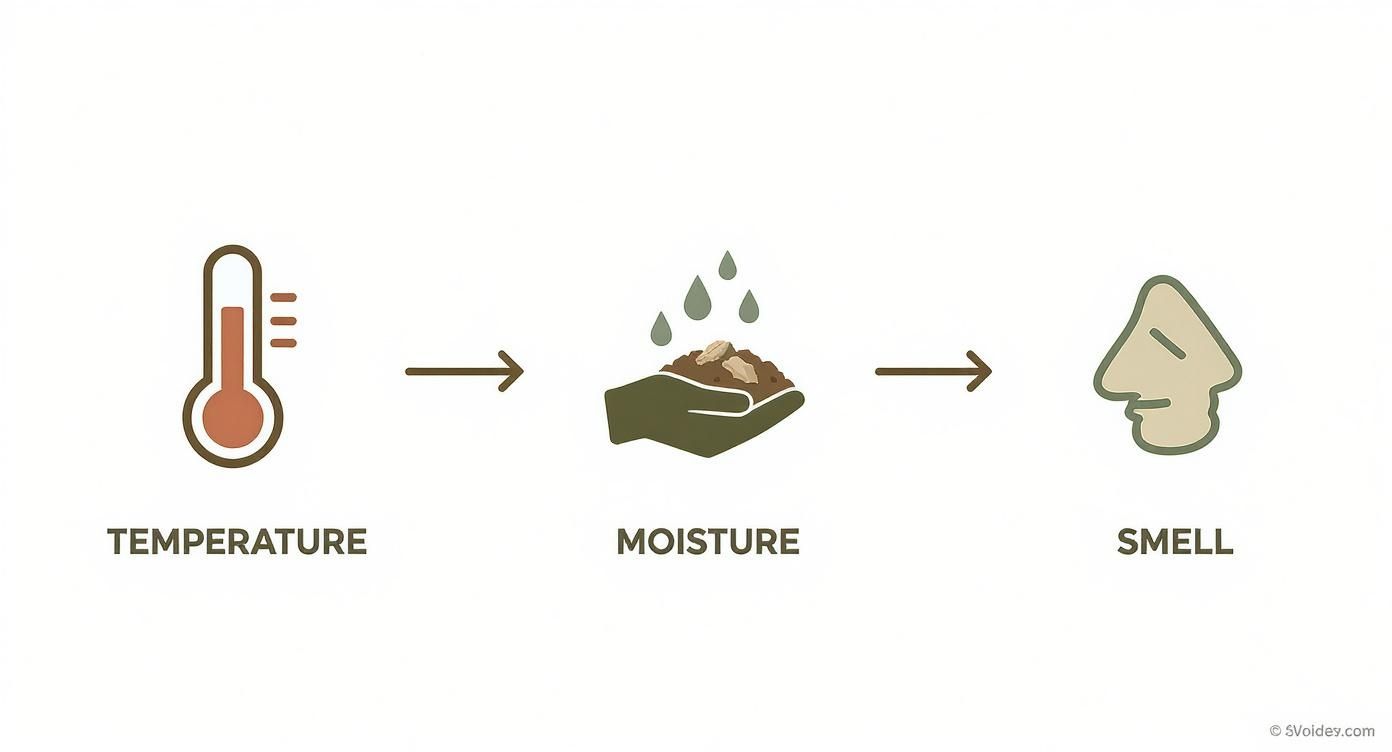
It’s a powerful reminder to trust your senses. Temperature, moisture, and smell are the language of your compost pile; learn to listen.
Turning Techniques for Different Setups
Your turning method will vary with your compost setup, but the core principle—outside in, inside out—remains constant.
For an Open Pile
This is the most direct method. You are essentially rebuilding the pile right next to the original. Begin by scraping the outer layers from the old pile to form the base of the new one. Then, work your way inward, methodically moving the hot core material to the top and sides of the new heap. This simple process completely inverts the pile.
For a Three-Bin System
These systems are engineered for efficient turning. You simply fork the contents from the first bin (fresh material) into the empty middle bin. Then, the partially decomposed material from the second bin gets moved into the third and final bin. It's a clean, continuous flow designed for optimal decomposition.
For a Compost Tumbler
Tumblers make turning effortless. The key is to rotate it sufficiently—most models require five to ten complete revolutions every few days. The most common mistake is overfilling. A packed tumbler prevents material from tumbling and mixing, rendering it ineffective.
Regardless of your system, you must break up any large, matted clumps. These are anaerobic dead zones that will grind your progress to a halt. Use your fork to vigorously fluff the material as you move it.
Finally, work smart. Protect your back by bending at your knees and lifting with your legs. Don't be a hero; lift manageable amounts. Stay hydrated and appreciate the process. Creating exceptional compost should empower you, not injure you.
Troubleshooting Common Composting Problems
Let's be direct: no compost pile is perfect from the start. Every gardener encounters issues—funky smells, a pile that refuses to heat up, or unwelcome pests.
The good news is that these aren't failures; they are signals. Your pile is telling you exactly what it needs. With a few decisive adjustments, you can turn these problems into triumphs and get your compost back on the fast track.
Identifying And Fixing Odors
If your compost pile smells, it demands an immediate fix. A strong ammonia odor is the classic sign of excess nitrogen (greens) and insufficient air. The solution is simple: as you turn the pile, aggressively mix in carbon-rich "browns" like shredded leaves, cardboard, or sawdust to restore the balance.
A rotten egg smell indicates severe anaerobic conditions—pockets in your pile are suffocating. Wield your pitchfork to break apart dense, matted clumps and introduce coarse, dry materials to open up air channels.
A single, thorough turn combined with the right brown materials can eliminate bad odors in less than 24 hours.
Dealing With A Cold Core
Is your compost pile stubbornly cold? If the core never rises above 90°F, your microbial workforce is dormant. This failure almost always comes down to three things: it’s too dry, too small, or it lacks fuel.
First, diagnose the moisture. Grab a handful and squeeze. It must feel like a damp sponge. If it's dry, drench it with a hose as you turn.
If moisture is adequate, your pile needs more "greens" to ignite the microbial furnace. A fresh infusion of grass clippings or kitchen scraps provides a powerful nitrogen boost.
- Check the size: A pile smaller than one cubic yard (3x3x3 feet) simply lacks the mass to build and retain heat.
- Insulate it: In cool weather, wrap the sides with straw bales or a tarp to trap precious warmth.
- Turn consistently: Once it heats up, turning it every 5–7 days is non-negotiable to maintain momentum.
Slimy Moisture Control
If your pile resembles a slimy, soggy mess, you have too much water and not enough air. These swampy conditions suffocate the beneficial microbes and bring decomposition to a dead stop.
The fix is decisive: add dry material. As you turn, incorporate generous amounts of dry leaves, straw, or shredded newspaper. These act like a sponge, absorbing excess moisture while creating the air pockets your pile desperately needs.
| Problem | Quick Fix |
|---|---|
| Soggy pile | Mix in plenty of dry "browns" during the next turn. |
| Slimy clumps | Break them apart with a pitchfork to aerate thoroughly. |
Keeping Unwanted Visitors Away
A well-managed compost pile is a hostile environment for pests like rodents. By turning your pile regularly, you are constantly destroying potential nests and maintaining a hot core that most critters will actively avoid.
On the other hand, you want certain visitors. Earthworms and springtails are your allies. Their presence is a definitive sign of a healthy, balanced ecosystem, and they will help accelerate the process.
Consistent turning is your most powerful defense against both foul odors and furry invaders.
Mastering these techniques connects your garden to a much bigger picture. As a practice, composting is a powerful agent of change. Integrating it into urban farming could collectively divert over 18 million tons of organic waste from landfills annually in the next two years. It can also reduce the need for synthetic fertilizers by up to 70% and cut landfill-bound food waste by 40%. You can discover more insights about composting and urban farming on Farmonaut.
To streamline your process, our guide on compostable bags for compost bins helps manage moisture from the very start.
Ultimately, troubleshooting is about observation and decisive action. By listening to your pile and making these adjustments, you will keep it active, odor-free, and on the express lane to becoming rich, beautiful soil.
How to Adjust Your Composting for Each Season
Composting is a year-round commitment, but your strategy must adapt to the changing seasons. The methods that work in the blistering heat of July will fail you in the frozen grip of January.
Mastering these seasonal adjustments is the mark of a true composter, ensuring you have a continuous supply of black gold for your garden whenever you need it.
Summer Heat and Hydration
Summer is your compost pile's peak performance season, but the intense heat is a double-edged sword. The furious microbial activity can rapidly dehydrate your pile, and a dry pile is a dead pile.
During hot, rainless periods, you must actively water your compost, especially during turning. The goal is always that "wrung-out sponge" consistency. With decomposition at its fastest, you'll need to turn it more frequently—every 7-10 days—to maintain oxygen flow and prevent anaerobic conditions.
Fall's Carbon Bounty
Autumn is a gift to the composter. The deluge of falling leaves provides a massive, free source of the carbon-rich "browns" that will sustain your pile through winter.
This is the time to stockpile. The trick is to avoid dumping them all at once. Instead, layer them with "greens" like kitchen scraps. Turning these layers together is absolutely critical; it prevents the leaves from forming a soggy, impenetrable mat that will suffocate the pile. Many gardeners use compostable lawn and leaf bags to collect and manage this windfall.
Think of fall leaves as winter fuel. By mixing them in continuously, you maintain the vital carbon-to-nitrogen balance, rather than creating one giant, smothering layer.
Winter's Slowdown and Insulation
As temperatures plummet, microbial activity in your compost pile will slow dramatically. Your primary goal in winter is not to create new compost, but to protect the life within it. Heat conservation is paramount.
This means you must stop turning the pile. Each turn releases a blast of precious warmth that the microbes need for survival. A larger pile—at least 3x3x3 feet—is your greatest asset, as its mass will retain heat far more effectively. Insulate it further by piling straw, bags of leaves, or a heavy tarp around the sides as a protective winter coat.
Spring Awakening
As the ground thaws, it's time to resurrect your compost pile. The single most powerful action you can take is a deep, thorough turn.
This first turn of the season is a catalyst. It injects a massive dose of oxygen into the dormant pile, breaks up compacted clumps, and remixes all the ingredients. To truly jump-start the process, add a fresh infusion of "greens" like the year's first grass clippings. This new food source, combined with the oxygen from turning, will reignite the decomposition engine and prepare your compost for the demanding growing season ahead.
Common Questions About Turning Compost
Once you master the fundamentals, a few key questions inevitably arise. Let's tackle the most common ones so you can manage your compost with complete confidence.
How Often Is Too Often to Turn Compost?
This is a critical question, as over-enthusiasm can be destructive. Turning your pile too often—like every day—is counterproductive. It prevents the pile from ever reaching the crucial temperatures of 130-160°F needed to kill pathogens and weed seeds. Every time you turn, you release heat, effectively cooling it down just as it's getting started.
Forget a rigid schedule. Let the pile itself dictate the timing. The definitive rule for an active pile is to turn it when the core temperature peaks and then begins to decline. This typically occurs every 5 to 10 days. This approach ensures you work with the natural heating and cooling cycle, not against it.
Do I Really Need Special Tools?
While a quality pitchfork is the ideal tool, you absolutely do not need one to start. A shovel or spade can get the job done, though it requires more effort to break up clumps and aerate effectively. For smaller bins, a hand trowel or even a sturdy stick can be used to poke holes and stir the contents.
The tool is secondary to the action. Your primary goal is to force oxygen into the pile and move the outer material to the hot center. Use whatever tool you have that accomplishes this mission.
What if I Can't Turn My Pile for a While?
Life happens. A busy week or a vacation won't ruin your compost. An untended pile simply shifts from a fast, hot composting process to a slow, cool one. It will still decompose, just over a much longer period.
When you return to it, your first priority is a thorough turn. It will likely be dry, so be prepared to add water as you go. This single, aggressive turn will re-energize the entire system by reintroducing vital oxygen and moisture, awakening the microbes and kicking the process back into high gear. Composting is a forgiving process; just pick up where you left off.
Making fantastic compost is a partnership with nature, and having the right system for collecting scraps makes the process clean and efficient. At terravera, we are dedicated to making the steps toward a healthier planet and garden feel effortless. Our compostable bags are designed to simplify your routine from the very beginning.
Start your journey to superior soil today by exploring our products at https://www.myterravera.com.