

Make Your Yard Work Matter: The Definitive Guide to Compostable Lawn and Leaf Bags
Let's be honest. Raking leaves and bagging grass clippings is a chore. For decades, the go-to solution has been stuffing everything into flimsy black plastic bags destined for a landfill. But what if your yard cleanup could do more than just tidy up your lawn? What if it could actively help heal the planet? It's not a fantasy—it's the reality of using compostable lawn and leaf bags.
These aren't just better bags; they represent a fundamentally smarter approach to yard waste. They are engineered to break down completely alongside your leaves and grass, transforming the entire package into nutrient-rich soil. Instead of creating more plastic pollution, the bag itself becomes a vital ingredient in nature's recycling program. It's time to stop treating yard waste like trash and start treating it like the valuable resource it is.
What Are Compostable Lawn and Leaf Bags Anyway?
Think of a compostable bag less like a plastic bottle and more like an apple core. The core is part of the apple, and when you're done, it returns to the earth to nourish new growth. It's the exact same principle. These bags are designed not just to hold your yard trimmings, but to decompose right alongside them in a compost environment. They are a crucial component of the solution, not just a disposable container.
A Radically Smarter Choice For Your Yard Waste
So, what's the secret? These bags are crafted from renewable, plant-based materials like cornstarch. This is the key that unlocks their ability to decompose completely in the right environment—a hot, active compost pile or a municipal composting facility. This infographic doesn't just show a difference; it shows a choice between a dead end and a new beginning.
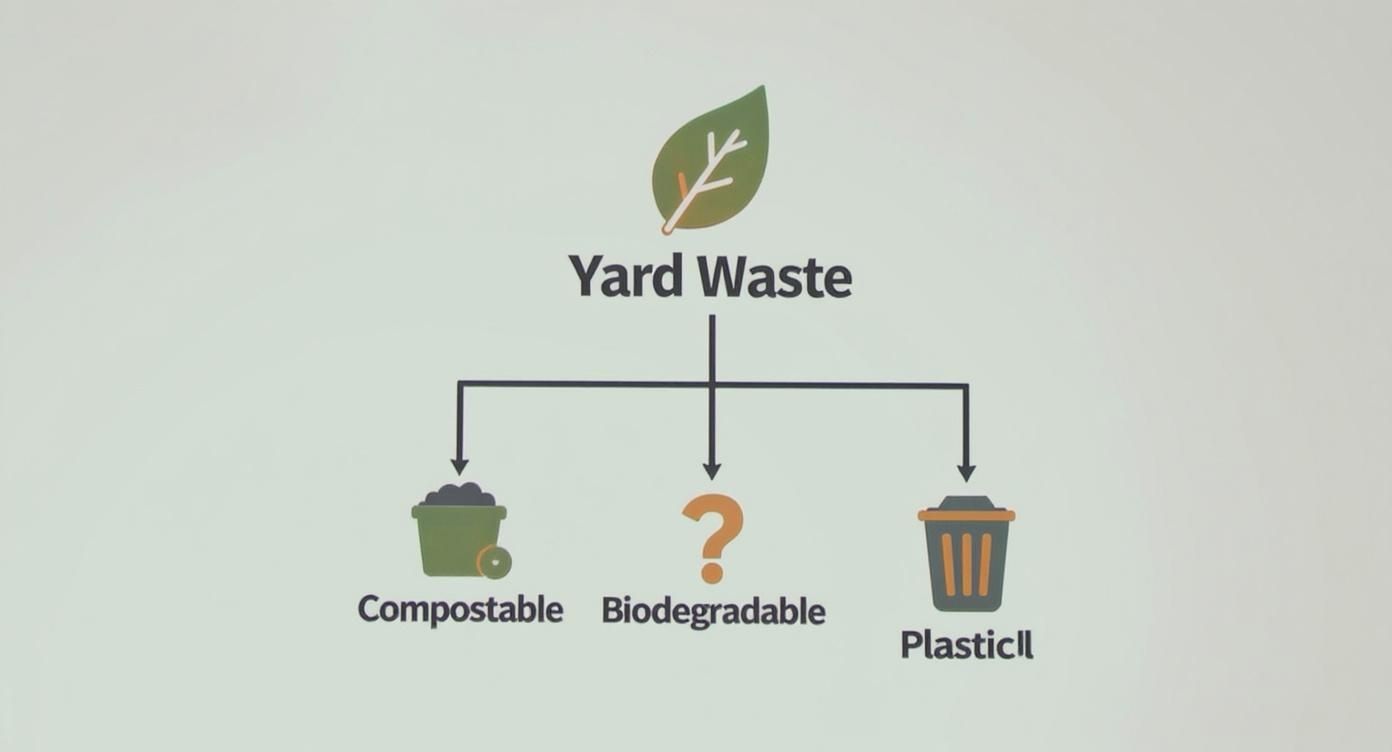
As you can see, compostable bags complete a natural, circular journey back to the earth. Plastic bags create a linear path straight to the landfill, and "biodegradable" bags? Their promise often dissolves into a haze of microplastic pollution.
Compostable vs. Biodegradable: The Difference That Changes Everything
This is where greenwashing can lead you astray. The terms "compostable" and "biodegradable" sound similar, but their real-world impact couldn't be more different. Understanding this distinction is the single most important step you can take.
Biodegradable is a dangerously vague marketing term. It simply means something will eventually break down into smaller pieces. It offers no guarantee on timeframe (it could take centuries!) or what it leaves behind. Many so-called biodegradable plastics are a Trojan horse, fragmenting into toxic microplastics that poison our soil and water.
Compostable, by contrast, is a scientific standard. It is a guarantee that the material will break down into natural elements in a composting environment within a specific timeframe—typically 90 to 180 days—leaving absolutely nothing toxic behind. It doesn't just disappear; it becomes humus, a valuable soil conditioner that is the very foundation of healthy plant life.
To truly grasp the stakes, look at how these bags stack up side-by-side.
Compostable vs Biodegradable vs Plastic Bags
| Attribute | Compostable Bags | Biodegradable Bags | Traditional Plastic Bags |
|---|---|---|---|
| Material | Plant-based polymers (cornstarch, PLA) | Often petroleum-based plastic with additives | Petroleum-based (polyethylene) |
| Decomposition | Breaks down into organic matter, water, CO2 | Fragments into smaller plastic pieces (microplastics) | Does not decompose; breaks into microplastics over centuries |
| Timeframe | 90-180 days in a compost environment | Vague; can take many years | 500+ years |
| End Product | Nutrient-rich humus (soil) | Microplastics, potentially toxic residue | Plastic pollution |
| Disposal | Home compost or municipal composting facility | Landfill (does not break down without oxygen) | Landfill or recycling (if clean and accepted) |
This table makes the choice crystal clear. A compostable bag is designed with a specific, regenerative purpose. The others are simply a one-way ticket to pollution.
By choosing certified compostable bags, you are making a conscious decision to participate in a restorative natural cycle. It's a small change in your routine that creates a powerful ripple effect for your garden, your community, and the planet. To see how this movement is reshaping industries, explore the latest trends in the compostable packaging market.
The Simple Science of How These Bags Disappear
How can a bag strong enough to haul 30 gallons of wet leaves simply vanish back into the earth? It's not magic; it's brilliant science that collaborates with nature instead of fighting it. Imagine these bags as a temporary vehicle for your yard waste, one that's designed to become part of the composting journey rather than ending up as permanent trash.
The secret lies in its very DNA. The best compostable lawn and leaf bags are made from a bioplastic called Polylactic Acid (PLA). Unlike traditional plastics derived from finite fossil fuels, PLA is born from renewable plant starches, like corn. This organic foundation is precisely what allows them to be reclaimed by nature. For a deeper dive, check out our guide on what compostable bags are made of.
A Feast For Microbes
Think of the bacteria and fungi in a compost pile as a microscopic army of recyclers. They are constantly searching for their next meal, but they have a very specific diet. A traditional plastic bag is like a chunk of concrete to them—completely inedible. They lack the biological tools (enzymes) to break it down.
A PLA bag, however, is a gourmet meal on their menu. These microbes possess the exact enzymes needed to unlock and consume its plant-based structure. It's a perfect biological handshake. They don't see the bag as trash; they see it as food. This natural synergy is why PLA is a market powerhouse, accounting for over 70% of compostable refuse bags, according to analysis from Future Market Insights.
Once this microbial army mobilizes, the real transformation begins.
The Breakdown Process, Step by Step
A compostable bag doesn't just vanish. It undergoes a predictable, natural metamorphosis once it enters the right environment—a hot, thriving compost pile.
- Heat and Moisture Arrive: The warmth and dampness of a compost pile act as a dinner bell, signaling the microbes that it's time to get to work. This is the trigger that activates the bag’s compostable nature.
- Microbes Start Feasting: Legions of bacteria and fungi swarm the bag, using their specialized enzymes to break the PLA polymers into smaller, digestible pieces.
- Transformation into Organic Matter: As the microbes consume the bag, they convert it into the fundamental building blocks of life.
The end result is not pollution. The bag is entirely transformed into water, carbon dioxide, and humus—that dark, invaluable organic material that revitalizes soil and fuels new plant growth.
This elegant cycle proves that a compostable bag isn't simply discarded; it's repurposed by nature. It closes the loop, turning your yard waste—and the bag it came in—back into a precious resource for the earth.
The Real-World Benefits You Can't Ignore
Switching to compostable bags isn't just a symbolic gesture. It's a practical, powerful choice with tangible benefits that make your life easier and your community healthier. This is about real impact you can see, from your curb to the local environment.
The first win is sheer convenience. Say goodbye to the clumsy ritual of dragging heavy plastic bags to the curb, only to have to rip them open and dump the contents into a green bin. With compostable lawn and leaf bags, the bag is an integral part of the package. You fill it, set it out, and you are done. It's a seamless, all-in-one system that streamlines your entire cleanup process.
A Cleaner Process for Everyone
This convenience extends far beyond your driveway. Consider what happens at the composting facility. Plastic contamination is the number one enemy of municipal composting programs. When yard waste arrives in plastic bags, workers must manually tear them open and attempt to separate the organic matter from the plastic. It's a dirty, expensive, and inefficient process. Inevitably, fragments of plastic contaminate the final compost.
When you use a compostable bag, you are sending a pre-packaged, ready-to-process gift to your local facility. This single action helps your town create far higher-quality compost, free from the plastic pollution that harms local soil and waterways.
Starve the Landfills, Stop the Methane
This is where your choice has global implications. When leaves and grass are sealed in plastic bags and sent to a landfill, they are buried and deprived of oxygen. In this airless tomb, they decompose anaerobically, releasing methane—a greenhouse gas over 25 times more potent than carbon dioxide at trapping heat in our atmosphere.
By diverting your yard waste to a composting facility, you are doing more than saving landfill space. You are actively preventing the emission of a destructive greenhouse gas. Composting is an aerobic (oxygen-rich) process; it breaks down organic material without producing methane.
Your yard clippings become a solution to climate change, not a contributor. It's a powerful shift that directly builds a healthier planet.
Turning Waste Into "Black Gold"
Ultimately, the most inspiring part of this story is the final product. Your leaves, grass clippings, and the very bag they traveled in are reborn as humus—a dark, crumbly, nutrient-dense material that gardeners rightfully call "black gold." This finished compost is the single best amendment you can give your soil.
Here's the magic it works in your garden:
- Enriches the Soil: It delivers a slow-release feast of essential nutrients, helping plants flourish.
- Improves Water Retention: Spongy compost acts like a reservoir, helping soil retain moisture and making your garden more drought-resistant.
- Reduces Chemical Use: Healthy, living soil means you can finally break free from a reliance on chemical fertilizers.
By using compostable bags, you become a key player in this incredible regenerative cycle. You are helping transform your yard's "waste" into a resource that will build a more vibrant, beautiful, and resilient garden for years to come.
How to Choose the Right Compostable Bags
Navigating the store aisle can be confusing. With so many brands, sizes, and claims, selecting the right compostable lawn and leaf bags feels daunting. But armed with the right knowledge, you can choose with absolute confidence and avoid the pitfalls of a weak bag or a "greenwashed" product that gets rejected by your compost facility.
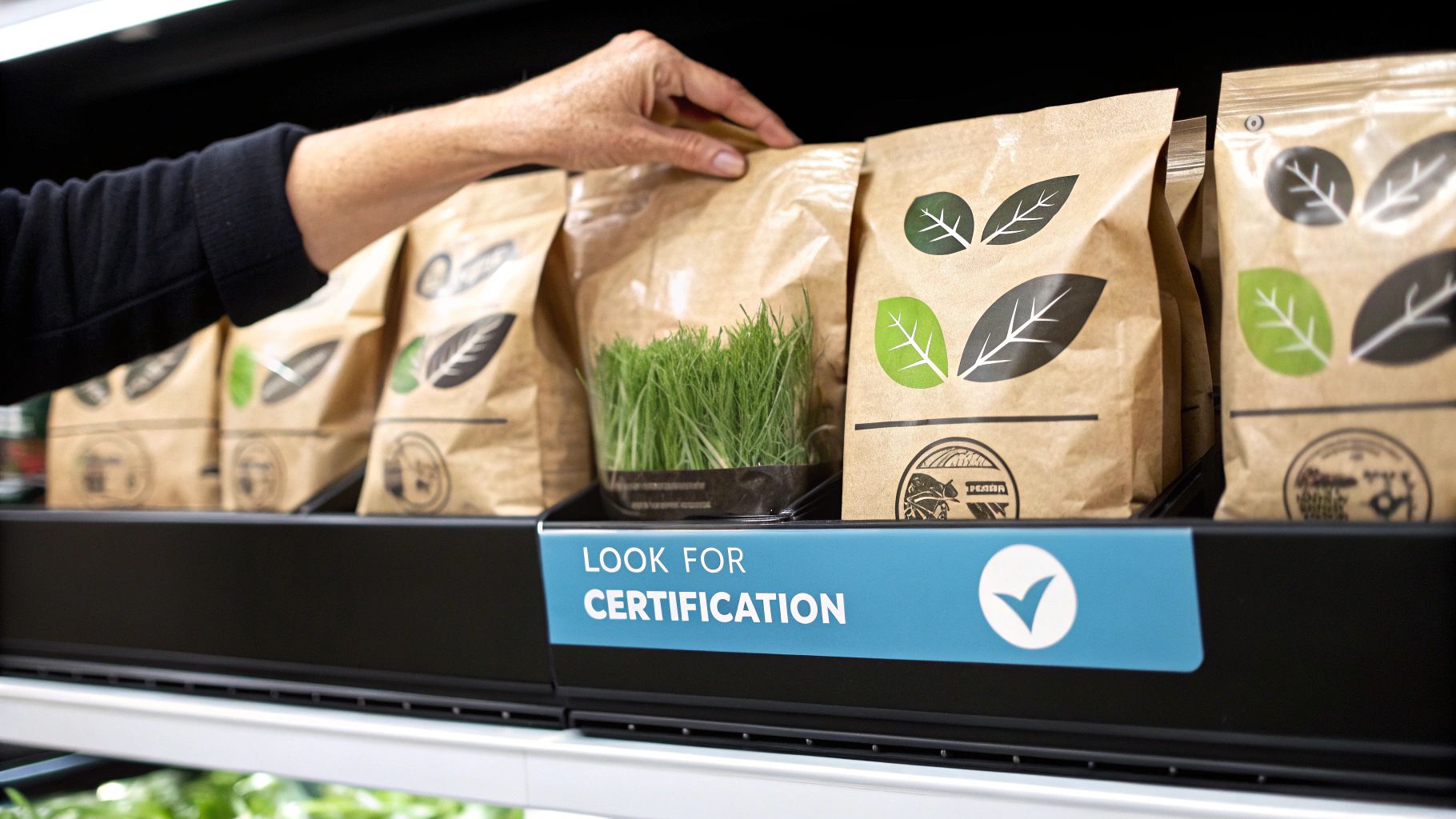
The single most critical factor is official certification. This is not just a logo; it is your non-negotiable guarantee that the bag will perform as promised. Without it, you are likely buying a product that will contaminate the compost stream, undermining the very reason you made the switch.
Decode the Certifications
Think of these certifications as a rigorous, scientific exam for compostability. A bag either meets the strict standards or it fails. There is no middle ground.
-
BPI Certified: The Biodegradable Products Institute (BPI) is the gold standard for certification in North America. The BPI logo is your proof that the bag has passed intensive lab testing and will break down safely in a commercial composting facility, typically within 180 days.
-
CMA Approved: The Compost Manufacturing Alliance (CMA) provides the ultimate real-world test. They take certified products and test them in a variety of active composting facilities across the country to ensure they break down effectively under different operational conditions.
The undisputed champion? A bag that carries both BPI and CMA certifications. This dual endorsement confirms that the product works flawlessly in the lab and in the real world, ensuring it will be welcomed by municipal programs and will decompose as intended. This is a crucial distinction you can learn more about by reading our comparison of compostable vs biodegradable bags.
Size, Strength, and Thickness
Once you've verified the certifications, it's time to match the bag to your specific needs.
Bag Size: The most prevalent sizes are 30-gallon and 39-gallon. A 30-gallon bag is perfect for smaller cleanups or for those who prefer lighter, more manageable loads. The 39-gallon option provides the capacity you need for major fall leaf-raking, but remember: a bigger bag means a much heavier load.
Thickness (Mils): A bag's resilience is measured in mils—a higher number signifies a thicker, more durable bag. For light grass clippings, a lower mil may suffice. But if you're battling poky twigs, water-logged leaves, or other heavy debris, insist on a thickness of 0.8 mil or higher to prevent catastrophic rips and tears.
Use this checklist to make your next purchase foolproof.
Feature Checklist for Buying Compostable Bags
| Feature to Check | Why It Matters | What to Look For |
|---|---|---|
| Certifications | This is your absolute guarantee the bag is legitimate and effective. | BPI and CMA logos printed clearly on the packaging and the bag itself. |
| Size/Capacity | Match the bag to the scale of your yard and the specific task. | 30-gallon for routine jobs; 39-gallon for major cleanups. |
| Thickness/Mils | Determines the bag's toughness and resistance to punctures. | 0.8 mil or higher for twigs, wet leaves, and heavy loads. |
| Star Seal Bottom | This superior design distributes weight evenly to prevent leaks. | A bottom seam that gathers in the center, not a weak flat seal. |
| Clear Labeling | Ensures waste collectors can easily identify the bag as "compostable." | The word "COMPOSTABLE" printed in bold, unmistakable letters. |
Choosing the right compostable lawn and leaf bag is simple when you know what to look for. By prioritizing certification and matching the bag's strength to your yard waste, you can confidently select a product that makes your sustainable efforts both effective and effortless.
Getting the Most Out of Your Compostable Bags
You've done the research and selected the perfect certified compostable bags. Now it's time to put them to work. Following a few best practices will ensure your yard waste makes it from your lawn to the compost pile flawlessly.
First, proper storage is key. Remember, these bags are designed to break down under specific conditions. To maintain their integrity, store the box in a cool, dry place away from direct sunlight—a garage shelf or utility closet is ideal. Heat and moisture are the catalysts for composting, so you must protect the bags from them until they are filled and ready for disposal.
Tips for Filling Your Bags
When it's time to tackle the yard, a little technique goes a long way. These bags are impressively tough, but they're not invincible. Treat them like a heavy-duty paper grocery bag: strong, but with sensible limits.
Follow these tips to prevent rips and spills:
- Beware of Sharp Objects: Avoid ramming thorny branches or sharp sticks directly into the bag. If you have prickly debris, create a soft cushion at the bottom with a layer of leaves or grass clippings first.
- Manage Moisture: Soaking wet leaves or grass can gradually weaken the bag. If your yard waste is saturated, let it air out for a short while before bagging it.
- Don't Overstuff: It's tempting to cram every last leaf inside, but overfilling places immense stress on the seams. A good rule is to fill it just enough so you can easily gather and tie the top.
How to Dispose of Them Correctly
This is the final, crucial step where your effort creates real change. Proper disposal is what transforms your yard waste into a valuable resource. You have two primary options: your local municipal collection program or your own backyard compost pile.
For most people, the municipal curbside program is the easiest route. Simply fill your bag, tie it securely, and place it in your designated green waste bin. These programs transport the bags to industrial composting facilities where the conditions—high heat, optimal moisture, and aeration—are perfectly managed to break everything down rapidly and safely.
If you're a dedicated home composter, you can often add these bags directly to your pile. Just be aware that a backyard pile rarely reaches the high temperatures of an industrial facility. To ensure the bag decomposes effectively, you'll need an active, well-maintained pile with a healthy balance of "greens" (like grass clippings) and "browns" (like dry leaves). You can find more tips on using compostable bags in your compost bin right here.
The entire goal is to create an ideal habitat for microbes. Provide the heat, air, and water they need, and they will perform the miraculous work of turning that bag and its contents into rich, life-giving soil.
While plastic bags remain the default for many, these plant-based powerhouses are rapidly proving their superiority. They integrate perfectly into composting systems, representing a major leap forward in waste management. Whether you're facing a mountain of autumn leaves or just doing some general yard cleanup efforts, these bags make the job easier, cleaner, and profoundly more impactful.
Answering Your Common Questions
Adopting a new, better way of doing things naturally brings up questions. You want to be sure you're making a truly smart decision. Let's address the most common concerns about compostable lawn and leaf bags so you can make the switch with total confidence.
Many people logically question the durability of a bag that's designed to disappear. It's a valid concern, but the science behind their decomposition is precise—it only activates under specific composting conditions.
Will Compostable Bags Start Decomposing in My Garage?
Absolutely not. Your compostable bags will not begin to break down while in storage.
Think of it like a dry piece of pasta. In your pantry, it remains perfectly hard and stable for years. It only transforms when you introduce it to the heat and moisture of boiling water.
These bags operate on the exact same principle. They require the unique ecosystem of an active compost pile to begin their decomposition. That process depends on a precise combination of three elements:
- Microorganisms: The bacteria and fungi that live in soil and compost.
- Heat: The warmth generated by the composting process.
- Moisture: The dampness required for microbes to thrive.
When stored in a cool, dry place like a garage, your bags will remain strong and reliable for up to a year. They are engineered to wait patiently until they are called to duty.
Are They Strong Enough for Heavy Yard Waste?
Yes, a high-quality compostable bag is remarkably tough. While they may feel different from traditional plastic, they are engineered to handle the rigorous demands of yard work without rips, spills, or frustration.
The key is to select the right tool for the job. Pay attention to the bag's thickness, measured in "mils." A standard bag is ample for light grass clippings. But when you're tackling heavy, wet leaves or sharp twigs, you need a heavy-duty option. Look for bags with a higher mil rating—0.8 mil or more—to give you superior puncture and tear resistance.
It's no different than choosing a heavy-duty contractor bag for construction debris instead of a thin kitchen bag. You choose a thicker compostable bag for tougher yard waste. They are built for the task.
Even with a strong bag, it's wise not to push it to its absolute limit. Always leave enough room at the top to easily twist and tie the bag shut. This simple practice relieves stress on the seams and ensures a secure closure.
Can I Put These Bags in My Recycling Bin?
This is critically important: No, you absolutely cannot. Placing a compostable bag in a recycling bin is a costly mistake that contaminates the entire recycling stream.
Recycling facilities are calibrated to process specific petroleum-based plastics like PET (#1) and HDPE (#2). Compostable bags, made from entirely different plant-based materials, are a foreign substance. When they get mixed in with plastic bottles and jugs, they can compromise the integrity of an entire batch of recycled material, forcing it all to be diverted to a landfill.
These bags have one designated destination: the compost bin. Keep them out of the recycling bin, without exception.
What Happens If a Bag Ends Up in a Landfill?
If a compostable bag is mistakenly sent to a landfill, its environmental benefits are completely negated. A landfill is not a compost pile; it's an oxygen-deprived tomb designed to store trash, not break it down.
In that sealed environment, the bag and its organic contents will decompose anaerobically (without oxygen). This process releases methane, a greenhouse gas that is over 25 times more potent than carbon dioxide. For a compostable bag to fulfill its environmental promise, it must go to a proper composting facility or a home compost pile. There, in the presence of oxygen, it will transform into healthy soil without producing this harmful gas.
Ready to make your yard cleanup easier and more eco-friendly? With terravera, you get certified, high-strength compostable bags you can trust. Make the switch today and turn your yard waste into a resource, not a problem.
Explore our compostable lawn and leaf bags at myterravera.com