

Sustainable Waste Management: Your Essential Guide to a Greener Future
Sustainable waste management isn't just about sorting your recycling correctly; it's a fundamental shift in how we see "trash." Instead of the linear "take-make-dispose" model that has pushed our planet to the brink, we must embrace a circular system. This means treating waste as a precious resource—one that can be reduced, reused, and recycled to keep valuable materials in play for as long as possible, dramatically cutting our environmental footprint.
Why Your Action on Waste Management Matters Right Now
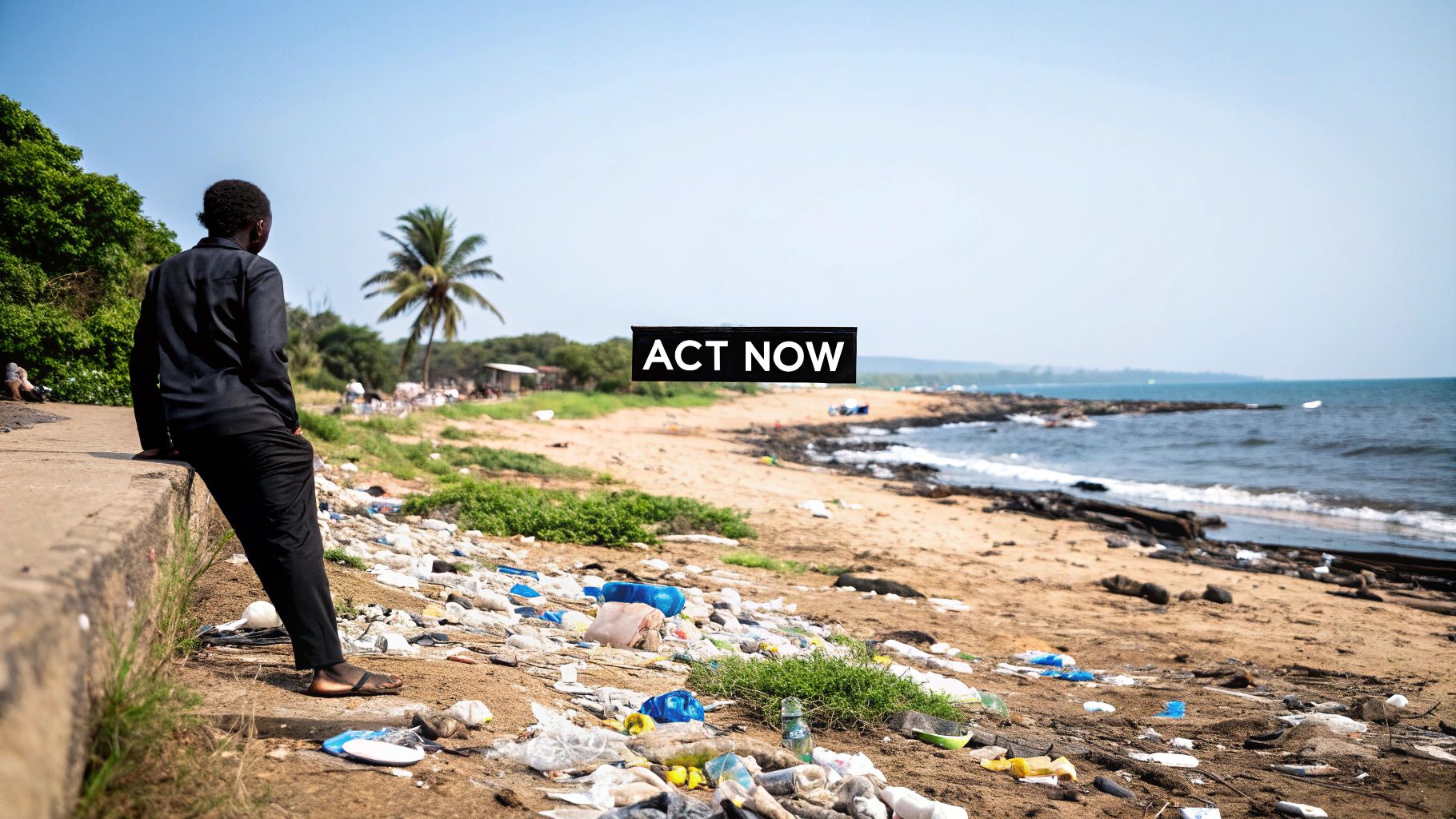
Let's be perfectly clear: our planet is facing a monumental waste crisis, and the clock is ticking. This isn’t a distant, abstract problem. It's a clear and present danger to our ecosystems, our health, and the stability of our economies.
The statistics are staggering and demand our attention. Humanity currently churns out over 2 billion tonnes of municipal solid waste every single year. If we continue on this disastrous path, that figure is projected to explode by 73% to nearly 4 billion tonnes by 2050. Even more shocking, a full 33% of all waste is openly dumped, poisoning our environment and creating dire health hazards for communities around the globe.
The Unacceptable Cost of Inaction
Ignoring sustainable waste management is not an option. The consequences are severe, widespread, and accelerating. This goes far beyond an unsightly pile of trash.
- Environmental Catastrophe: Landfills are factories for methane, a greenhouse gas far more potent than CO2. At the same time, they leach a toxic cocktail of chemicals directly into our soil and precious water supplies.
- Economic Injustice: The burden of this crisis falls heaviest on communities with the fewest resources, forcing them to bear the crippling costs of chronic health problems and environmental cleanup they did not create.
- Critical Resource Depletion: Every item we mindlessly throw away represents a bundle of wasted materials, energy, and water. This careless consumption is rapidly depleting the Earth’s finite resources.
The shift toward sustainable practices isn’t merely a good idea—it is an absolute imperative for our survival. To do nothing is to consciously choose a future choked by pollution, defined by scarcity, and built on broken ecosystems.
Understanding these stakes is the first step toward meaningful change. To see how these principles apply to one of the fastest-growing waste streams, you can explore the principles of e-waste circular economy and sustainable recycling for a critical perspective.
Taking on tangible solutions like composting is a powerful place to start. You can learn more about its incredible impact here: https://myterravera.com/blogs/news/how-does-composting-help-the-environment.
Your At-Home Waste Audit: The First Step to Real Change
To make a genuine impact on your household's waste, you must first confront the reality of what you throw away. A home waste audit is your tool for this mission. It’s not a chore; it’s a powerful act of discovery that reveals your consumption habits and unlocks a clear path to effective change.
For one week, commit to this process. Instead of taking out the trash, collect it in a designated spot like a garage or utility room. The goal is to create an undeniable, tangible snapshot of your household's footprint. It may feel unconventional, but this single action is the bedrock of transformation.
Confronting the Evidence
When the week is over, it’s time for the revelation. Put on some gloves, lay out a tarp, and sort everything you’ve collected. This is the moment of truth where you move from assumption to fact.
Separate your waste into these critical categories:
- Food & Organics: Every coffee ground, vegetable peel, and leftover scrap. Prepare to be shocked by the sheer volume of this pile.
- Recyclables: All clean paper, cardboard, glass, aluminum, and plastics that your local program accepts.
- True Trash (Landfill): This is what remains—the non-recyclable, non-compostable items like snack bags, broken ceramics, and styrofoam.
As you sort, the "aha!" moments will be undeniable. You will likely discover that a massive portion of your "trash" is actually valuable organic material. Arming yourself with knowledge of what you can compost at home can immediately and drastically reduce what you send to a landfill.
A waste audit is not about guilt. It is your personal roadmap to power. It shows you exactly where your efforts will have the greatest impact, whether that’s finally starting a compost bin, waging war on single-use plastics, or mastering your local recycling rules.
Once you’re done, step back and look at what you’ve created. Are Amazon boxes dominating your recycling? Is the food scrap pile far larger than you imagined? This is your data. This is what empowers you to stop guessing and start taking decisive, meaningful action.
Master the 5 Rs: Your Blueprint for a Low-Waste Life
The 5 Rs—Refuse, Reduce, Reuse, Recycle, and Rot—are not just a catchy phrase; they are your strategic framework for making intentional, high-impact choices every single day.
The most powerful R is also the most direct: Refuse. This is the art of saying "no" to things you don’t need. It means rejecting the plastic straw, declining the promotional freebie, and always bringing your own bag. Every item you refuse is a victory—one less object that needs to be produced, shipped, and eventually managed as waste.
Reduce, Reuse, and Recycle with Purpose
After refusing, you must Reduce what you allow into your home. Your waste audit is your guide, pinpointing exactly where to cut back. Are you buying products smothered in excessive packaging? It’s time to choose alternatives. Are you buying disposable items? It’s time to invest in durability.
Next, unleash your creativity and Reuse everything you can. Glass jars become pantry storage heroes. Old t-shirts are transformed into a lifetime supply of cleaning rags. That wobbly chair isn’t trash; it's a weekend project. For a deep dive into this mindset, explore our guide to a zero-waste lifestyle with these simple tips.
Finally, when an item has truly reached the end of its life, it's time to Recycle. But you must do it correctly. Tossing questionable items into the bin—a hopeful but damaging practice called "wishcycling"—can contaminate entire batches of recyclables, condemning them to the landfill. Always check your local guidelines. It’s a small step that makes a huge difference.
Strive for progress, not impossible perfection. When you prioritize refusing and reducing, you dramatically shrink the volume of "stuff" that requires management. This makes your recycling and composting efforts exponentially more powerful.
Turn Your Waste into Black Gold
The final R, Rot, is your secret weapon: composting. This is where your food scraps, coffee grounds, and yard trimmings are transformed from waste into wealth. Instead of letting this organic matter rot in a landfill and produce destructive methane gas, you can create nutrient-rich soil to nourish your garden or houseplants.
This entire revolution starts with understanding what you’re throwing away.
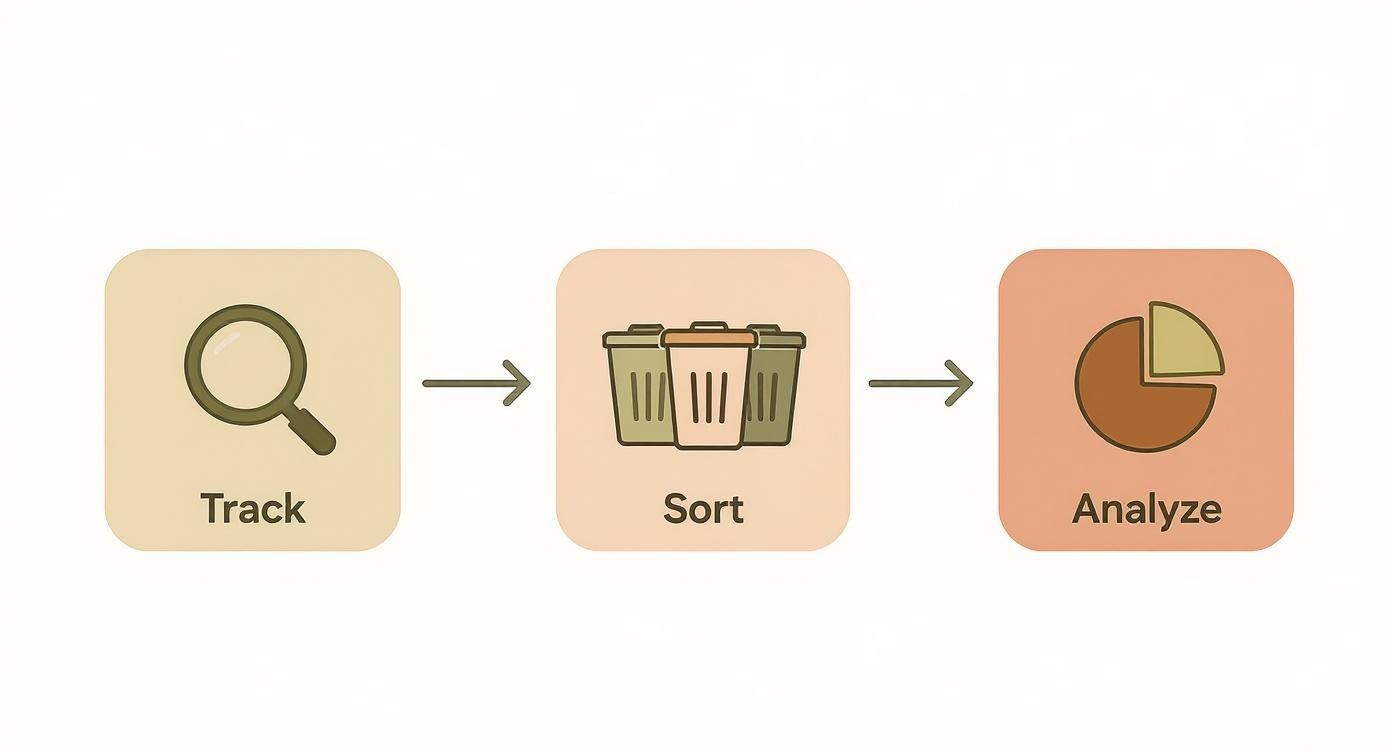
By tracking and sorting your trash, you will instantly see where your greatest opportunities for change lie.
It’s clear that a nation's approach to waste reflects its priorities. The data reveals a stark contrast in outcomes driven by policy and culture.
A Tale of Two Systems: Waste Management in High-Income Nations
| Country | Waste Per Capita (kg/year) | Landfilled Waste (%) | Recycled Waste (%) |
|---|---|---|---|
| United States | 951 | 50% | 35% |
| Germany | 632 | <1% | 67% |
| Japan | 326 | 1% | 20% |
| Canada | 777 | 73% | 27% |
These numbers tell a powerful story. Germany has all but eliminated landfills through aggressive, systemic recycling and waste-to-energy policies. In stark contrast, the U.S. generates a staggering 951 kg of waste per person annually, burying half of it in the ground.
While your individual actions are the catalyst, systemic change needs fuel. Community groups can amplify their impact by securing grants for waste prevention to launch projects that benefit everyone.
Shop Smarter: Your Wallet is Your Weapon
Every dollar you spend is a vote for the kind of world you want to live in. The most effective way to manage waste begins long before anything enters your home—it starts with the decisions you make at the checkout counter.
The most radical act is to simply buy less. Before you purchase anything, pause and ask yourself: Do I truly need this? When you do buy, choose durability over disposability. A well-crafted item may cost more upfront, but it prevents a constant stream of cheap, breakable products from flooding our landfills.
Become an Expert in Product Choices
Navigating store aisles can feel like a minefield of greenwashing. But learning to identify genuinely sustainable options is a skill that pays dividends for the planet. The best choice is often the one with no packaging at all—think loose produce and bulk bin staples.
When packaging is unavoidable, you must understand the labels. Two terms create constant confusion and let companies off the hook:
- Biodegradable: This term is dangerously misleading. It often means a product simply shatters into invisible microplastics, creating a more insidious form of pollution.
- Compostable: This is a regulated term, but it comes with a crucial caveat. Certified compostable products are designed to break down only in an industrial composting facility, not in a landfill or your backyard bin.
The most impactful choice you can make is always the reusable one. Prioritizing a reusable item over any single-use alternative—regardless of its "eco-friendly" label—is the single most effective way to shrink your waste footprint.
Simple swaps create massive change. Banish plastic wrap and embrace reusable beeswax wraps. Stop buying new plastic spray bottles and switch to concentrated cleaning refills you mix with water at home.
When you demand and support brands that are transparent about their materials and packaging, you send an unmistakable signal. You demonstrate that consumers are demanding superior sustainable waste management solutions. Your choices have power. Use it.
Lead the Change in Your Community
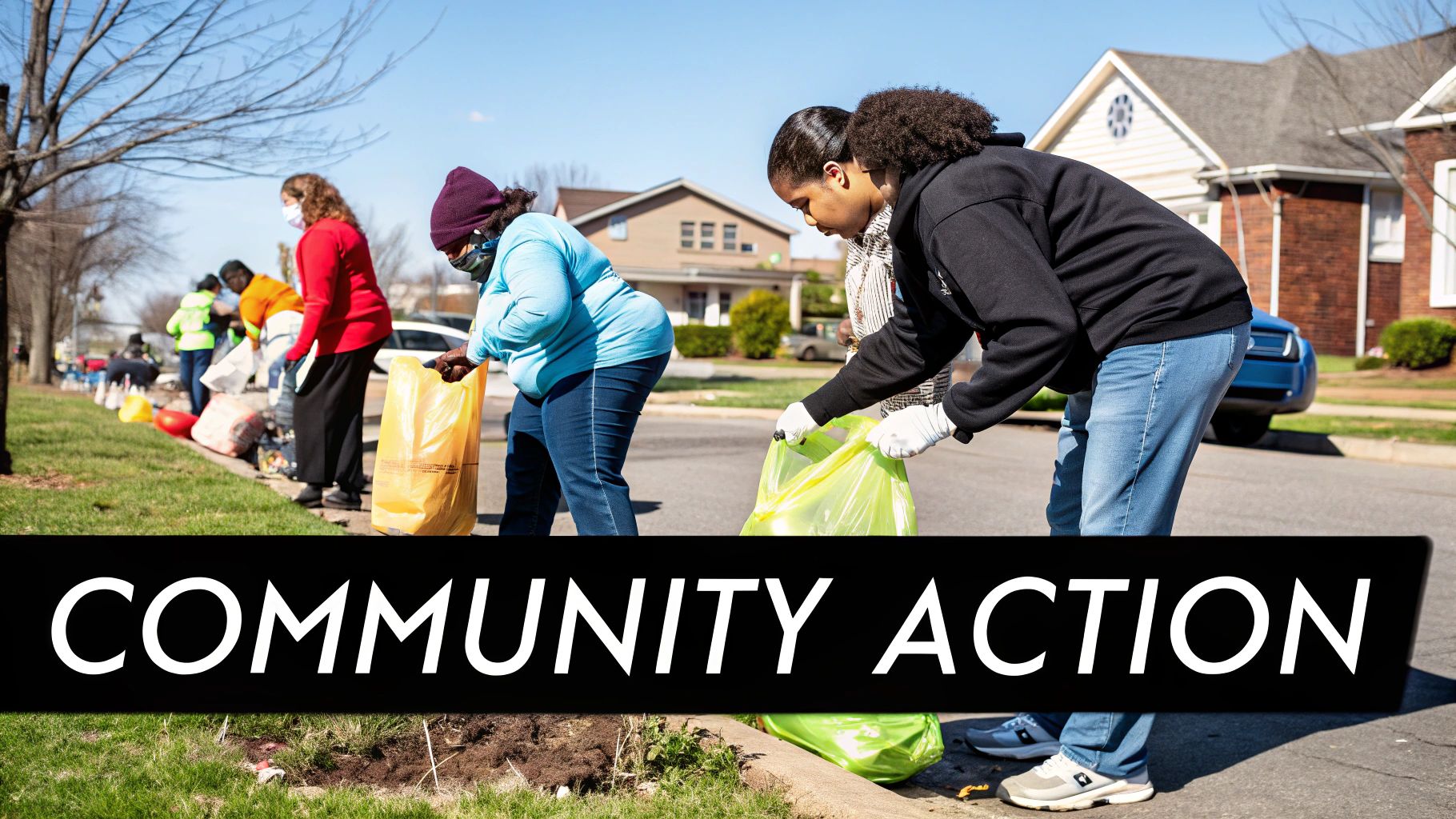
Transforming your own habits is the essential first step. But the real revolution begins when you carry that passion into your community. Expanding your sustainable waste management practices beyond your front door creates a powerful ripple effect that can reshape our world.
Start where you have influence: your workplace. You would be stunned by how many companies are eager to improve their environmental impact but simply lack a champion to lead the charge. You can be that champion.
Spark a Revolution at the Office
Proposing a robust recycling or composting program at work is more achievable than you think. You just have to frame it as what it is: a strategic advantage for the company. It’s not just good for the planet; it’s good for the bottom line, significantly cutting waste disposal costs.
Here’s your action plan:
- Gather the Evidence: Use your auditing skills. Propose a one-week audit of the office trash to create an undeniable business case for what’s being wasted.
- Build Your Alliance: Identify a few like-minded colleagues. Presenting a unified proposal is exponentially more effective than a solo mission.
- Present the Solution: Don’t just present the problem. Research local commercial composting or enhanced recycling services. Handing management a ready-made solution makes saying "yes" the easiest possible decision.
Never underestimate your power. As an employee, a neighbor, and a consumer, you have influence. When you demand better from businesses and champion sustainable practices, you are actively shaping corporate responsibility and driving market-wide change.
This collective pressure is already reshaping a trillion-dollar industry. In 2024, the waste management market was valued at an astonishing USD 1.20 trillion, and it’s projected to nearly double by 2034.
What's fueling this explosive growth? A global awakening. A significant portion of this market, especially in the Asia Pacific region which commands 59.14% of it, is driven by an urgent demand for effective sustainable waste management solutions. Learn more about the global waste management market trends.
Every action you take—from launching an office compost program to choosing sustainable brands—contributes directly to this monumental global shift.
Your Questions Answered: Overcoming Common Hurdles
Embarking on a more sustainable path will inevitably raise questions. That’s not a sign of weakness; it’s a sign of engagement. Getting clear answers is what fuels your momentum and ensures your efforts are truly effective.
What Is the Single Most Powerful Action I Can Take?
While recycling is important, the undisputed champion of impact is reducing your consumption. This is the core principle.
Every time you refuse to buy something you don’t need, choose an item with minimal packaging, or opt out of a single-use product, you prevent waste at its source. That item never needs to be manufactured, shipped, or buried. The most effective way to start is with a home waste audit—it will immediately reveal your biggest opportunities for reduction.
How Can I Possibly Compost in an Apartment?
The myth that you need a sprawling backyard to compost is just that—a myth. Urban composting is simple, clean, and more accessible than ever.
- Vermicomposting (Worm Bins): These compact, odorless systems are powerhouses of decomposition that can live under your sink or on a balcony. Worms efficiently convert your food scraps into one of the world's best fertilizers.
- Bokashi Bins: This innovative fermentation method uses a special inoculant to break down all food scraps (including meat and dairy) in a sealed, airtight container.
- Community Drop-Offs: An increasing number of municipalities, farmers' markets, and community gardens now offer central drop-off locations for residents' food scraps. A quick search can connect you to a program near you.
The real choice isn’t between “compostable” or “biodegradable” plastics—it’s between single-use and reusable. Always prioritize items you can use again and again for the greatest environmental benefit.
Are ‘Biodegradable’ or ‘Compostable’ Plastics a Viable Solution?
This is a critical area where greenwashing preys on good intentions. The truth is far more complex than the labels suggest.
"Compostable" plastics are engineered to break down, but only under the precise high-heat conditions of an industrial composting facility. They will not break down in your backyard bin, and in a landfill, they behave just like regular plastic.
The term "biodegradable" is even more problematic. It’s a vague, unregulated claim that often means the plastic merely fractures into countless microscopic pieces, creating a pervasive and harmful storm of microplastics.
Ready to make composting a clean and simple part of your routine? At terravera, we offer high-quality compostable bags designed to help you manage your organic waste the right way. Check out our products to get started at myterravera.com.