

How to Live More Sustainably Without Overwhelm
Living sustainably is not about achieving perfection overnight. It's the conscious decision to make small, deliberate choices that, over time, compound into a powerful positive impact. This is your opportunity to redefine your relationship with the planet—reducing what you use, reusing what you have, and recognizing the profound connection between your daily actions and the world around you.
Your Realistic Start to Sustainable Living
Feeling the pressure to "go green" perfectly? Let's dismantle that guilt and focus on what truly matters. The journey to a more sustainable life isn't a race to do everything at once. It’s the art of making intelligent, consistent choices that you can genuinely embrace. Forget those overwhelming checklists and impossible standards that lead to burnout.
The real secret to learning how to live more sustainably is to identify the high-impact changes that require the least effort. This is your strategic starting point. This approach allows you to build habits that feel deeply empowering, not like a chore. Once you grasp the core principles, integrating them becomes second nature. For a powerful primer, explore our guide on what is sustainable living to build your unshakable foundation.
Where to Focus Your Efforts First
To sidestep the feeling of being overwhelmed, you must zero in on the key areas where small adjustments deliver monumental results. These are the parts of your daily life where your decisions wield the most influence.
- What You Eat: Your food choices are a cornerstone of your personal carbon footprint. The two most powerful actions you can take are to eliminate food waste and reduce your meat consumption.
- Energy at Home: The power required to light, heat, and cool our homes is a primary source of greenhouse gas emissions. Simple, mindful habits around electricity and water use will slash this impact.
- How You Get Around: Your daily commute and errands are not trivial. Ditching the car for a solo trip, even just a couple of times a week, makes a tangible, measurable difference.
This infographic breaks down some of the easiest first steps you can take in these areas.
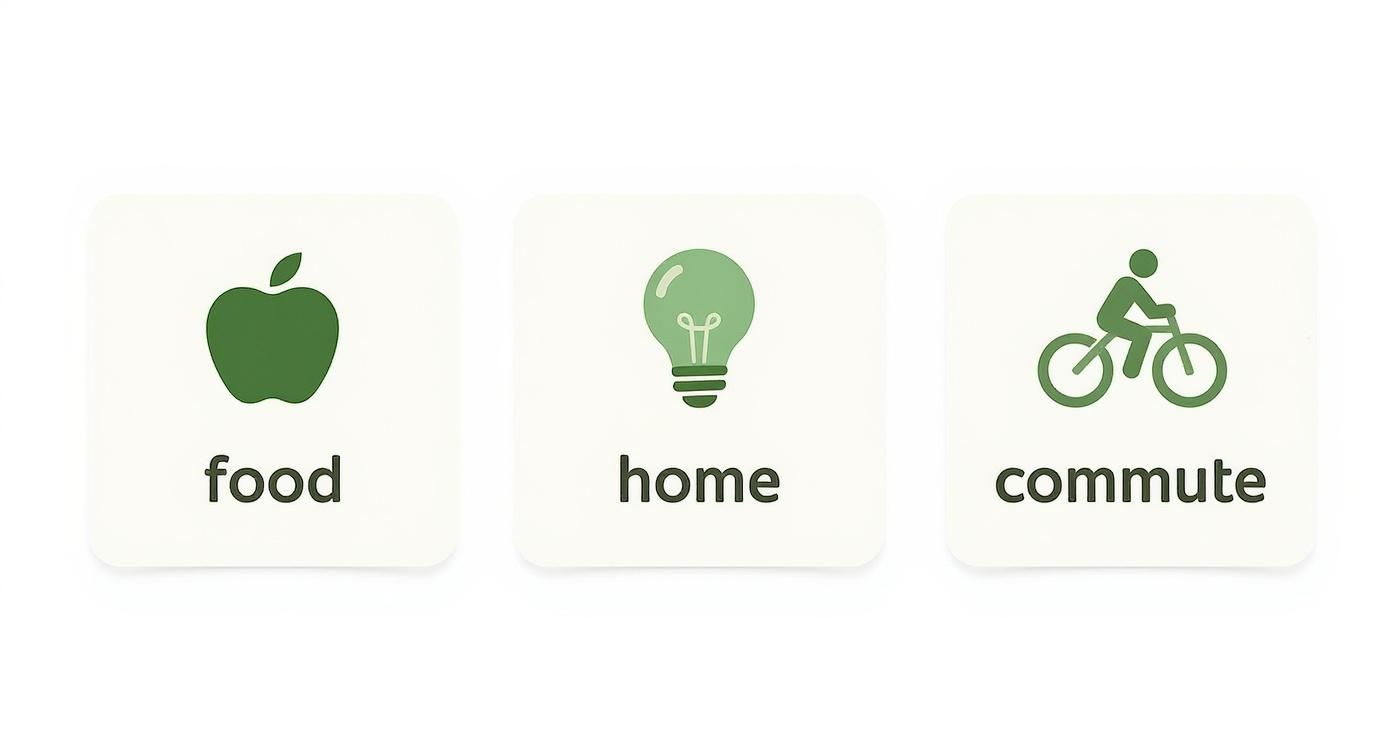
As you can see, meaningful change doesn't demand a complete life overhaul. It begins with simple, intelligent swaps in your kitchen, your living room, and your commute.
To make this even clearer, here's a quick look at some simple but powerful swaps you can make right away.
High-Impact First Steps for a Sustainable Lifestyle
| Area of Life | Simple Sustainable Swap | Potential Yearly Impact |
|---|---|---|
| Food | Skip beef and lamb for one week. | Reduces your carbon footprint by up to 8.4 kg of CO2 per week. |
| Home Energy | Lower your thermostat by just 1°C. | Can cut your heating bill by up to 10%. |
| Transportation | Walk, bike, or use public transport twice a week. | Saves hundreds of pounds of CO2 emissions. |
| Daily Habits | Switch to a reusable coffee cup. | Prevents about 500 disposable cups from hitting the landfill. |
These small adjustments are undeniable proof that you don't need to do everything to achieve something significant.
Adopt a Progress-Over-Perfection Mindset
It’s easy to get discouraged. You scroll online and see curated images of perfectly lined-up zero-waste jars, a sprawling vegetable garden, and a brand-new electric car. But let me be clear: comparison is the thief of progress.
The most sustainable habit you can build is consistency. Committing to one or two small actions and sticking with them is infinitely more powerful than attempting twenty things at once, burning out, and giving up after a week.
Remember that every small step forward is a victory. Bringing a reusable bag to the grocery store, turning off the lights when you leave a room, or walking to a nearby shop instead of driving—it all counts. You are actively participating in the creation of a healthier planet, and this guide is here to help you build that momentum, one realistic choice at a time.
Making Sustainable Food Choices That Work
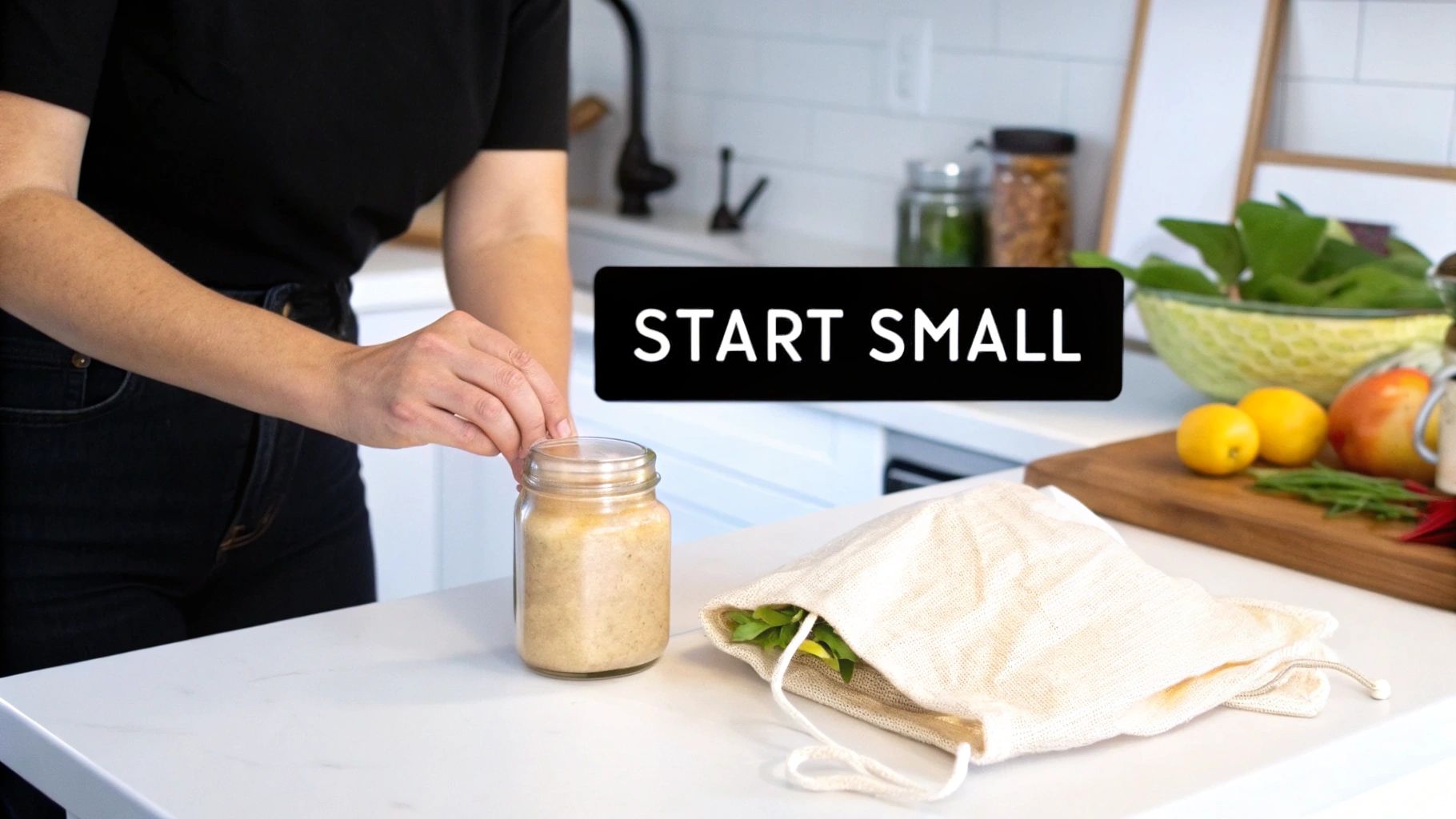
The connection between our plates and the planet is one of the most direct and powerful links we have. What we choose to eat has a profound impact, but let's be realistic—completely revolutionizing your diet overnight isn't a sustainable strategy for most people.
The empowering truth is that you don't have to become a vegan tomorrow to make a real difference. Living more sustainably in the kitchen is about making a series of small, conscious decisions that compound over time. It's about understanding the undeniable effects of your food choices and folding simple, effective strategies into your routine, one meal at a time.
Start With Reductive, Not Restrictive Changes
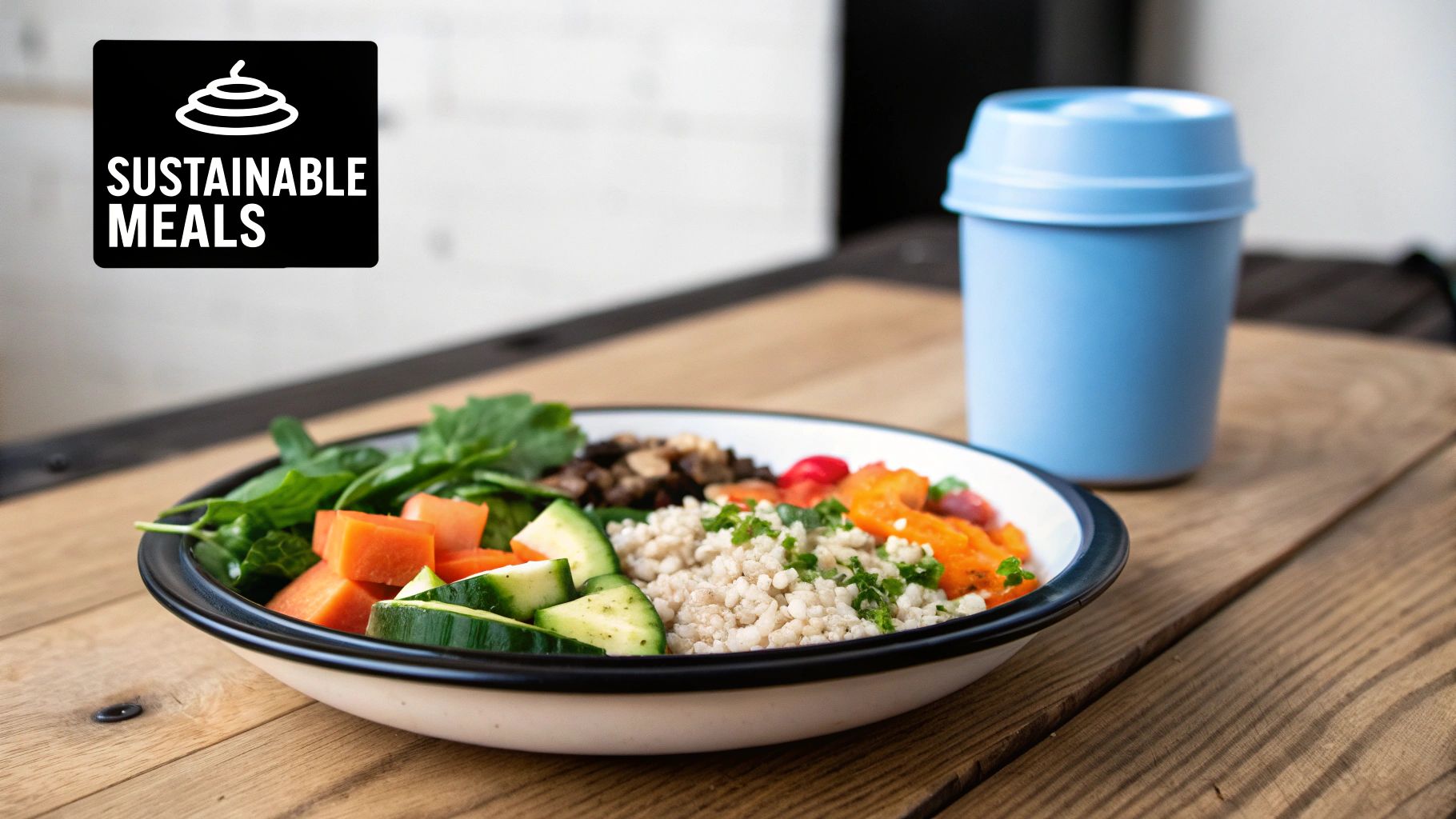
Begin by focusing on reducing, not eliminating. One of the single most impactful changes you can make is to cut back on animal-based foods, especially red meat. Food production is responsible for a staggering 26% of global greenhouse gas emissions, and livestock is a massive contributor to that figure.
You don’t have to give up burgers forever to see a change. Research proves that if the average person in a developed country halved their meat intake, their dietary carbon footprint could plummet by as much as 35%. It's all about shifting the balance of power on your plate.
Here are a few approachable ideas to get you started:
- Embrace 'Meatless Mondays': Dedicating just one day a week to plant-based meals cuts your weekly meat consumption by about 15%. It's a simple commitment with a guaranteed payoff.
- Rethink Your Protein: Swap beef for chicken or pork. Chicken produces far fewer emissions than beef, making it a more climate-friendly option for your go-to recipes.
- Make Meat a Garnish, Not the Star: Instead of a giant steak, use smaller amounts of meat to add flavor to vegetable-packed dishes like stir-fries, soups, or pastas.
Tackle Food Waste and Plan Like a Pro
Did you know that a massive amount of all food waste happens right in our own homes? When we throw away food, we're also discarding all the water, energy, and labor that went into producing it. The single most effective weapon against this is smart meal planning.
Before heading to the store, take a quick inventory of your fridge and pantry. Design your meals for the week around what you already possess, then create a detailed shopping list for only what you truly need. This one habit doesn't just slash waste—it will save you a surprising amount of money.
By planning your meals, you're not just organizing your week—you're actively preventing waste at every step, from the farm to your fridge. It’s one of the most direct ways you can reduce your environmental impact.
Getting creative is another key to reducing waste. Vegetable scraps like onion peels, carrot ends, and celery bottoms can be stashed in the freezer to make a delicious homemade broth later. Stale bread? It’s perfect for croutons or breadcrumbs. For more ideas, check out these sustainable kitchen hacks for a greener kitchen.
Shop Smarter and More Seasonally
Your grocery store habits are another area ripe for easy, sustainable wins. Making a few more conscious decisions while you shop can dramatically shrink your environmental footprint without feeling like a major sacrifice.
Prioritize local and seasonal produce. Foods that are in season and grown nearby don't have to travel halfway across the world, which seriously cuts down on transportation emissions. As a bonus, they're usually fresher, more nutritious, and often cheaper. Hitting up a local farmers' market is a fantastic way to connect with your food source and support your community's economy.
For any food scraps you can't use, composting is a brilliant solution. It keeps organic matter out of landfills, where it would produce harmful methane gas, and instead transforms it into nutrient-rich soil for your garden or houseplants. You have the power to turn waste into life.
Building an Eco-Conscious Home
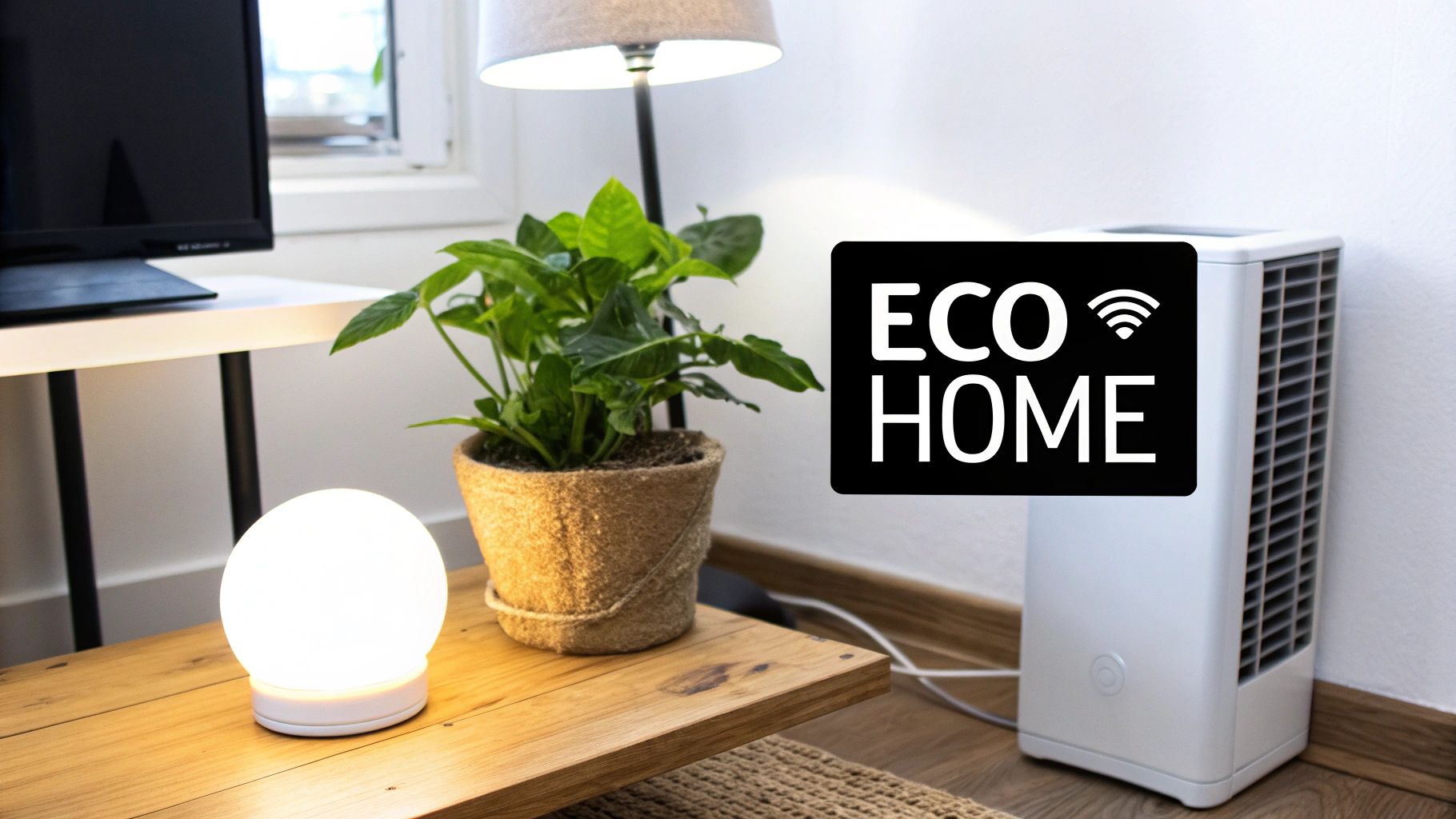
Your home is more than just four walls—it’s your command center for making a real, positive impact on the environment. Creating an eco-conscious home isn't about some massive, expensive overhaul. It's about looking at your daily habits with fresh eyes and making small, intentional shifts in how you use energy and water.
Think of it as transforming your living space into a force for good, one practical step at a time. These everyday actions not only shrink your footprint but will often trim your utility bills, too.
Master Your Home Energy Use
The electricity that keeps our lights on and gadgets running is a huge part of our personal carbon footprint. The good news? It's also one of the easiest areas to make a big difference.
A great place to start is with smart swaps. Upgrading to energy-efficient appliances and switching to LED bulbs can cut your home energy use by a whopping 20-30%. It’s a simple change that lowers your bills and eases the strain on the power grid. When you're shopping, just look for the Energy Star rating—it's a reliable sign of efficiency.
Here are a few quick wins you can implement today:
- Unplug 'Vampire' Electronics: Those devices with little standby lights are secretly sucking power even when they're "off." Plug things like your TV, gaming console, and stereo into a power strip and flick it off when you're done. Problem solved.
- Let the Sun In: Open your blinds during the day. It’s the best kind of free lighting and can even help warm your home in the cooler months, giving your heater a much-needed break.
- Tweak Your Thermostat: Just nudging your thermostat down a couple of degrees in the winter (and up in the summer) has a massive impact over the course of a year. If you can, a smart thermostat automates this for you, so you don't even have to think about it.
It's easy to dismiss these small changes as insignificant, but their cumulative effect is huge. Imagine the collective impact if every household made these simple adjustments. This is the true power of individual action.
The potential here is enormous. According to the latest United Nations report on sustainable development goals, switching to renewable energy sources can slash a household's carbon emissions by up to 80%.
Conserve Water from Kitchen to Bathroom
Water is one of our most precious resources, yet it’s far too easy to take for granted. Most of our household water usage happens in two rooms: the kitchen and the bathroom. Luckily, cutting back is remarkably straightforward.
In the bathroom, the biggest water-wasters are long showers and old, inefficient toilets. A low-flow showerhead can save thousands of gallons a year without you even noticing a difference in pressure. And that tiny drip from a leaky faucet? It can waste hundreds of gallons. Get that fixed!
In the kitchen, the trick is to stop letting the tap run endlessly. When washing dishes by hand, try the two-basin method: fill one side of the sink with soapy water for washing and the other with clean water for a quick rinse. It uses far less water than keeping the faucet on.
Rethink Your Cleaning Routine
Take a walk down the cleaning aisle at any store, and you're met with a wall of plastic bottles filled with harsh chemicals. These products aren't just rough on the planet; they can be tough on your health, too.
Going the DIY route is a fantastic alternative. It’s cheaper, slashes plastic waste, and puts you in complete control of what you’re spraying around your home.
You can make a great all-purpose cleaner with ingredients you already have:
- Mix equal parts white vinegar and water in a spray bottle.
- Add a few drops of an essential oil like lemon or tea tree for a nice, fresh scent and some extra antibacterial power.
This simple mix works wonders on countertops and sinks. For grimy tubs or tiles, a paste of baking soda and water is a fantastic, non-toxic scrub. These simple recipes help you sidestep an entire aisle of chemicals.
As you get comfortable, you can explore other eco-friendly home products to round out your toolkit. Turning your home into a sustainable sanctuary is a journey, and every small step makes the world a little healthier for everyone.
The Power of Conscious Consumerism
Have you ever stopped to realize that every dollar you spend is a vote for the kind of world you want to live in? That is the heart of conscious consumerism, and it is one of the most formidable tools you have for living more sustainably. It’s about taking a deliberate pause before you buy to ask, "Does this purchase align with my values?"
This isn’t about depriving yourself or abandoning everything you enjoy. Far from it. It's about being more intentional with your choices—backing companies that treat people and the planet with respect, cutting down on waste, and sending a clear message to businesses that sustainability is a priority we demand.
Navigating the World of Greenwashing
As more of us push for greener options, some companies have resorted to clever marketing. They use vague, feel-good claims to make their products seem more eco-friendly than they really are. This deceptive tactic is called greenwashing, and learning to see through it is critical.
You've undoubtedly seen it in action. A company might label a plastic bottle "eco-friendly" because it uses a fraction less plastic, completely ignoring the massive problem of single-use plastics. Or a fast-fashion brand might launch a "conscious collection" that makes up a minuscule sliver of their total production.
To see past the hype, you need to look for real proof:
- Look for trusted certifications: Labels like Fair Trade, B Corp, or USDA Organic are not just for show. They represent rigorous standards that companies must meet.
- Check for transparency: Genuinely sustainable brands are proud to talk about their supply chain, labor practices, and environmental footprint. If a company is evasive about these details, consider it a major red flag.
- Watch out for vague language: Be skeptical of fuzzy terms like "natural," "green," or "eco-friendly" if there's no specific information to back them up.
Adopting a "Fewer, Better Things" Mindset
Honestly, one of the most effective ways to be a conscious consumer is to simply buy less. This doesn't mean living a barren life; it means shifting your focus from quantity to quality.
Before you click "buy" or head to the checkout, just pause. Ask yourself: Do I really need this? Is it built to last? Could I find one secondhand? This simple habit can stop countless impulse buys that just end up as clutter or trash.
And let's not forget the lost art of repair! A broken zipper or a toaster on the fritz doesn't automatically mean it's destined for the landfill. Learning basic repair skills can save you money and give your belongings a much longer, more meaningful life.
This is especially true for our electronics. For a comprehensive guide on how to reduce electronic waste, you can find some really practical tips.
Where You Spend Your Money Matters
Putting your money where your mouth is by supporting genuinely ethical and sustainable brands is a game-changer. It takes a little research upfront, but the payoff is immense. Look for companies that prioritize fair wages, use sustainable materials, and design products that are meant to be cherished, not discarded.
This isn't just wishful thinking—it's already making a huge difference. An incredible 72% of global consumers now say sustainability is a key factor in their purchasing decisions. What's more, 65% of consumers are willing to pay more for products that are better for the environment, sending a clear financial signal to businesses to step up.
By choosing to support small, local businesses or B Corporations, you're investing in a more equitable and sustainable economy. Your purchase becomes a powerful statement of support for a better way of doing business.
Remember, this is a journey, not a destination. You don't have to be perfect. Just start. Maybe you focus on your wardrobe first, or on your household cleaning supplies. Those small, intentional choices truly do add up, creating a ripple effect that helps build a better, more sustainable world.
Living Sustainably Beyond Your Front Door
You've worked hard to make your home a greener place, and that is a huge victory. But what happens when you step outside? A truly sustainable lifestyle doesn't stop at the front door—it travels with you, influencing every choice you make.
It’s easy to fall back on convenience when you’re out and about, surrounded by single-use plastics and high-impact habits. The secret isn't about being perfect; it's about being prepared. A little foresight is all it takes to weave your eco-conscious values into your daily commute, work life, and even social events.
Master Your Daily Commute
Let's face it: how we get from A to B has a massive impact. Transportation is a major source of greenhouse gas emissions, so even small tweaks to your commute can make a real difference.
While driving is unavoidable for many of us, think about how you can make those trips count.
- Rethink Solo Trips: Could you carpool with a coworker, even just once or twice a week? That one change immediately slashes your commute emissions for the day.
- Embrace Public Transit: If you have access to a bus or train, it's one of the single best ways to shrink your carbon footprint.
- Active Commuting: For those closer trips, why not walk or bike? It's a win for the planet and a fantastic boost for your own health.
- Bundle Your Errands: Instead of zipping around town multiple times a week, try planning one efficient, consolidated trip to hit all your stops. You’ll save on gas, time, and headaches.
Champion Sustainability at Work
Your office is a small community, and you have more influence than you might think. You don't need a fancy title to inspire change; often, just leading by example is enough to get your colleagues thinking.
Start with your own desk. Bring your lunch in a reusable container, sip your coffee from a real mug, and be the person who always remembers to shut down their computer at night. Once those habits are second nature, you can start thinking bigger.
Maybe you could suggest starting a special recycling collection for things the main service doesn't take, like old batteries or coffee pods. Or, you could spark a little friendly competition to see which department can cut its paper use the most. It’s all about creating a shared sense of purpose.
Your Sustainable On-The-Go Checklist
Being prepared is half the battle. Putting together a simple "zero-waste" kit to keep in your car or backpack means you can confidently refuse single-use items without a second thought. Here’s a quick-reference guide to get you started.
| Situation | Sustainable Action | Eco-Friendly Tool |
|---|---|---|
| Getting Takeout Coffee | Politely ask the barista to use your personal cup. | Reusable Coffee Cup |
| Eating Out | Say "no, thank you" to a plastic straw. | Reusable Straw (metal or silicone) |
| Grocery Shopping | Decline plastic produce and shopping bags. | Cloth Tote & Produce Bags |
| Grabbing Lunch | Skip the disposable utensils and napkins. | Travel Cutlery Set & Cloth Napkin |
This small collection of reusables empowers you to handle almost any situation, turning potential waste into a non-issue.
Navigating Social Events and Dining Out
Parties and restaurants can feel like a minefield of waste, from disposable plates to flimsy plastic cutlery. But you don't have to sacrifice your social life to stick to your values. When you’re dining out, try to pick spots that source their ingredients locally and seasonally.
Getting takeout? Don't be shy about asking if you can bring your own containers. You'd be surprised how many small, independent businesses are happy to accommodate the request. Your question might even plant a seed for them to rethink their own practices.
And for parties, if you suspect there will be a mountain of disposable cups, just bring your own. It might feel a little strange at first, but it's a great conversation starter. More often than not, people are curious and supportive, proving that you can live your values in every situation.
Answering Your Questions About Sustainable Living
As you start to shift your habits, questions are bound to come up. That’s perfectly normal. Kicking off a sustainable journey is exciting, but let's be honest, it can feel a bit overwhelming at times. So, let’s tackle some of the most common worries head-on with clear answers to help you stay on track.
Think of this as your go-to guide for clearing up the confusion and getting past those little mental roadblocks.
Is Living Sustainably Expensive?
This is the biggest myth out there, and it's time to bust it for good. While you can certainly find pricey "eco" gadgets, the very heart of sustainable living is about saving money. The entire philosophy is to use less, which is always the cheapest way to live.
The math is simple. When you cut back on electricity, your utility bills drop. When you get smart about meal planning to prevent food waste, you spend less at the grocery store. Buying clothes secondhand costs a fraction of buying new, and mending an item you already love costs next to nothing compared to replacing it.
The initial cost of a few quality reusables—like a good water bottle or a set of sturdy grocery bags—pays for itself surprisingly fast once you stop buying the disposable versions over and over. Sustainability is about being resourceful, not going on an expensive shopping spree.
What Is the Single Biggest Change I Can Make?
I love this question because it gets right to the point. For most of us in developed countries, the two areas where you will get the most impact for your effort are food and transportation.
Cutting back on red meat and dairy is one of the most powerful actions you can take as an individual. The amount of water, land, and energy needed to produce them is staggering. Even scaling back a little makes a huge dent in your personal carbon footprint.
Along those same lines, rethinking how you get around is a game-changer. Every single time you decide to walk, hop on a bike, or take the bus instead of getting in your car, you're directly reducing emissions. These two lifestyle shifts consistently have the biggest environmental payoff.
How Do I Stay Motivated When My Actions Feel Small?
This feeling is completely understandable. When we are up against massive global challenges, it’s easy to wonder, "Does my one reusable coffee cup even matter?" The answer is a huge, resounding yes.
Every major cultural shift in history started with individual actions. Your choices create a powerful ripple effect in a few key ways:
- You send a message to businesses: When you buy sustainable products, you’re voting with your wallet. You are showing companies there’s a real market for responsible goods, which forces them to change their practices.
- You inspire the people around you: Trust me, people notice. Your habits spark conversations and nudge friends, family, and coworkers to try making their own small changes.
- You're part of a massive collective effort: One person's choice might feel small, but when millions of us are making similar conscious choices, it adds up to incredible, system-wide change.
Focus on what you can control and give yourself credit for the progress you make. Every sustainable choice is a vote for a healthier planet.
What Is the Difference Between Compostable and Biodegradable?
These two words get tossed around a lot, often interchangeably, but they mean very different things. Knowing the distinction is crucial for making choices that are genuinely good for the environment.
Biodegradable is a vague and often misleading term. It just means something will eventually break down into smaller pieces. The problem is, "eventually" could mean hundreds of years, and it might leave behind toxic microplastics.
Compostable, however, is a certified standard. It guarantees that an item will break down into natural, non-toxic components (like soil) within a specific timeframe—usually 90-180 days—but only in a proper composting environment. Always look for official certifications on the packaging to be sure.
At terravera, we're all about making sustainable choices easy and accessible. Our certified compostable bags are designed to help you cut down on waste without any hassle, turning your food scraps back into a valuable resource for the earth. You can make a real difference in your daily routine by checking out our products at https://www.myterravera.com.