

Your Guide to Compostable Yard Waste Bags
Yard cleanup is a constant chore, but what if the bags you use could do more than just hold leaves? What if they could actively heal the planet? That's the power of true compostable yard waste bags. They are engineered to break down right alongside your grass clippings and twigs, transforming all that "waste" into a vital resource for the soil.
Unlike the plastic bags that haunt our environment for centuries, these bags are designed to become part of the natural cycle, not a source of lasting pollution. It's time to make your choice count.
A Smarter Way to Clean Up Your Yard
Let’s be honest—raking leaves, pulling weeds, and trimming hedges can feel like a thankless, never-ending battle. For decades, the go-to solution was to stuff all that organic debris into a massive plastic bag and haul it to the curb. But that outdated method creates a devastating one-two punch: it senselessly wastes a valuable natural resource and fuels our ever-growing plastic pollution crisis.
The good news is, there's a profoundly better way. When you switch to compostable yard waste bags, you transform a mundane chore into a genuinely powerful act for the environment.
It's Time to Rethink "Yard Waste"
What if we stopped seeing grass clippings and fallen leaves as "waste"? Think of them instead as future nutrients for the earth—a promise of new growth. This organic matter is packed with everything needed to create the rich, healthy compost that helps gardens and landscapes flourish.
Choosing the right bag is the critical first step in unlocking that potential. Here’s why making the switch from plastic to compostable isn't just a small change—it’s a game-changer:
- You Shrink Your Landfill Footprint: Every single bag of yard trimmings you divert from the landfill is a significant victory. Since yard debris makes up a massive chunk of municipal waste, your choice directly helps conserve precious landfill space and fight the release of harmful greenhouse gases.
- You Fight Plastic Pollution: A typical plastic bag can take up to 1,000 years to degrade. Even then, it just shatters into tiny, toxic microplastics that poison our soil and water. Compostable bags are designed to disappear completely, leaving nothing but nutrients behind.
- You Close the Loop: Using compostable bags means you become an active participant in a circular system. The bag and its contents are transformed into compost, which then enriches the soil to grow new plants. It’s a complete, sustainable cycle—and you are the one who makes it happen.
Embracing this mindset is a cornerstone of broader sustainable gardening practices that benefit your entire outdoor space.
Making the switch isn't just about buying a different product; it’s about adopting a smarter, more responsible perspective. It's about seeing the hidden potential in what we used to call trash and making a simple change that delivers a lasting positive impact. This guide will show you exactly how, from the science of how these bags work to picking the perfect ones for your needs.
How These Bags Actually Break Down
So, what's the real difference between a compostable yard waste bag and a regular old plastic one? It all comes down to the ingredients and the specific biological process they're designed for.
Think of it this way: an apple core is designed by nature to return to the earth, while a plastic bottle is engineered to last for centuries. True compostable bags are made to act just like that apple core. Instead of petroleum, they come from renewable, plant-based materials. This clever design allows them to break down completely when the conditions are right, becoming a valuable part of the composting cycle.
This visual shows the simple, circular journey your yard waste takes when you use a compostable bag.
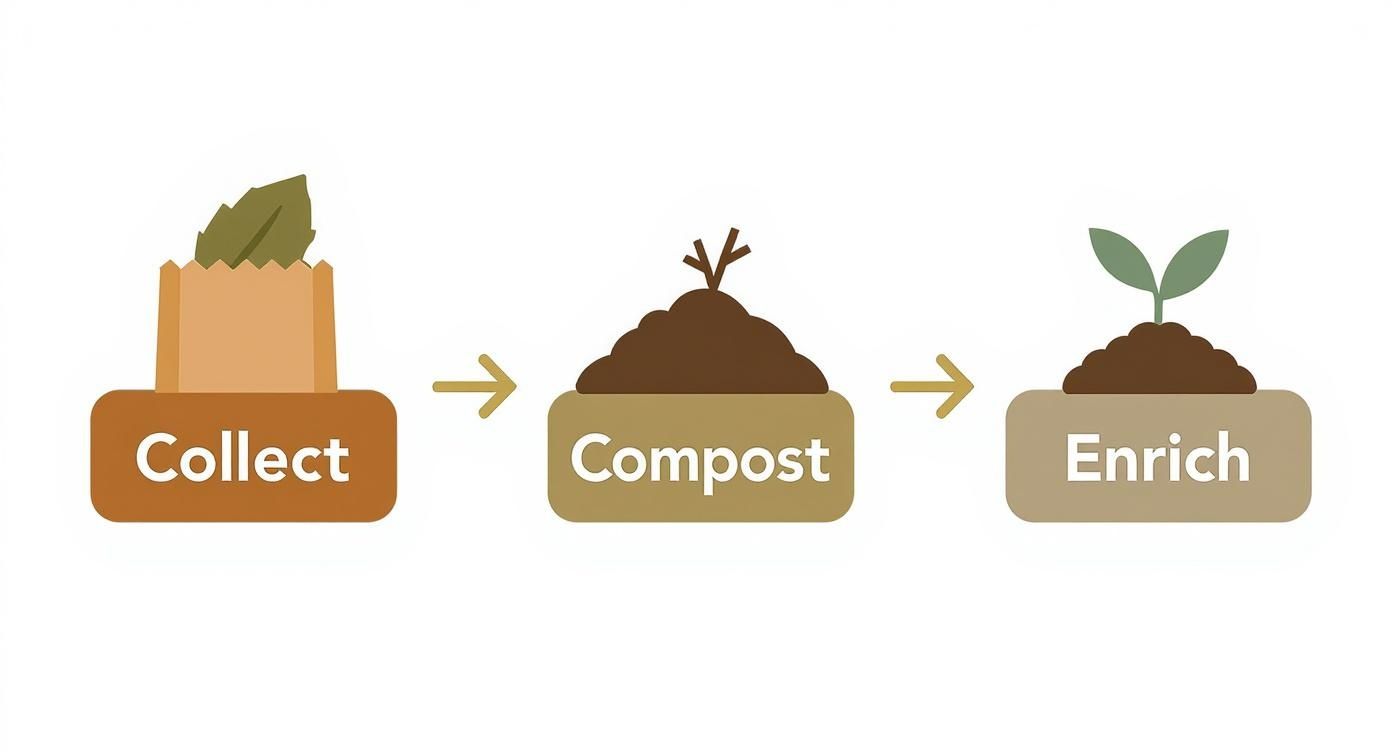
As you can see, the process turns what we used to call "waste" into a fantastic resource that enriches the soil and supports new growth.
The Science of Disappearing
For a compostable bag to do its job, it needs a special environment—one full of heat, moisture, and hungry microorganisms. This is exactly what you'll find in a commercial composting facility.
When your leaves, grass clippings, and the compostable bag arrive, they get introduced to a carefully controlled process:
- Heat cranks up the decomposition, often reaching temperatures over 131°F (55°C).
- Moisture helps the microbes thrive and get to work breaking down all the organic material.
- Microbes (like bacteria and fungi) are the real heroes here. They feast on the plant-based materials of the bag and the yard trimmings, breaking everything down at a molecular level.
In the end, the bag and everything inside it are fully converted into humus (a stable, nutrient-rich soil amendment), water, and carbon dioxide. Nothing harmful is left behind. This is a big deal, and it’s why the global compostable packaging market, valued at USD 55.53 billion, is expected to hit nearly USD 89.85 billion by 2032.
Why Certification Is Your Seal of Approval
Here's a critical point: not all "green" bags are created equal. The term "compostable" isn't just a marketing buzzword; it’s a scientific standard that has to be verified by independent organizations. Without that proof, you can't be certain a bag will truly break down and not just contaminate the final compost with plastics.
Key Takeaway: Certification is the only way to guarantee a bag will decompose safely and completely in a composting facility. It’s your assurance that you’ve made a genuinely eco-friendly choice.
This is where the Biodegradable Products Institute (BPI) comes in. BPI is the leading authority in North America for certifying compostable products. When you see the BPI Certified Compostable logo on a package of compostable bags, it means the product has passed tough, third-party testing to meet strict scientific standards.
Choosing a BPI-certified product ensures it meets the ASTM D6400 standard—the gold standard required by most municipal composting programs. It's how you know your efforts are helping the environment, not accidentally causing a contamination problem down the line. You can learn more about what compostable bags are made of in our detailed guide.
The Real Environmental Impact of Your Choice
It's easy to think that the type of bag you use for leaves and grass clippings is a small, insignificant choice. But that simple swap creates a powerful ripple effect that goes far beyond your curb, making a real difference for the planet.
https://www.youtube.com/embed/oFlsjRXbnSk
Every time you reach for a compostable yard waste bag, you're doing more than just bagging up trimmings. You're actively taking part in a healthier, more sustainable cycle. Let’s break down the three major ways this one choice has such a massive impact.
You Actively Shrink Landfills
First things first: you help shrink our overflowing landfills. When organic stuff like leaves and branches gets dumped in a landfill, it's buried under tons of other trash and starved of oxygen. This forces it to break down anaerobically, a process that releases methane—a greenhouse gas over 25 times more potent than carbon dioxide at trapping heat in our atmosphere.
By using compostable bags, you divert all that organic material away from the landfill. Instead of creating a climate problem, your yard waste (and the bag it's in) gets turned into a valuable resource. It’s a classic case of turning a problem into a solution.
You Help Build Healthier Soil
The second huge benefit is the creation of nutrient-rich compost. You can think of compost as a superfood for the earth. The bags and their contents break down together, becoming a dark, crumbly material that's packed with essential nutrients.
When added back to the earth, this compost improves soil structure, helps it retain moisture (reducing the need for watering), and decreases the reliance on synthetic chemical fertilizers. This natural process helps create a thriving ecosystem right in your community’s gardens and parks.
It's a perfect example of a circular system in action. Waste isn't just thrown away; it’s repurposed to support new life and build a healthier, more resilient environment for everyone.
You Fight Plastic Pollution at the Source
Finally, and maybe most visibly, you’re taking a direct stand against plastic pollution. Standard plastic bags are made from fossil fuels and can stick around in the environment for hundreds of years. They don't really disappear; they just break apart into smaller and smaller toxic bits called microplastics that contaminate our soil, water, and even our food.
Every compostable bag you use is one less plastic bag causing long-term harm. This is a critical point, especially when you compare them to so-called "biodegradable" plastics, which can still leave harmful residues behind. For a closer look at this, check out our guide on the differences between compostable vs. biodegradable bags.
This choice is a big deal when you consider just how much yard waste we produce. In the United States alone, yard trimmings made up about 7.2% of all municipal solid waste sent to landfills in 2018. That’s an incredible 10.5 million tons.
Ultimately, choosing compostable yard waste bags is a powerful statement. It shows a commitment to cutting landfill emissions, regenerating soil health, and stopping plastic pollution before it starts. It’s proof that small, everyday actions can lead to huge, lasting environmental wins.
Using and Disposing of Bags the Right Way
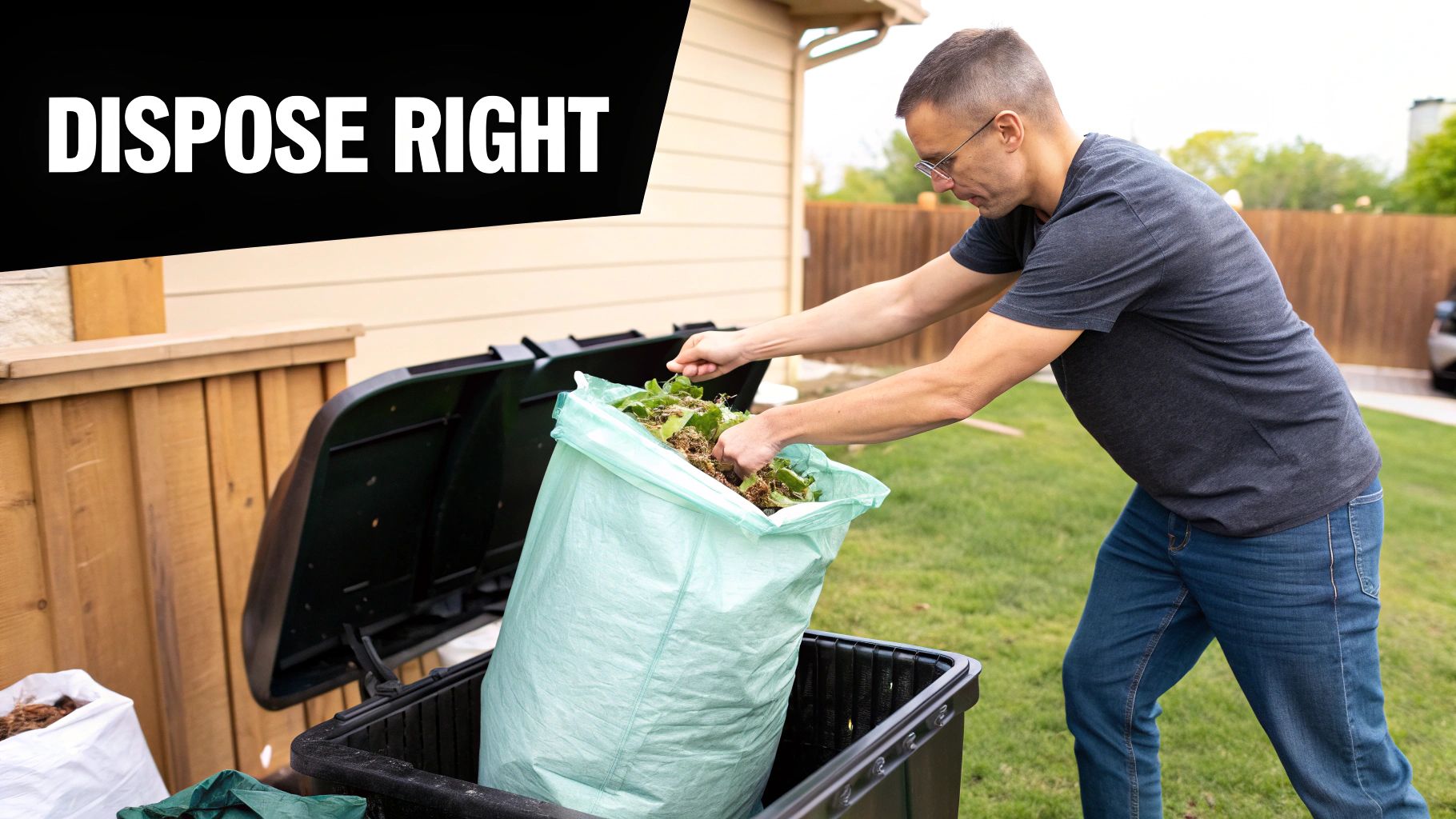
You’ve made the smart choice and picked up a certified compostable yard waste bag. That was the easy part. To make a real difference, what you do next is just as important. To ensure your good intentions translate into real environmental benefits, you need to use and dispose of these bags correctly.
It's all about making sure the bag and everything inside it break down properly and turn back into a valuable resource for the soil. You've got two main options: tossing it in your city's curbside bin or adding it to your own backyard compost pile. Each path has its own set of rules, but they're both straightforward once you get the hang of it.
Curbside Pickup: Your City's Green Bin Program
For most of us, the city's green bin program is the most effective route. These programs are built to handle massive amounts of organic waste, sending it all to industrial composting facilities where the conditions for decomposition are perfect.
But here’s the thing: you have to be a good partner in the process. Before you start filling up bags, do a quick check to make sure you’re helping the system, not accidentally causing problems.
- Verify Acceptance: First things first, confirm your local program actually accepts BPI-certified compostable bags. A quick look at your city’s recycling or public works website usually has the answer. If not, a phone call will clear it up.
- Know What Goes Inside: Stick to their approved list. This almost always includes leaves, grass clippings, weeds, and small branches (typically under 4 inches thick).
- Keep Contaminants Out: This is non-negotiable. Never toss in plastic pots, rocks, treated wood, or pet waste. Contamination can ruin an entire batch of compost at the facility, so it’s critical to keep your green waste clean.
Following these local guidelines is crucial. When you send clean, acceptable organic material to the facility, you’re helping create top-notch compost that benefits the whole community.
Backyard Composting: A Slower but Rewarding Path
Got your own compost pile at home? You can toss compostable bags in there, too, but you’ll need a bit of patience. Backyard piles just don't get as hot as industrial ones, so the bags will take a lot longer to break down—sometimes more than a year.
Want to speed things up? A few simple tricks can help the process along.
- Increase Surface Area: After emptying the yard waste into your pile, tear the bag into smaller strips. This gives the helpful microbes more surface area to work on, which speeds up decomposition.
- Ensure a Healthy Pile: A happy compost pile works faster. Make sure you have a good mix of "greens" (like grass clippings) and "browns" (like dry leaves), keep it properly moist, and turn it every so often.
If you’re just getting started, our guide on https://myterravera.com/blogs/news/how-to-compost-at-home is a fantastic resource. Creating your own nutrient-rich compost is an amazing way to feed your garden, and it's a key part of proper soil preparation for planting that will help your own landscape flourish.
How to Choose the Best Compostable Yard Bags
Alright, you're ready to make your yard cleanup a force for good. That's fantastic. But when you start looking at the options, it can feel overwhelming. How do you pick a bag that's tough enough for prickly branches but will actually break down like it's supposed to?
Let's cut through the noise. Here's exactly what to look for so you can choose the right bags with total confidence.
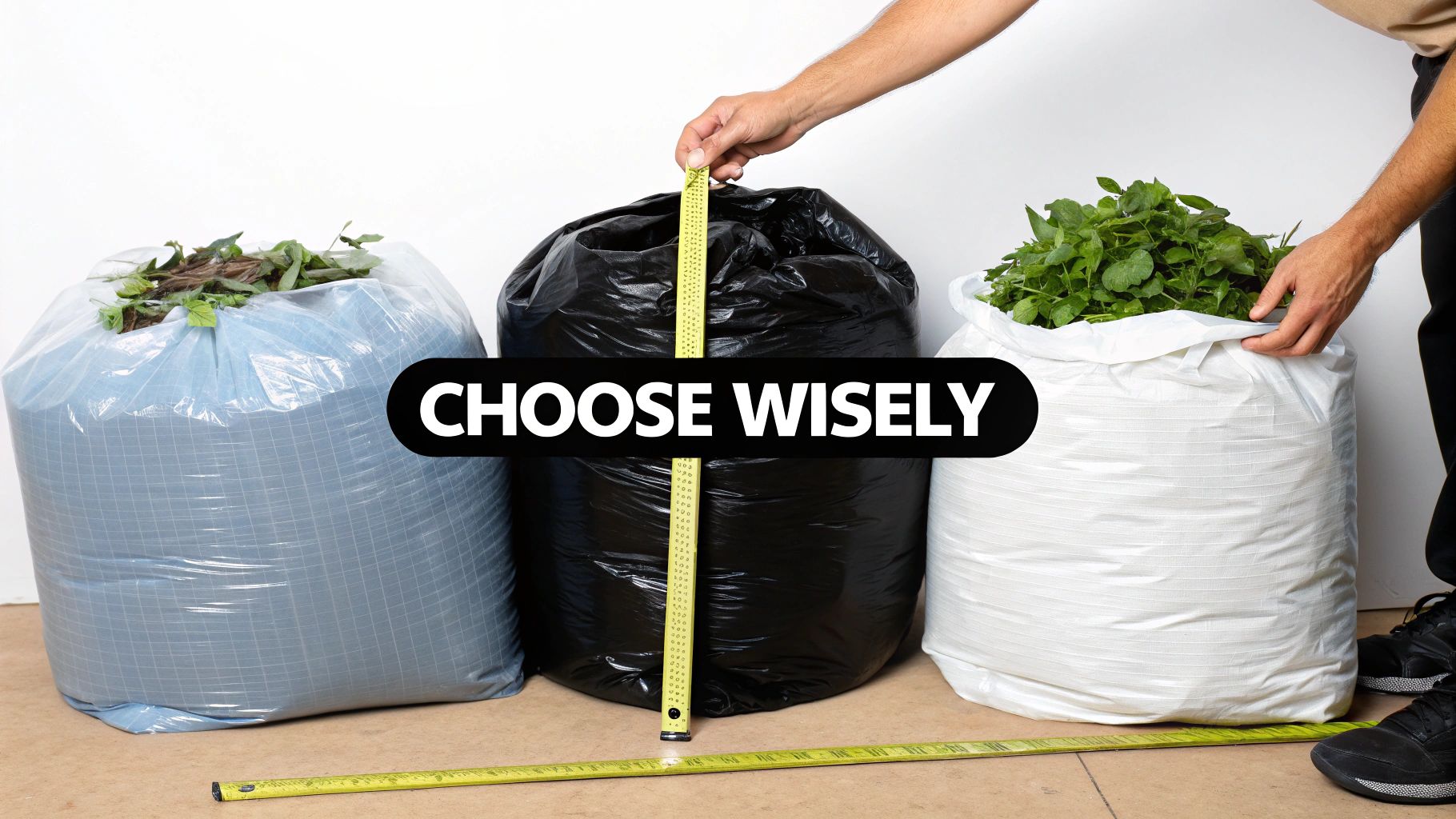
When you get down to it, choosing the right bag is simple. It all boils down to three things: matching the bag's size and strength to your typical yard work, verifying it has the right certification, and knowing how to store them. Get these three things right, and you're set.
Match the Bag to Your Cleanup Job
Not all yard work is created equal, and your bags shouldn't be either. Picking the right size and strength from the get-go saves you from the frustration of a ripped bag and a mess on your lawn.
- For Routine Maintenance: Just doing some light weeding, deadheading flowers, or bagging clippings from a small lawn? A smaller 13-gallon bag is your best friend. They’re easy to handle and won't be half-empty when you're done.
- For Major Cleanups: Tackling the big autumn leaf drop or doing a major pruning job? Go for the 33-gallon bag. Its larger capacity means you'll be filling fewer bags, which makes the whole process a lot less of a chore.
But it’s not just about how much a bag can hold. You also need to think about what you're putting in it. If you're dealing with thorny rose clippings or sharp twigs, look for bags that mention puncture resistance. A well-made bag, like the ones from terravera, gives you that extra bit of confidence that it won't split open on the way to the curb.
Insist on Genuine Certification
This is the most important rule. If you only pay attention to one thing, make it this. Without proper certification, you have no real proof that a bag will break down the way it claims. Lots of products throw around vague terms like "eco-friendly" or "biodegradable," but these are often just marketing fluff with no science to back them up.
Your Non-Negotiable Checkpoint: Look for the BPI Certified Compostable logo. This is the gold standard in North America. It’s your only real guarantee that the product has passed strict, scientific tests to meet the ASTM D6400 standard for commercial composting.
When you see that BPI logo, you know the bag is proven to decompose completely and safely in a commercial facility. It won't leave any toxic gunk behind. It's the difference between actually helping the environment and accidentally contaminating the compost stream with microplastics. Choosing a certified brand like terravera means you can be sure you've made a genuinely responsible choice.
Store Your Bags for Peak Performance
Finally, let's talk about storage. It might seem like a small detail, but where you keep your compostable bags really matters. They're designed to break down with heat and moisture, so storing them in the wrong spot can weaken them before you even get to use them. Think of them like cereal—you need to keep them in the right environment to stay fresh.
To keep them strong and ready for action, just follow these simple tips:
- Store them in a cool, dry place, like a shelf in your garage, a pantry, or a basement cabinet.
- Avoid spots with high humidity or big temperature swings, like under a sink that might leak.
- Keep them out of direct sunlight, as UV rays can start to degrade the plant-based materials over time.
When you store them right, your bags will hold their strength for up to a year. This simple step ensures they perform exactly as you expect them to. Taking a moment to do things the right way helps support the whole system, which is growing fast—the market for these bags is projected to hit USD 2.25 billion by 2032 as more people switch to greener habits. You can learn more about the growth of the compostable bag market on MyEcoWorld.com.
To make it even easier, here's a quick checklist to run through when you're shopping.
Checklist for Buying Compostable Bags
Use this handy table to make sure you're picking bags that are perfect for your needs and truly compostable.
| Consideration | What to Look For | Why It Matters |
|---|---|---|
| Certification | The BPI Certified Compostable logo and mention of ASTM D6400 or ASTM D6868 standards. | This is your only guarantee the bag will break down safely in a commercial composting facility without leaving toxins. |
| Size & Capacity | 13-gallon for light tasks (weeds, grass clippings) or 33-gallon for heavy-duty jobs (leaves, large-scale pruning). | Matching the bag size to the job prevents waste and makes cleanup easier and more efficient. |
| Strength & Durability | Features like "puncture-resistant," "tear-resistant," or mentions of thickness (measured in mils). | Prevents messy spills and frustration, especially when dealing with sharp twigs, branches, or heavy, wet material. |
| Intended Use | Check if the bag is rated for yard waste specifically, not just kitchen scraps. | Yard waste bags are typically stronger and larger to handle the unique demands of outdoor cleanup. |
Following this checklist will help you cut through the confusion and find a reliable, effective product every time.
Got Questions About Compostable Bags? We Have Answers.
Switching to compostable yard waste bags is a fantastic move for a greener lawn care routine, but it's totally normal to have a few questions. We've heard them all, and we're here to clear up the confusion so you can feel great about your choice.
Let's dive into the most common questions and get you the straight answers you need.
Are 'Biodegradable' and 'Compostable' Bags the Same Thing?
No. And this is the most critical distinction you can make. The two words are often used interchangeably, but they mean vastly different things for the planet.
"Biodegradable" is a meaningless marketing term. Technically, almost everything is biodegradable given enough time—hundreds or even thousands of years. The huge problem is that many "biodegradable" plastics just shatter into toxic microplastics, polluting our soil and water for generations. It’s a greenwashing tactic, plain and simple.
On the other hand, "compostable" is a scientific certification with strict standards. For a bag to earn the stamp of approval from an organization like the Biodegradable Products Institute (BPI), it has to pass rigorous, independent tests.
The bottom line is this: a certified compostable bag is legally and scientifically required to fully break down into natural elements—rich humus, water, and CO2—within 180 days in a commercial composting facility. And, critically, it must leave zero toxic residue behind. If you want to make a real environmental impact, always, always look for the certified compostable label.
Can I Use These Bags in My Home Compost Bin?
Yes, but there's a catch. Most certified compostable yard bags are engineered for the intense, high-heat environment of an industrial composting site. Those facilities are like pressure cookers, reaching temperatures your backyard pile just can't match.
So, while the bag will eventually break down in a well-managed home compost, it's going to take a lot longer—think a year or more, instead of a few months.
If you want to speed things up in your own backyard setup, here's what you can do:
- Shred It: After you empty the yard trimmings, tear the bag into smaller pieces. More surface area means the microbes can get to work faster.
- Tend Your Pile: A happy compost pile is a fast compost pile. Make sure you have a good mix of "greens" (like grass clippings) and "browns" (like dry leaves), keep it damp, and turn it now and then to get air flowing.
For dedicated home composters, keep an eye out for bags with a specific "home compostable" certification, as they're built to break down in cooler conditions.
Why Do Compostable Bags Cost More Than Plastic?
It’s true, compostable bags usually cost a bit more than the cheap plastic ones. The price difference really comes down to the ingredients and the manufacturing.
Compostable bags are made from renewable, plant-based materials like corn starch (PLA) and other biopolymers. Finding and processing these materials is just more expensive right now than drilling for oil to make plastic. Plus, the technology is newer and hasn't had a century to scale up and become dirt-cheap like plastic production has.
Try thinking of the extra cost as an investment rather than an expense. You’re investing in:
- Cleaner soil without microplastic pollution.
- Less landfill waste by keeping organic materials out.
- A healthier planet by cutting back on fossil fuels.
That price difference reflects the true value of creating a product that’s genuinely better for the earth.
How Should I Store Compostable Bags?
Proper storage is key to making sure your bags stay strong until you need them. Since they’re designed to break down with heat and moisture, you need to keep them protected from those things.
Think of them like you would flour or crackers in your pantry. You wouldn't keep them in a damp basement or a hot car, and the same goes for your compostable bags.
For best results, store your compostable bags in a cool, dry place away from direct sunlight. A shelf in the garage, a utility closet, or the pantry are all perfect spots.
When stored correctly, most bags will have a shelf life of about one year. Taking this simple step ensures that when it's time for a big yard cleanup, your bag will be as tough and ready as the day you bought it.
Ready to make your yard work a force for good? Choose terravera for BPI-certified compostable yard waste bags that are strong, reliable, and genuinely good for the planet. Make the switch today and turn your yard waste into a resource. Shop terravera compostable bags now.