

A Guide to Compostable Produce Bags: Your Simple Switch for a Healthier Planet
Choosing compostable produce bags is more than just a smart, earth-friendly alternative to single-use plastic; it’s a powerful statement. These bags are engineered to break down completely under the right conditions, transforming into nutrient-rich compost. By making this one small swap, you're not just reducing landfill waste—you're actively participating in a circular system where organic materials return to the earth. It's a simple, decisive action that makes a real impact every time you shop.
Why Your Grocery Routine Needs This Upgrade
Walk into any grocery store, and you're confronted by the problem: endless rolls of thin, flimsy plastic bags. For decades, they've been the default—a convenience that has cost our planet dearly. We use trillions of these bags worldwide every year, yet a staggering ninety-one percent of plastic is never recycled. The vast majority end up clogging our landfills or, far worse, polluting our oceans, where they'll persist for centuries as toxic monuments to our throwaway culture.
This addiction to plastic fuels a destructive "take-make-waste" economy. We extract finite fossil fuels, create a product used for mere minutes, and then discard it to become permanent pollution. But you have the power to break this cycle.
A Smarter Way to Shop
This is where a powerful alternative comes into play: certified compostable produce bags. These aren't just a slightly less-bad version of plastic; they represent a fundamental shift in how we think about waste. They are designed to be part of a solution, not a problem.
Instead of polluting, they are made to:
- Break down completely: In a proper composting environment, they decompose into healthy compost that regenerates the soil.
- Reduce landfill burden: When you compost these bags with your food scraps, you divert organic waste from landfills. This is critical, because that buried waste would otherwise release methane, a potent greenhouse gas.
- Support a healthier planet: They're made from renewable resources like cornstarch, not precious fossil fuels.
This isn't just about using a "better" bag; it's about embracing a regenerative mindset. By choosing compostable options, you actively participate in returning valuable nutrients to the soil, closing the loop and transforming waste into life.
Making the switch is a practical and meaningful step toward a more sustainable future. This guide will give you the confidence you need—to understand what these bags truly are, how to identify the genuinely compostable ones, and to appreciate the profound impact of making this simple, positive change.
Decoding the Labels: What Makes a Bag Truly Compostable?
Navigating the world of "eco-friendly" products can feel deliberately confusing. You're bombarded with terms like "biodegradable," "degradable," and "compostable," making it easy to get lost in the greenwashing.
But the difference between these words is monumental. Not all claims of "green" are created equal.
Imagine tossing an apple core into your garden. Over time, it vanishes, breaking down into rich organic matter that nourishes the soil. That is the definition of compostable.
Now, picture a plastic bottle left in the sun. It doesn't disappear. It shatters into countless toxic microplastics. This is what happens with many products vaguely labeled "degradable." They break up, but they never break down into anything beneficial for the earth.
The Problem with "Biodegradable"
"Biodegradable" is perhaps the most deceptive word in green marketing. It sounds wonderful, but it has no regulated definition. It simply means something can be broken down by microorganisms over an unspecified—and potentially infinite—amount of time.
A leather shoe is biodegradable, but that can take 50 years. A block of wood is biodegradable, but that might take even longer. Do you see the problem?
This ambiguity is a greenwasher's dream. A so-called "biodegradable" bag might still contain plastics and take decades to decompose in a landfill, releasing harmful methane gas the entire time. To make a real difference, you must look past the marketing hype and start understanding greenwashing in eco-products.
The critical takeaway is this: "Biodegradable" is a vague promise with no finish line. "Compostable" is a specific, verifiable process with a beneficial outcome—healthy soil. For a deeper dive into this topic, you can explore our guide on whether compostable bags are truly compostable.
What Makes a Bag Truly Compostable?
Genuinely compostable produce bags are made from plant-based materials specifically designed to return to the earth.
One of the most common materials is PLA (Polylactic Acid), typically derived from renewable resources like cornstarch. Another is PBAT (Polybutylene Adipate Terephthalate), a polymer that adds flexibility while remaining fully compostable.
These materials are engineered to be food for microorganisms in a compost pile, just like your leftover vegetables. They transform into water, carbon dioxide, and that dark, nutrient-rich organic matter we call humus.
But how can you be certain a bag will deliver on its promise?
The Gold Standard: Certifications
The only way to know for sure if a bag is genuinely compostable is to look for third-party certifications. These labels are your non-negotiable guarantee. They prove the product has passed rigorous scientific tests to break down completely within a specific timeframe, leaving no toxic residue behind.
In the United States, the most critical certification to look for is from the Biodegradable Products Institute (BPI).
When you see this logo, it confirms the product is designed for an industrial composting facility, where high-heat conditions ensure a complete breakdown.
Other vital certifications to recognize include:
- TÜV AUSTRIA (OK compost HOME): This is a game-changer. It means a product is proven to break down safely in the lower temperatures of a backyard compost pile.
- Composter Manufacturing Alliance (CMA): This label verifies that a product is compatible with the real-world equipment used by various industrial composters.
The demand for verified sustainable options is surging. The global market for compostable packaging is projected to hit an astounding USD 120.14 billion by 2032. This explosive growth proves that consumers are no longer settling for empty promises; they are demanding products that are proven to be better for our planet.
The Real Environmental Impact of Making the Switch
It might feel like a small act—swapping one thin produce bag for another. But that simple choice triggers a powerful positive ripple effect. We all know the grim story of single-use plastics. Born from fossil fuels, their creation spews carbon emissions. After minutes of use, they spend centuries clogging landfills and polluting oceans, killing wildlife.
Choosing a compostable bag is a direct rebellion against this crisis. You're not just avoiding another piece of plastic; you are stepping into a healthier, circular system. It's about moving beyond "doing less harm" and actively becoming part of the solution. You can dive deeper into the staggering environmental impact of plastic bags to see why this switch is so vital.
Starving the Landfill and Fighting Climate Change
One of the most immediate benefits of using compostable produce bags is how they revolutionize your kitchen routine. These bags are the perfect vessel for your organic waste—from coffee grounds to apple cores—making it clean and easy to get them into your compost. This one habit has a massive impact.
Here's why: when food scraps are thrown in the trash and buried in a landfill, they are trapped in an oxygen-free environment. As they decompose, they release methane, a greenhouse gas over 25 times more potent than carbon dioxide at trapping heat. By diverting that organic waste from the landfill, you are directly fighting climate change.
By composting your food scraps in a compostable bag, you're not just reducing trash. You are preventing the release of a devastating greenhouse gas and turning waste into a precious resource.
Joining the Circular Economy
The concept of a circular economy is elegantly simple. Instead of the linear "take-make-waste" model, a circular system keeps resources in use for as long as possible before returning them to the earth to regenerate natural systems.
Compostable produce bags are the perfect, everyday embodiment of this powerful idea.
- Take: They begin as renewable, plant-based materials like corn.
- Make: Those materials are crafted into a useful bag.
- Return: After use, the bag and its organic contents are composted, breaking down to create rich, life-giving soil.
This "closed-loop" process feeds vital organic matter back to the earth, improving soil health and helping grow more plants. You become an essential part of this regenerative cycle, transforming what we once called "waste" into the foundation for new life. If you're inspired to see how other companies are embracing this vision, you can learn about sustainability initiatives.
This shift in thinking is bigger than our grocery carts; it's reshaping entire industries. The demand for products like compostable produce bags is exploding. Valued at USD 341.5 million in 2024, the market for compostable and biodegradable refuse bags is forecast to more than double, reaching USD 756.3 million by 2035. This growth is fueled by conscious consumers like you, who are choosing a healthier planet with every purchase.
A Practical Guide to Using and Disposing of Your Bags
Choosing a roll of compostable produce bags is a fantastic first step, but how you use and dispose of them determines their true impact. To unlock their full environmental potential, you must close the loop—ensuring the bag completes its journey from plant-based material back into healthy soil.
Think of it like planting a seed. You wouldn't just toss it on the ground and walk away; you'd give it the right conditions to flourish. The same logic applies here. Let's make sure your good intentions translate into real results.
From Store to Home: Best Practices
Once you bring your compostable produce bags home, a little care will keep them strong and ready for their second mission: collecting kitchen scraps. Because they are designed to decompose, they are more sensitive to their environment than plastic.
Here are a few easy tips:
- Keep Them Cool and Dry: Store your unused bags in a cool, dark, and dry spot, like a pantry or drawer. Excessive heat or moisture can kick-start the decomposition process prematurely.
- Watch Out for Sharp Objects: While these bags are tough enough for a load of apples, their plant-based material can be punctured by sharp stems or box corners more easily than plastic. Just be mindful when bagging anything with sharp edges.
- Use Them Within a Year: It’s best to use your compostable bags within a year of purchase. Over time, the organic materials naturally age, and the bags can lose some of their strength.
The Most Important Step: Disposal
This is the moment that matters most. Tossing a compostable bag in the wrong bin doesn't just negate its benefits; it can create new problems. It is absolutely crucial to send it down the right path to break down as designed.
This decision tree starkly illustrates the two very different fates of a plastic bag versus a properly handled compostable bag.
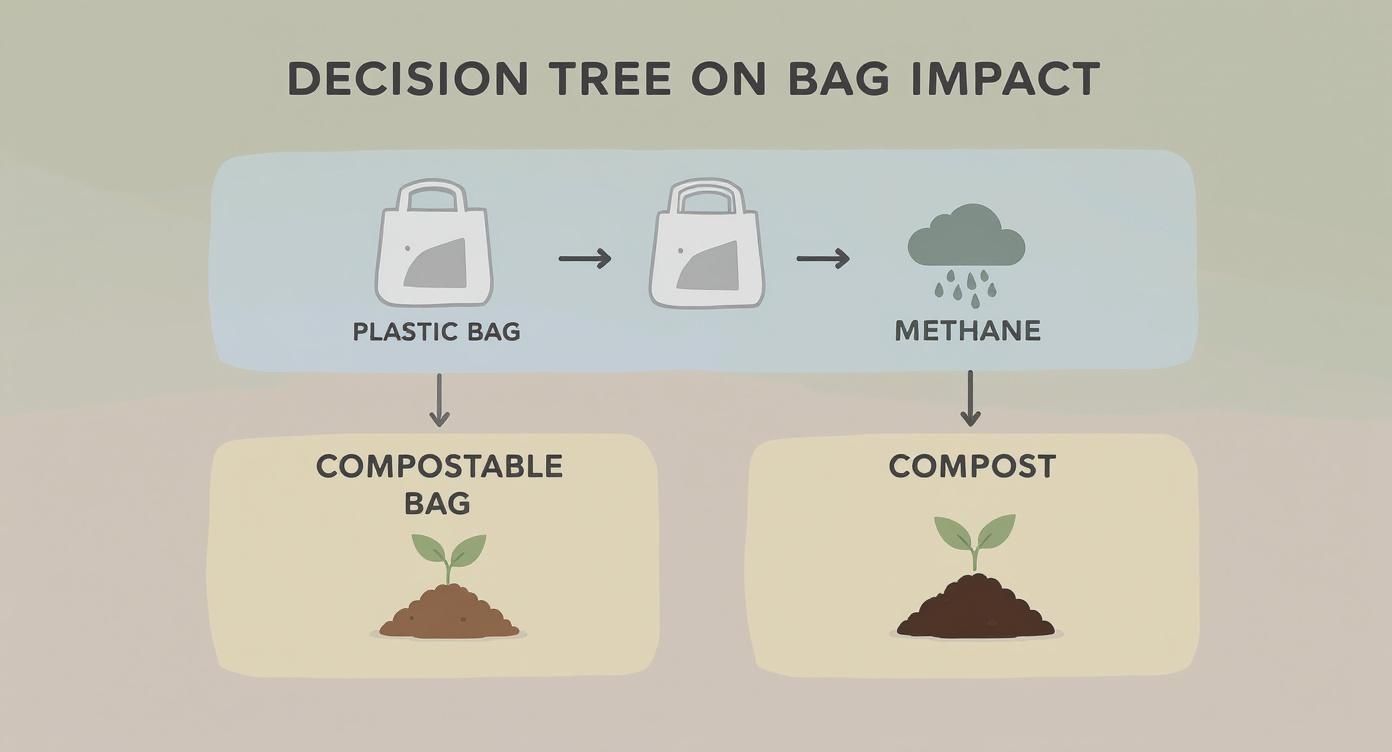
As you can see, your choice determines whether your bag becomes pollution or builds healthy soil.
You have two primary options for your used compostable bags: a commercial composting facility or your own home compost pile.
Option 1: Industrial Composting
For most certified compostable produce bags—especially those bearing the BPI logo—an industrial composting facility is the ideal destination. These facilities are engineered to create the perfect high-heat environment, often exceeding 131°F (55°C), which allows the bags to decompose completely in just weeks.
Finding one is easier than you think:
- Check for City Green Bins: Many municipalities now offer curbside green bin programs for food scraps and certified compostable plastics. Check your local waste management website for guidelines.
- Find a Drop-Off Site: If you don't have curbside service, look for local compost drop-off locations. A great tool for this is a site like FindAComposter.com, which can help you locate a facility in your area.
These specialized facilities are designed for this exact purpose. Sending your bags there is the surest way to guarantee they become valuable, nutrient-rich compost.
Option 2: Home Composting
If you have a compost pile in your backyard, you might be able to compost some bags right at home—but you must check the certification first. Home compost rarely reaches the high temperatures of industrial facilities, so you need a bag specifically designed for these cooler, slower conditions.
Look for the TÜV AUSTRIA OK compost HOME seal on the packaging. This label is your assurance that the bag has been tested and will fully break down in a typical backyard compost pile. If your bag lacks this specific certification, send it to an industrial facility.
For a deeper dive, check out our guide on using compostable bags for your compost bin.
The One Place They Never Belong: The Recycling Bin
If you remember only one thing, let it be this: never, ever put compostable produce bags in your recycling bin.
Compostable bags are organic material, not plastic. When they enter the recycling stream, they contaminate entire batches of valuable materials like PET bottles and HDPE jugs. This contamination can ruin the quality of the recycled plastic, often forcing the whole lot to be sent directly to a landfill.
By keeping compostable items out of recycling, you are protecting our fragile recycling systems and ensuring both your compostable bag and the recyclable plastics end up where they belong.
How to Choose the Right Compostable Produce Bags
You're ready to make the switch. That's a fantastic decision. But walking into the world of sustainable shopping can be overwhelming. This guide will cut through the noise and empower you to choose compostable produce bags with confidence, ensuring your purchase truly delivers on its green promise.
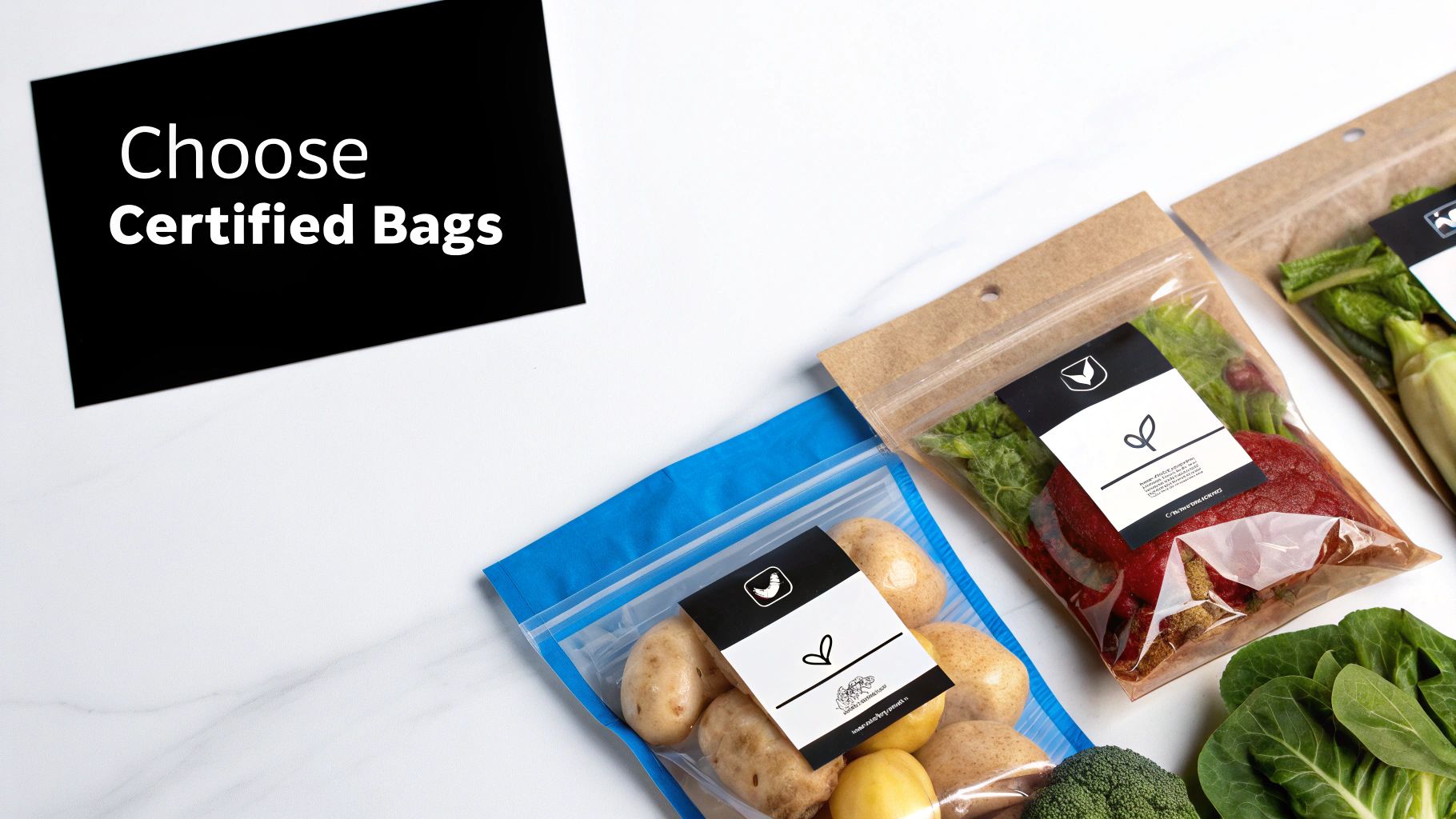
Making a smart choice isn’t about grabbing the first box with a leafy logo. It’s about knowing what to look for so you can see past the marketing and find a product that genuinely helps the planet.
The Non-Negotiable First Step: Look for Certifications
Before you consider price, size, or brand, there’s one non-negotiable step: check for official, third-party certification logos. This is the single most critical factor in buying authentic compostable produce bags. Certifications are your guarantee that a product has been scientifically proven to break down completely and safely.
Without these seals, a company's claims are just words.
A certification from an organization like the Biodegradable Products Institute (BPI) or TÜV AUSTRIA (for home compost) isn't just a nice-to-have; it's proof of performance. It confirms the bag won't leave behind toxic residues and will transform into healthy compost in the correct environment.
Think of it like the "USDA Organic" seal on your food. It’s a trusted shortcut that tells you the product meets strict, verifiable standards. For compostable bags, these logos are your assurance of integrity.
Matching the Bag to Your Needs
Once you've confirmed that all-important certification, you can think about the practicalities. Not all compostable bags are created equal, so match the bag to your shopping habits.
Consider what you usually buy:
- Size: Do you need smaller bags for a handful of green beans, or larger ones for a head of lettuce? Many brands, including terravera, offer various sizes for this exact reason.
- Strength and Thickness: If you're stocking up on heavy items like potatoes or apples, you’ll want a thicker, more durable bag. For delicate produce like mushrooms or leafy greens, a standard bag is perfect.
Choosing the right size and strength ensures a frustration-free experience, making your sustainable shopping trip that much smoother.
Understanding the Value Behind the Price
You might notice that compostable produce bags often cost a bit more than their plastic counterparts. That price tag reflects a significant investment in a more responsible and sustainable process from start to finish.
The higher cost stems from:
- Sustainable Sourcing: The raw materials, like cornstarch, are renewable resources that must be grown and harvested.
- Advanced Technology: Creating a material that can fully decompose is far more complex than manufacturing simple plastic film.
- Rigorous Testing: Earning those crucial certifications involves expensive, detailed scientific testing to prove a product is truly compostable.
When you buy certified compostable produce bags, you're not just buying a bag. You are casting a vote for a more sustainable industry and investing in a healthier planet. This consumer demand is having a real impact. Recent surveys show that over 54% of consumers now actively seek products with sustainable packaging. It's a clear signal that people are willing to invest in better choices. You can discover more insights about these compostable packaging trends and see how the market is shifting.
Your Simple Switch Can Create a Big Impact
It’s easy to feel like our small, everyday choices are insignificant in the face of global challenges. But when it comes to picking a produce bag, that couldn't be further from the truth. The switch to a compostable bag is a simple, tangible action you can take on your next grocery run that creates a powerful ripple effect.
We’ve armed you with the knowledge to identify the heroes—the genuinely compostable bags—and spot the imposters. You now understand that certification seals aren't just marketing fluff; they are a hard-earned guarantee that the bag will return to the soil without a trace of harm. That knowledge is power.
Your Vote for a Healthier Planet
Think about it: every time you reach for a certified compostable bag, you're casting a vote. You're not just bringing home apples; you're actively choosing to reduce the burden on our overflowing landfills. You’re helping create rich, healthy soil by ensuring your food scraps—and the bag itself—become a valuable resource instead of a source of methane gas.
You have the practical know-how to use and dispose of these bags correctly, turning what would have been trash into black gold for our gardens.
Your choice is a powerful signal. It tells manufacturers and stores that you demand products designed for a complete, regenerative lifecycle—from the field to the compost pile and back again.
So, the next time you're in the produce aisle, look for those BPI or TÜV AUSTRIA logos. Feel the satisfaction of knowing that one small, easy change is a meaningful step toward a cleaner, healthier planet. You really are making a difference.
Got Questions About Compostable Bags? We Have Answers.
Making the switch to compostable bags is a great step, but it's natural to have a few questions. Getting clear on the details will make you feel even more confident in your choice. Let's tackle some of the most common questions.
How Long Do Compostable Bags Last on the Shelf?
Because these bags are designed to break down, they do have a shelf life. When stored correctly—in a cool, dark, and dry place like a kitchen drawer—they’ll remain strong and reliable for about one year.
This gives you plenty of time to use them for groceries and then as a liner for your kitchen compost pail. After a year, the natural materials may start to weaken, so it's best to use them before then.
What Happens If a Compostable Bag Ends Up in a Landfill?
This is a critical question, and it highlights why proper disposal is everything. If a compostable bag is thrown in the trash and ends up in a landfill, it's trapped. Buried without oxygen, it cannot break down as intended.
Instead, it decomposes anaerobically, releasing methane—a greenhouse gas far more potent than carbon dioxide. The bag’s entire environmental benefit is lost, and it tragically contributes to the very problem it was designed to solve.
Here's the bottom line: A compostable bag only works its magic in a compost environment. Sending it to a landfill negates its purpose.
Are These Bags Strong Enough for Wet Produce?
Absolutely. You can confidently use them for damp greens, freshly washed berries, or herbs. Certified compostable produce bags are engineered to handle the moisture from fresh food without failing you.
They can even help regulate humidity, keeping some produce crisp longer. You might notice the bag "sweating" after a few days with very wet items, but that's normal! It's just a sign it's ready to begin the decomposition process.
If a Bag Is "Plant-Based," Does That Mean It's Compostable?
This is a common and dangerous misconception. No, "plant-based" does not automatically mean "compostable." It's a classic greenwashing tactic. A bag can be made from corn or other bio-based materials but still be blended with plastics that will never break down in a compost pile.
The only way to know for sure is to look for the certification seals. Logos from trusted third-party certifiers like the BPI (Biodegradable Products Institute) or TÜV AUSTRIA (OK compost HOME) are your guarantee. These seals prove the bag has passed rigorous scientific tests and will truly return to the soil. Always look for the logo to avoid being misled.
Ready to make the switch with confidence? terravera offers certified compostable produce bags you can feel good about. Make your next grocery run a small act for a healthier planet.