

Stop Using Plastic to Pick Up Poop: Why the Best Compostable Dog Poop Bags Matter
Let's be honest: the best compostable dog poop bags have to do more than just be green. They need to be sturdy, absolutely leak-proof, and give you the confidence that you're not about to have a very bad day. The real winners are certified by trusted authorities like BPI or TÜV AUSTRIA. This isn't just marketing fluff; it's your guarantee that the bags are made from plant-based materials like cornstarch and will genuinely break down, returning to the earth instead of polluting it.
The Search for a Guilt-Free Way to Scoop Poop
We've all been there. You're enjoying a walk with your dog, you dutifully grab a bag, and you do the responsible thing. But as you tie that little knot, a nagging thought sinks in: this flimsy plastic bag, used for a fleeting moment, is destined to sit in a landfill for hundreds of years. It’s a small action, but it's part of a colossal problem, and it's driving a powerful shift in how we care for our pets and our planet.
This is more than a trend. It's a conscious movement. We are becoming more thoughtful consumers, and that extends to the choices we make for our furry family members. Compostable dog poop bags have emerged as the clear solution, offering a way to clean up after our dogs without that lingering environmental guilt. The market growth proves it.
A Market Driven by Eco-Conscious Pet Owners
The demand for genuinely compostable and biodegradable dog poop bags isn't just growing; it's exploding. Valued at an astonishing USD 4.2 billion in 2023, the market is projected to more than double to USD 8.7 billion by 2033. That explosive growth tells a powerful story: you, and millions of others, want products that align with your values.
Switching to a greener option is about recognizing that small, daily choices create massive change. When you choose a compostable bag, you’re doing far more than just buying a product—you're casting a vote for a healthier planet. You're turning a mundane chore into a meaningful act, shrinking our collective "paw print" one scoop at a time.
Choosing compostable pet waste bags is a simple yet powerful way to reduce single-use plastic consumption. It transforms a routine chore into a positive environmental action, ensuring that your pet's waste can return to the earth without leaving a harmful trace.
Of course, compostable bags are just one piece of the puzzle. If you're looking to make an even bigger impact, you might want to explore the broader benefits of choosing reusable pet products. At the end of the day, finding the right eco-friendly solutions lets you take care of your dog and the planet at the same time.
So, What Actually Makes a Poop Bag Compostable?
Picking a dog poop bag seems trivial, but the chasm between "compostable" and a standard plastic bag is immense. Think of it this way: a truly compostable bag is like an apple core, designed by nature to break down and become part of the soil again. A regular plastic bag is like a plastic bottle—an immortal piece of trash that will haunt our planet for centuries.
The secret is in the ingredients. The best compostable dog poop bags are made from plant-based materials, primarily cornstarch (PLA) and other vegetable starches. These natural polymers provide a feast for microorganisms in a compost pile, which break the bag down into simple, harmless components: water, carbon dioxide, and organic matter. No toxic residue. No microplastics. Just rich, healthy earth.
This infographic breaks down the journey from that all-too-familiar feeling of environmental guilt to finding a solution that actually works.
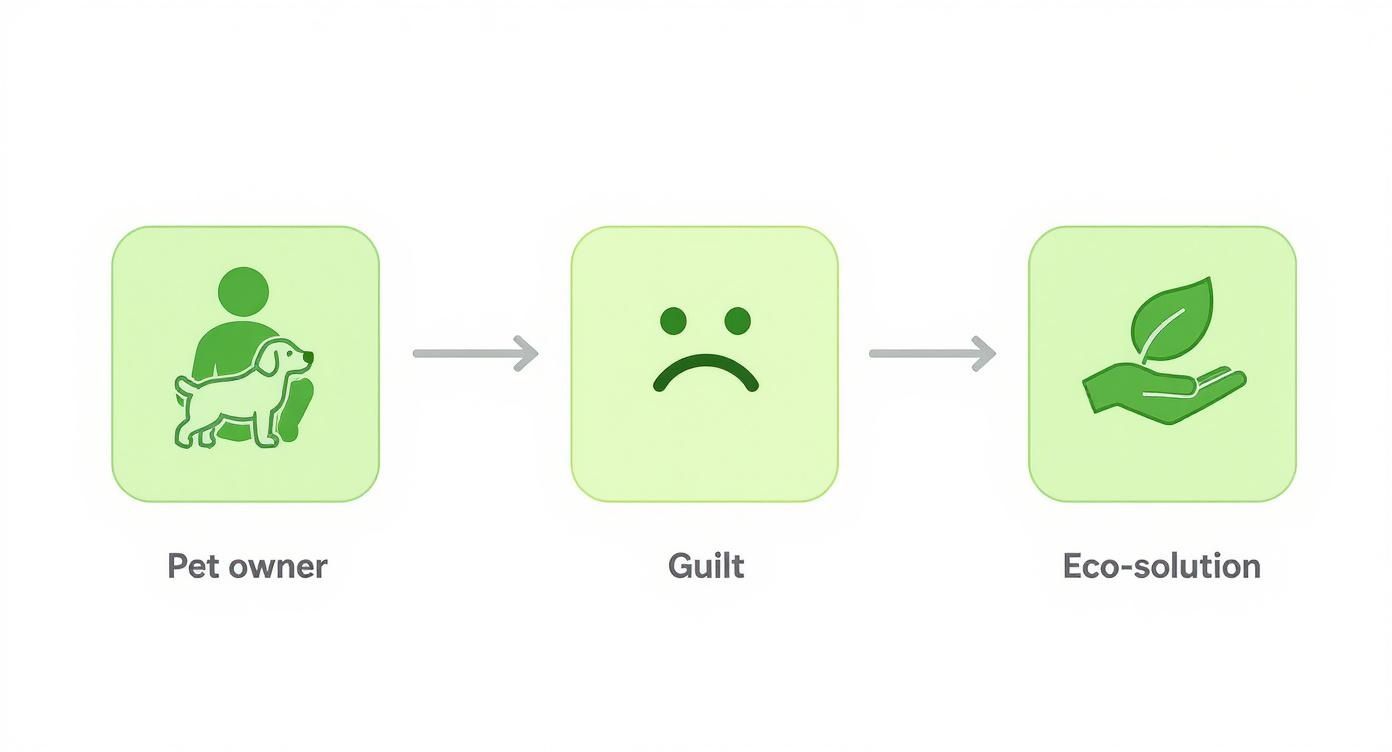
As you can see, making the switch is a pretty clear path toward a more sustainable routine for you and your pup.
The Critical Difference: Biodegradable vs. Compostable
This is where many well-intentioned people get tripped up by deceptive marketing. The words "biodegradable" and "compostable" are thrown around as if they're interchangeable. They are not. The difference is everything.
- Biodegradable: This term is virtually meaningless. It just means something can eventually be broken down by living organisms. But there’s no official timeline or standard. It could take 500 years and still leave behind a toxic soup of microplastics.
- Compostable: This is a legally regulated, scientific claim. To earn this label, a bag must be proven to disintegrate and biodegrade into natural elements in a specific timeframe (usually 90-180 days) under composting conditions, leaving nothing harmful behind.
A "biodegradable" sticker on a package, without any real certification to back it up, is often just greenwashing. If you want to be sure you’re making the right call, always look for official compostability certifications.
This is precisely why certified compostable bags are the only responsible choice. You're choosing a product designed for a circular system—one that turns waste into a valuable resource at industrial composting facilities. To truly understand the science, see our guide on what compostable bags are made of. A little knowledge here empowers you to see past the hype and choose a product that’s genuinely saving our planet, not just pretending to.
How to Choose Bags That Are Tough and Eco-Friendly
You're committed to compostable. Excellent. But how do you pick one that won't fail you in a critical moment? The best bags deliver on two non-negotiable promises: they are legitimately good for the planet and strong enough to handle their very important job. It's all about finding that perfect, reliable balance.
The answer begins with proof. Never trust a company's marketing claims alone. Instead, demand official, third-party certifications. These aren't just decorative logos; they are your absolute guarantee that the product has undergone rigorous scientific testing and meets strict international standards.
Look for Official Certifications
This is the most important step. Certifications are what separate the authentic environmental heroes from the "greenwashed" imposters. Think of it as a background check for your poop bags, confirming they will decompose completely and won't poison the soil with toxins.
Here are the gold standards you should insist on:
- BPI (Biodegradable Products Institute): This is the leading certification in North America. Seeing the BPI logo means the bag is scientifically proven to break down safely in a commercial composting facility. No guesswork.
- TÜV AUSTRIA HOME COMPOST: This premier European certification is a game-changer, especially if you compost at home. It guarantees the bag can break down even in the cooler, less intense environment of a backyard compost pile.
A bag without one of these certifications is a gamble you shouldn't take. By choosing a certified product, you know you're getting a bag that contributes to a healthier planet instead of just adding more plastic to the problem.
Prioritize Strength and Durability
Let's be brutally honest—an eco-friendly bag is utterly useless if it tears. No one wants to deal with that mid-walk catastrophe. That's why thickness and durability are absolute deal-breakers.
Look for bags that are at least 20 microns thick. That’s about 10-20% thicker than many standard bags, and that extra material makes all the difference. It provides the puncture resistance you need, especially when cleaning up on rough pavement or a trail full of sharp twigs. A great bag should feel substantial, not flimsy, and be completely, unquestionably leak-proof.
Of course, a thoughtful approach doesn't have to stop at poop bags. As you make choices for your furry friend, you can explore other pet wellness products that also align with your eco-conscious values.
To make shopping a little easier, I've put together a quick checklist to help you compare your options.
Compostable Dog Poop Bag Feature Checklist
Use this table to quickly compare key features when choosing the best compostable dog poop bags for your needs.
| Feature to Check | Why It Matters | What to Look For |
|---|---|---|
| Material Quality | Ensures the bag is strong and breaks down cleanly. | Plant-based materials like cornstarch (PLA). |
| Bag Size | Must be large enough for your dog and easy to tie. | Check dimensions (e.g., 9 x 13 inches) and handle type. |
| Packaging | Avoids adding more plastic waste to your purchase. | Recycled cardboard boxes and roll cores. |
Running through this list will help you find a bag that's not just good on paper, but good in practice, too.
Proper Disposal to Complete the Green Cycle
https://www.youtube.com/embed/gtEgGC3PCgg
Choosing a great compostable dog poop bag is a fantastic first step, but it's only half the journey. Think of it like buying organic seeds for your garden—if you just toss them onto the sidewalk, you're not going to grow anything. The real environmental magic happens when you dispose of the bag correctly, finally closing the loop and returning its nutrients to the earth.
If a compostable bag ends up in a regular trash can, it's headed straight for a landfill. Buried under tons of other garbage without oxygen, it simply can’t break down as designed. It gets trapped, mummified, and can release methane—a greenhouse gas far more potent than carbon dioxide. All your good intentions are wasted.
Finding the Right Composting Method
So, how do you ensure these bags fulfill their destiny? You must get them into a composting environment that can safely process pet waste. You have a couple of solid options.
- Industrial Composting Facilities: These are the heavy hitters. They’re large-scale operations that generate enough heat to destroy the harmful pathogens in dog waste. The crucial step is checking with your local municipality, as not all facilities accept pet waste.
- Specialized Dog Waste Composters: For a convenient at-home solution, you can use systems made specifically for composting dog poop. These are typically small, in-ground units that use enzymes to break everything down safely, keeping it completely separate from your garden compost.
This is critical: never toss dog poop into your standard backyard compost bin, especially if you grow food. Your home pile simply does not get hot enough to destroy dangerous bacteria like E. coli and salmonella.
Closing the Loop for a Healthier Planet
The market for compostable bags is growing fast, which is great news. We're seeing all sorts of smart designs, from thicker bags that don't tear to convenient dispensers for parks and home use. It’s all part of a bigger shift in understanding that these small daily choices really do add up.
Ultimately, proper disposal transforms your sustainable purchase into a genuinely sustainable action. It is the final, vital step that turns your dog's waste from a landfill problem into a valuable resource. To get started, it’s essential to understand the basics. For a deeper dive, check out our guide on what can and cannot be composted.
Top Compostable Bag Brands You Can Trust
It can be tough to sort through all the "green" claims out there, but knowing what to look for makes it much easier. Instead of giving you a long, overwhelming list, I’ve picked a few standout brands that consistently do things right. Think of this as a launchpad for finding the perfect bags for you and your pup.
The market is full of options, from big names to small startups all focused on sustainability. Companies like Earth Rated, Doggy Do Good, and BioBag have really earned the trust of eco-conscious pet parents. If you're curious, you can dive deeper into the growing dog poop bag market to see who the key players are.
Earth Rated
You've probably seen Earth Rated around—they’re a huge name in the pet world for a reason. Their compostable bags are top-notch and, most importantly, BPI-certified. This is your guarantee that they’ll break down as promised in an industrial composting facility.
What I really appreciate about them is their focus on strength. Let's be honest, no one wants a bag to fail mid-walk. These are thick, leak-proof, and reliable. Plus, their packaging is made from recycled cardboard, so their eco-friendly mindset extends beyond just the bags.
Doggy Do Good
If you're into home composting, Doggy Do Good is a brand you need to know. Many of their bags have the TÜV AUSTRIA HOME COMPOST certification, which is the gold standard for backyard composters. It means the bags are proven to break down in the cooler, less intense environment of a home compost pile.
They are made from plant-based materials like cornstarch, so you're getting a bag that’s not only tough but truly designed to return to the earth.
These brands prove you don't have to choose between doing the right thing and having a product that works. The best compostable bags are just as strong and dependable as the old plastic ones, so you can scoop with confidence.
BioBag
BioBag was one of the first companies to really champion compostable products, and that deep experience shows. Their pet waste bags are made from a unique resin derived from plants, vegetable oils, and other compostable materials.
They hold multiple certifications, including from BPI, so you know their products are held to the highest standards. BioBag's entire mission is about creating alternatives to plastic, making them a company you can feel good about supporting. When you stick with trusted brands like these, you can be sure your choice is actually making a difference.
Got Questions? We’ve Got Answers.
Alright, let's clear up those last few questions. When you're trying to do right by both your pet and the planet, the details matter. Here are direct answers to the most common concerns.
Even though we've covered it, the biggest point of confusion for almost everyone is the "biodegradable" vs. "compostable" thing. Here’s the simplest way to remember it: compostable is a specific, certified promise. It means a bag will break down into healthy, natural elements in a specific timeframe, leaving zero toxic stuff behind. "Biodegradable," on the other hand, is a vague marketing term with no real teeth.
Can I Throw These in My Backyard Compost Bin?
This is a big one, and the answer is a firm no, especially if you plan on using that compost for a vegetable garden.
Your home compost pile just doesn't get hot enough to kill off the nasty pathogens found in dog poop, like E. coli and roundworm eggs. You need a dedicated dog waste composter or a high-heat industrial facility to handle that safely.
A quick heads-up: tossing compostable bags in the landfill pretty much cancels out their benefits. They need oxygen to break down properly. Without it, they're trapped and can end up producing methane, a nasty greenhouse gas.
Do Compostable Bags Have a Shelf Life?
They absolutely do. Because they're made from plant-based materials designed to break down, they won't last forever. Most compostable bags have a shelf life of about 12 to 18 months.
The best practice is to buy only what you'll use within a year. Store them in a cool, dark, and dry place (like a closet or under the sink) to ensure they stay strong and ready for duty.
Why Do They Cost More Than Regular Plastic Bags?
It really boils down to three things:
- The Raw Materials: Sourcing and processing plant starches is inherently more expensive than drilling for oil and producing cheap plastic.
- The Manufacturing Process: Creating these advanced films is a more specialized and complex process than churning out standard plastic bags.
- The Certifications: Earning those trustworthy BPI or TÜV AUSTRIA HOME COMPOST labels requires rigorous, expensive, and independent scientific testing.
Think of it less as an expense and more as an investment. You're paying a small premium for a product that is genuinely kinder to the earth and won't persist for centuries as plastic pollution. That extra cost reflects the true value of making a responsible, sustainable choice.
Ready to make the switch? The terravera lineup offers certified, strong, and reliable compostable bags designed for pet owners who care. Check out our products today and take a simple step toward a cleaner planet.